22 Febbraio 2019
Rector Andrea Pieroni: "UNISG is putting the UN’s Sustainable Development Goals into practice, and has three new Masters arriving between 2019 and 2020"
Stefano Zamagni: "The agrifood industry is wracked by ethical, political and institutional dilemmas"
Carlo Petrini: "To be virtuous gastronomes we must start here in Pollenzo with little changes, like less waste, less plastic and less meat"
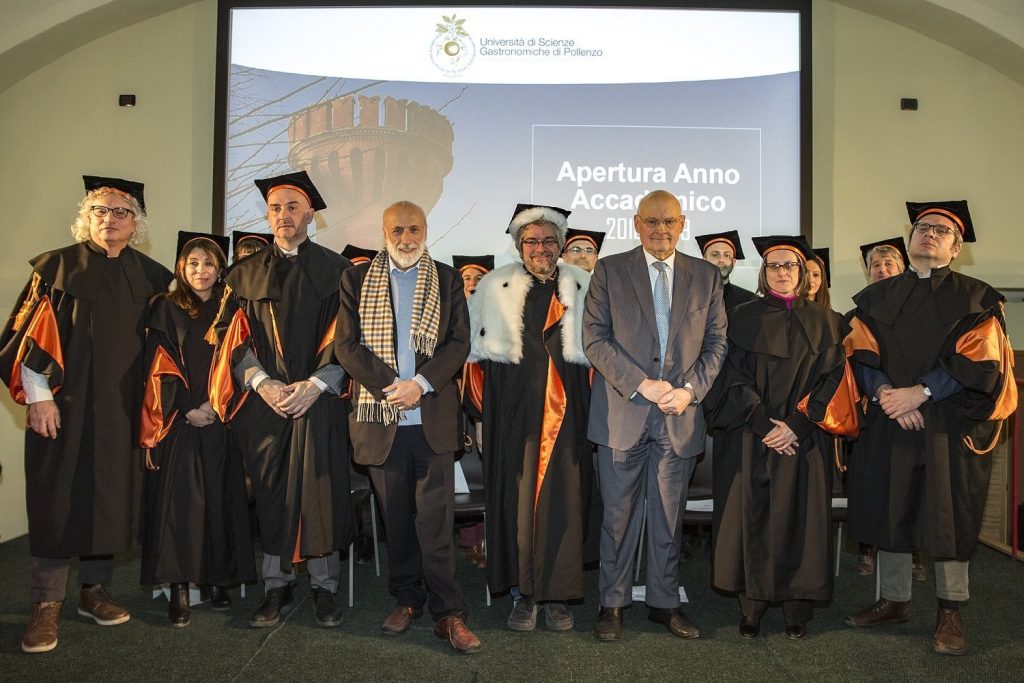
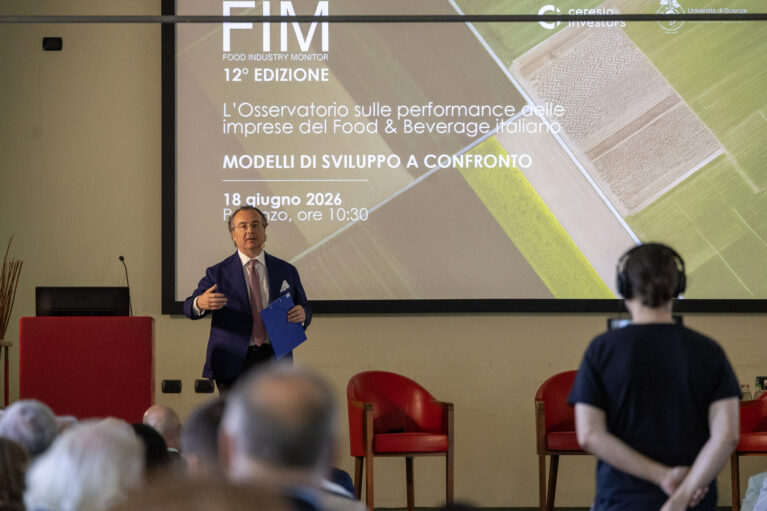
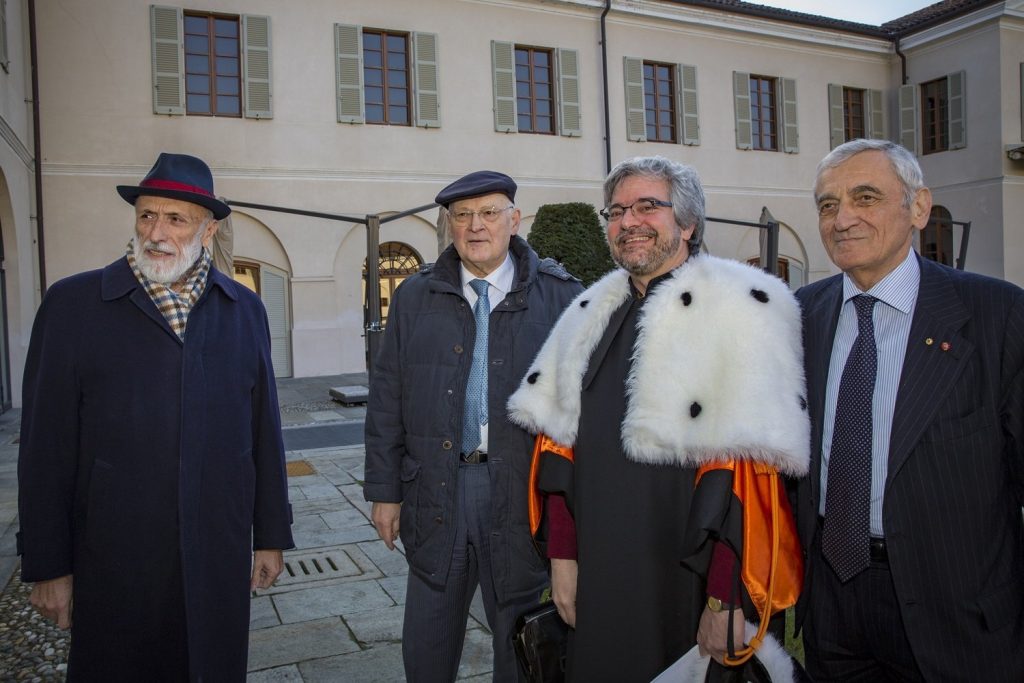
The 2018-19 academic year at the University of Gastronomic Sciences (UNISG) was officially inaugurated today in Pollenzo, in the presence of the rector of the university, Professor Andrea Pieroni; the two new student representatives, Cecilia Schuppisser and Shalom Simcha Elbert; the president of the university, Carlo Petrini; and economist Stefano Zamagni, Professor of Political Economics at the University of Bologna and Adjunct Professor of International Political Economy at Johns Hopkins University, who gave a keynote lecture on the subject “Agroecology, Food Tech and Food Security: Why the Trilemma must be Resolved.”
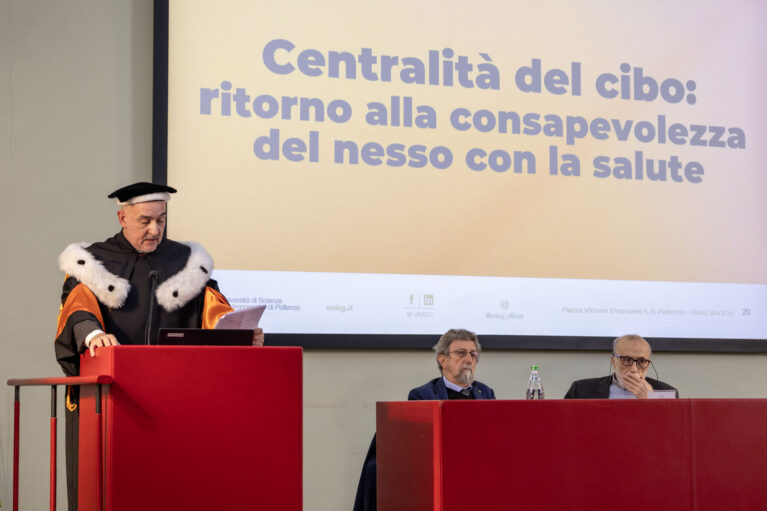
UNISG’s rector, Professor Andrea Pieroni, opened the afternoon’s event by looking forward to the new prospects that currently face the university. “Our great global community is now walking, in the words of the philosopher Nietzsche, on a ‘rope over an abyss.’”
“Today the university’s most important task lies in a relational process: our university must continue to create a community, more than other institutions, and contribute to tackling the huge challenges that loom for our communities and the Earth. Pollenzo is doing this in part by putting into practice those priorities highlighted by the United Nations through its Sustainable Development Goals for 2030.”
The rector went on to point out some of the unique features of the teaching at Pollenzo, such as, for example, “the science of travel, confirmed by the hundred study trips we organize every year; the documentation and knowledge of small-scale food products and the world’s gastronomies through the Ark of Taste; and the constant bridge with the circular economy represented by the field projects and internships in both the private and public sectors.”
He continued by talking about UNISG’s current and upcoming courses: “This academic year saw the launch of our new PhD program in Ecogastronomy, Education and Society, and there are also four Masters currently active, including the new Master of Creativity, Ecology and Education, which offers spaces for transdisciplinary experimentation that students design themselves together with their instructors. From October we will be running a revised Master of Applied Gastronomy: Culinary Arts and from February 2020 a new Master in Raw Milk and Pastoralism. Plus from July 2019 we will be holding the first Summer School in Pollenzo, focused on themes around science in the kitchen and wine cultures and languages. For the end of 2020 we are planning a new Master in Agroecology, which will explore the future of agriculture.”
Alongside all this, added Pieroni, “the Pollenzo university will continue its exploration of new learning platforms, starting with the Diffused University project, which is about to be piloted for the first time here in Piedmont, thanks to the involvement of businesses and friends of the university. Meanwhile UNHCR has renewed its partnership with UNISG, involving the provision of gastronomic training to refugees and trainers.”
“In the future we will be challenged by two of the trajectories indicated by the fourth Sustainable Development Goal: those of lifelong learning and inclusion, which for a university of the future brings up the theme of relationships, and therefore has as an essential corollary the need to move beyond academic disciplines.”
“Our experts will need to carry out their research from a transdisciplinary perspective, studying the link between places, communities and gastronomies and the flows of people and tangible and intangible goods that have marked the planet’s present and past. In this regard we are putting together two laboratories for research and educational experimentation that will focus on Africa, Asia and Eastern Europe. We are starting a collaboration with the L’Orientale University of Naples on the theme of food cultures in East Africa and with the University Ca’ Foscari in Venice, thanks to a research grant from the ERC, on traditional ecological and gastronomic knowledge and its mutation in the east of the former Soviet Union.”
Lastly, concluded the rector: “We must work to bring altruism back into fashion. This concept is studied not only in the social sciences, but most importantly in the bio-scientific world, by many ethologists. We want to build a society of women and men who are free and strong, who are not afraid of their limits and who ask for and offer help to their neighbors. This process must start from food, because more than any other universal object or cultural process, it touches our lives and all the main aspects of the current crisis. You students must be proactive protagonists, you must explore paths and learn to wield the theoretical and methodological tools available, if possible in groups and never alone, adapting them to your sensibilities and to the challenges of the world.”
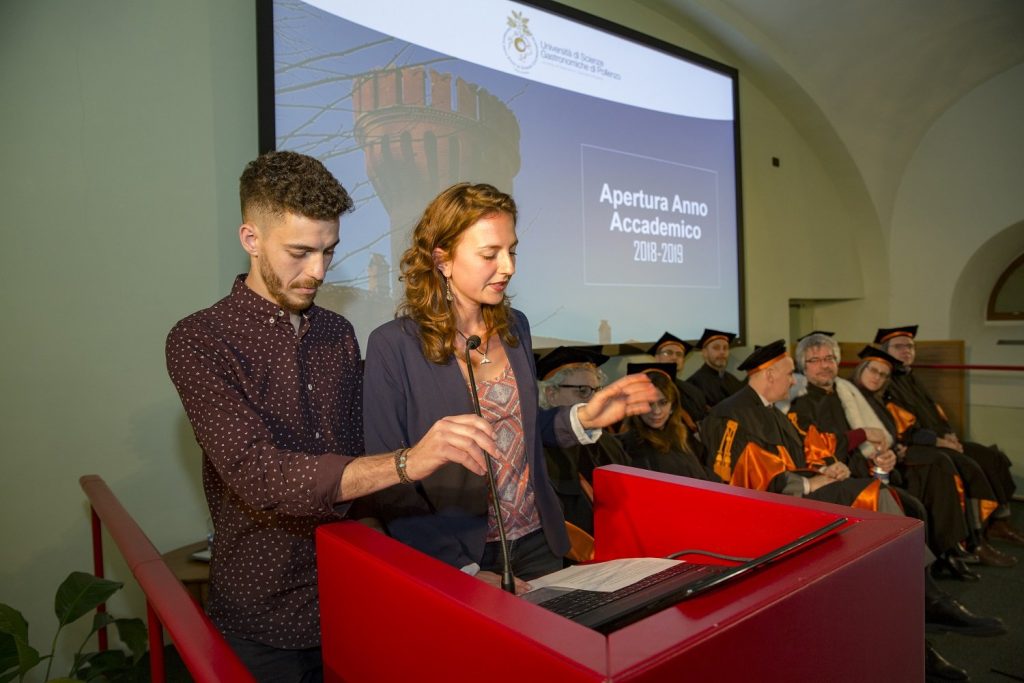
The student representatives, Cecilia Schuppisser and Shalom Simcha Elbert, were the next to speak. “Imagine that you are a huge recipe, in constant evolution and in constant development, made up of many ingredients of all different kinds, from many different countries. We want to thank every ingredient and together continue to seek out new flavors, fragrances and ideas, because this recipe is unique and constantly evolving. The ingredients of Pollenzo are community, inclusion, equality and curiosity.”
Professor Stefano Zamagni focused his lecture on how, out of all the contemporary economic sectors, that of agrifood was the one characterized by the highest intensity of dilemmas, of an ethical, political and institutional nature.
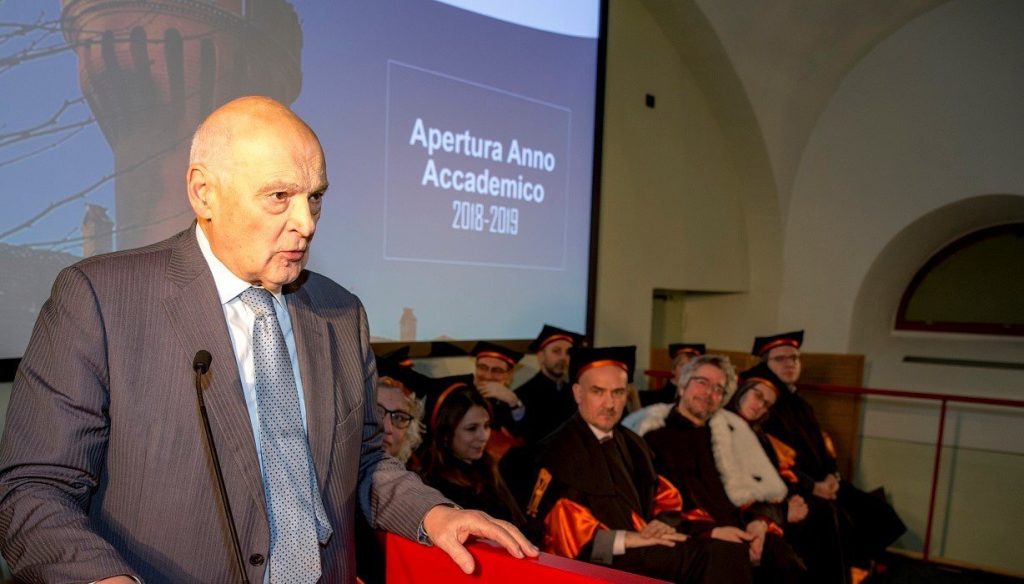
“The first dilemma of agriculture now is that it is facing a tragic choice,” began the economist. “It must respond to the challenge of feeding a growing world population, but without endangering environmental sustainability. The second dilemma concerns the difficult relationships between agriculture and other economic sectors, first and foremost finance. We know that one of the main factors responsible for the malfunctioning of the market mechanism is technical externalities. Is it right to conclude that nobody should be held responsible for the negative consequences that fall on third parties? No, it’s not, so correcting the negative consequences of monetary externalities is a question of corrective justice, because those who support their damage have done nothing to ‘deserve’ their punishment. The third dilemma relates to biodiversity: Do we protect plant species or jeopardize the development process?”
Zamagni continued: “How can we resolve these dilemmas? We must act on three fronts to resolve the problem of ensuring agrifood systems are able to produce enough food for a growing population while at the same time reducing their overall environmental impact.”
“One first intervention front is to increase the yields of crops in regions like Africa, Central America and Eastern Europe. This means opening up to Agriculture 4.0, the agriculture of precision: satellites, drones, robots with artificial intelligence, digital tools. The second is the cultural front, most specifically education about diet. We need to launch coherent and robust food education programs that can inform citizens in an undistorted way about the difference between food safety and food security. The third point regards how to intervene on the economic-institutional system of the entire food and agriculture sector. These days a handful of mega-businesses controls the seed and global agriculture market. We need to act to ensure that the environmental sustainability of food and its nutritional value are always considered together when laws or regulations are put in place.”
“The major problems of an agriculture that is sustainable and able to feed a growing population are much more closely connected to unequal power relationships than to a lack of specific knowledge in the technical and scientific sphere. That’s why talking about agriculture, its challenges and its prospects, as this academic institution has been doing for years, confirms the reasons for choosing the title of these remarks. The alternatives facing us are to passively endure the on-going processes or to seek to address the profound change that we are already seeing at the highest levels of civil progress.”
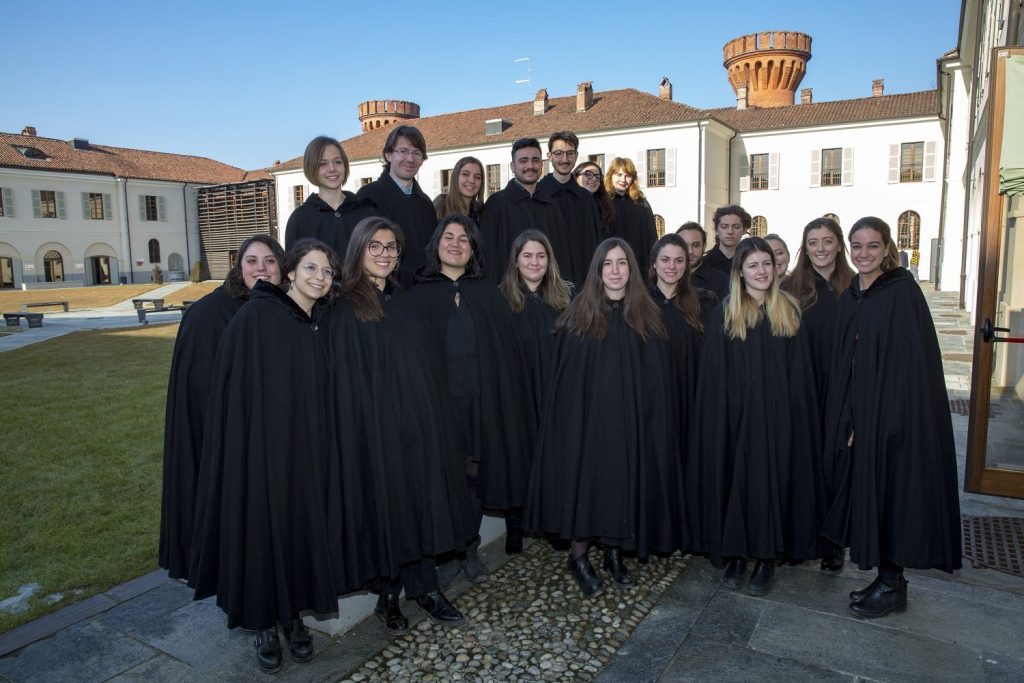
The president of the university, Carlo Petrini, brought the day to a close. “There are students from more than 50 countries present here. Based on what we have heard from Rector Pieroni, from Professor Zamagni and from your two representatives, thinking about all of your travels and the experiences you have had here in Pollenzo, I ask you students to have a global vision and to work to understand and protect biodiversity in your countries. I also want to remind you that we must start small, with daily actions that represent change. Here in Pollenzo we are starting to reduce food waste, to eat less meat, to use less plastic and to activate a small circular economy. This is where we must begin from in order to be virtuous gastronomes.”
Learn about our programmes…