26 Marzo 2026
Guest of honour Prof. Paolo Vineis, Professor of Environmental Epidemiology at Imperial College London,
with the lectio "Food, Environment and Health: Are We at a Turning Point?"
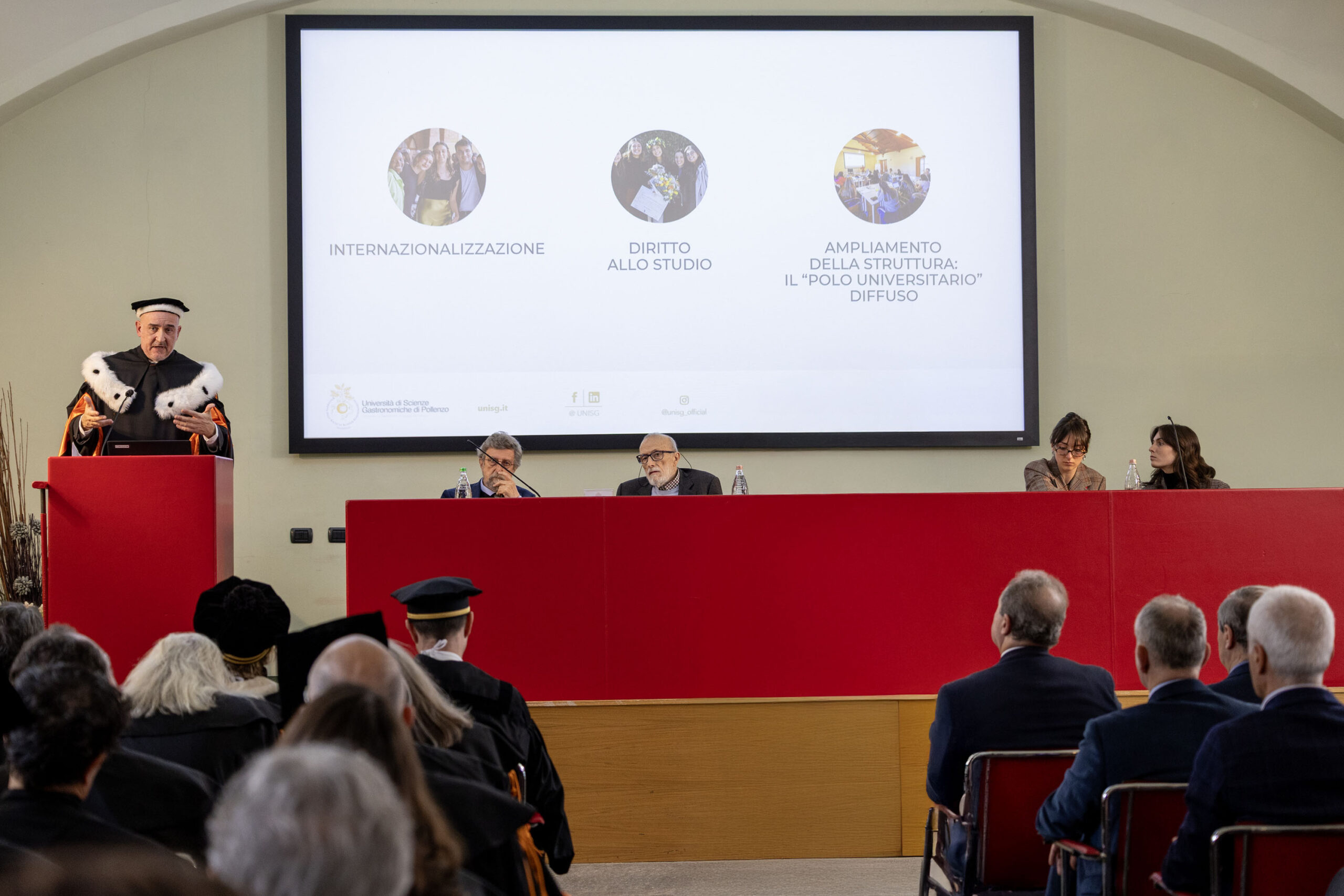
On Wednesday, January 28th, the University of Gastronomic Sciences of Pollenzo inaugurated its twenty-second academic year with a ceremony that placed at its centre three interdependent concepts: contemporaneity, global polycrises, and the centrality of food as a lever for addressing present and future challenges.
The day, held in the Sala Rossa of the Agenzia Hotel, brought together the entire university community around a complex and multidisciplinary vision of the present.
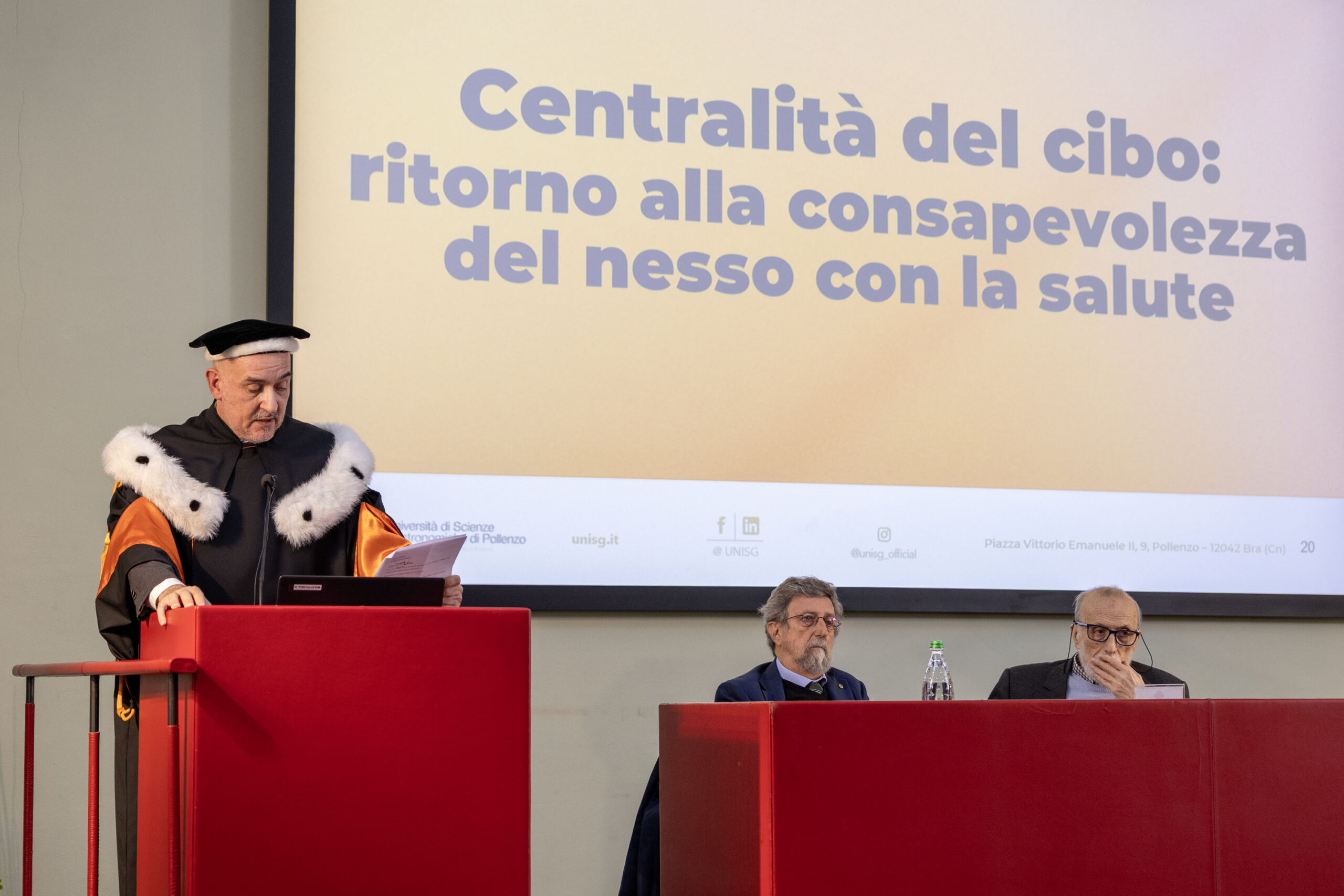
The morning was opened by a lecture from Rector Nicola Perullo, followed by the intervention of the two Student Representatives Elisa Carone and Emma Maria Deandrea.
Contemporaneity Beyond Actuality: The Rector's Address
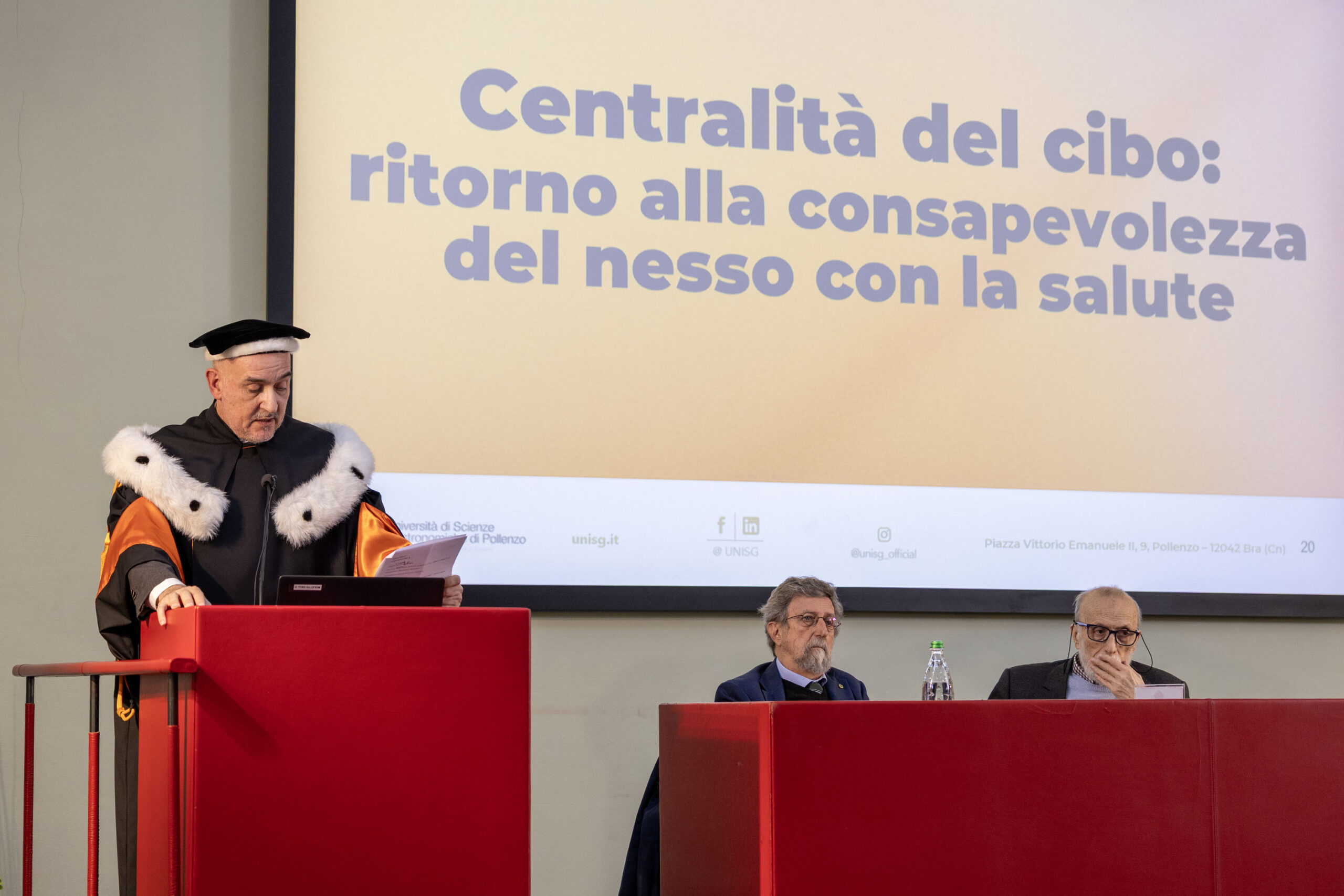
Rector Nicola Perullo opened proceedings by introducing a conceptual distinction between two often-confused terms: "actuality" and "contemporaneity". If actuality is a flattened view of the present, contemporaneity is that capacity to hold together past, present, and future, anticipating what has yet to arrive.
"Do not settle for the present and anticipate, build the future through what does not satisfy us in the present," explained the Rector, evoking the teaching of Edgar Morin on "polycrisis" – a concept that describes the complex system of distinct and specific crises that amplify one another reciprocally: climate, political, pandemic, and biodiversity crises.
In this context, the Rector, again citing Edgar Morin, stated:
"I like to recall a book by the French philosopher called 'La tête bien faite' – A Well-Made Mind: it is better to possess a well-made mind than a full mind. A well-made mind is a multidisciplinary mind that sees many perspectives simultaneously, that can flexibly articulate these perspectives with a gaze that is not solely one's own, rather than accumulating isolated, disconnected notions, which is characteristic of a full mind. The well-made mind is the critical mind, that connects and unites, which is the opposite of the hyper-specialised mind that fragments knowledge."
Thus: "The future is not already written – he emphasised – because the future is what we do every day."
"Future scenarios must make room for new forms of sociality and new welfare models, imagining a polycentric future oriented towards good living. It is necessary to reason in terms of unity, collaboration, and global decentralisation," added the Rector. "Today much is said about artificial intelligence, but that is not all. It is necessary to overcome a suffocating vision that opposes techno-enthusiasts and technophobes, and work on an idea of university with a concept of learning that goes beyond students alone. We are a country in motion and we must adopt a polycentric perspective, moving towards broad education, capable of creating new perspectives and alliances."
And further: "Pollenzo reaffirms that at the centre are students, but not only. Here is the concept of Universitas studiorum: where the key words are 'know, cultivate, share, collaborate'. The University is a place of sociality, of commonality, of things done together: studying also for the pleasure of being together."
The Centrality of Food and New Educational Horizons
In his lecture, the Rector then presented, as a concretisation of this vision, the evolution of Pollenzo's educational offering. Starting from October 2026, the university will articulate its teaching around four macro areas, corresponding to the four degree programmes: culture, critical reflection and territory; technology, innovation and sustainability; economy, enterprise and management; health, wellbeing and quality of life.
Among these, the new three-year inter-university course with the Polytechnic of Turin "Food Tech for Ecological Transition" represents the integration of scientific and humanistic dimensions. Perullo underlined how the centrality of food is not academic "arrogance" but a historical necessity: food, understood as a "crossroads" through which to read the world, makes it possible to simultaneously address issues of environmental justice, public health, social equity, and technological innovation.
The Voice of the Student Community
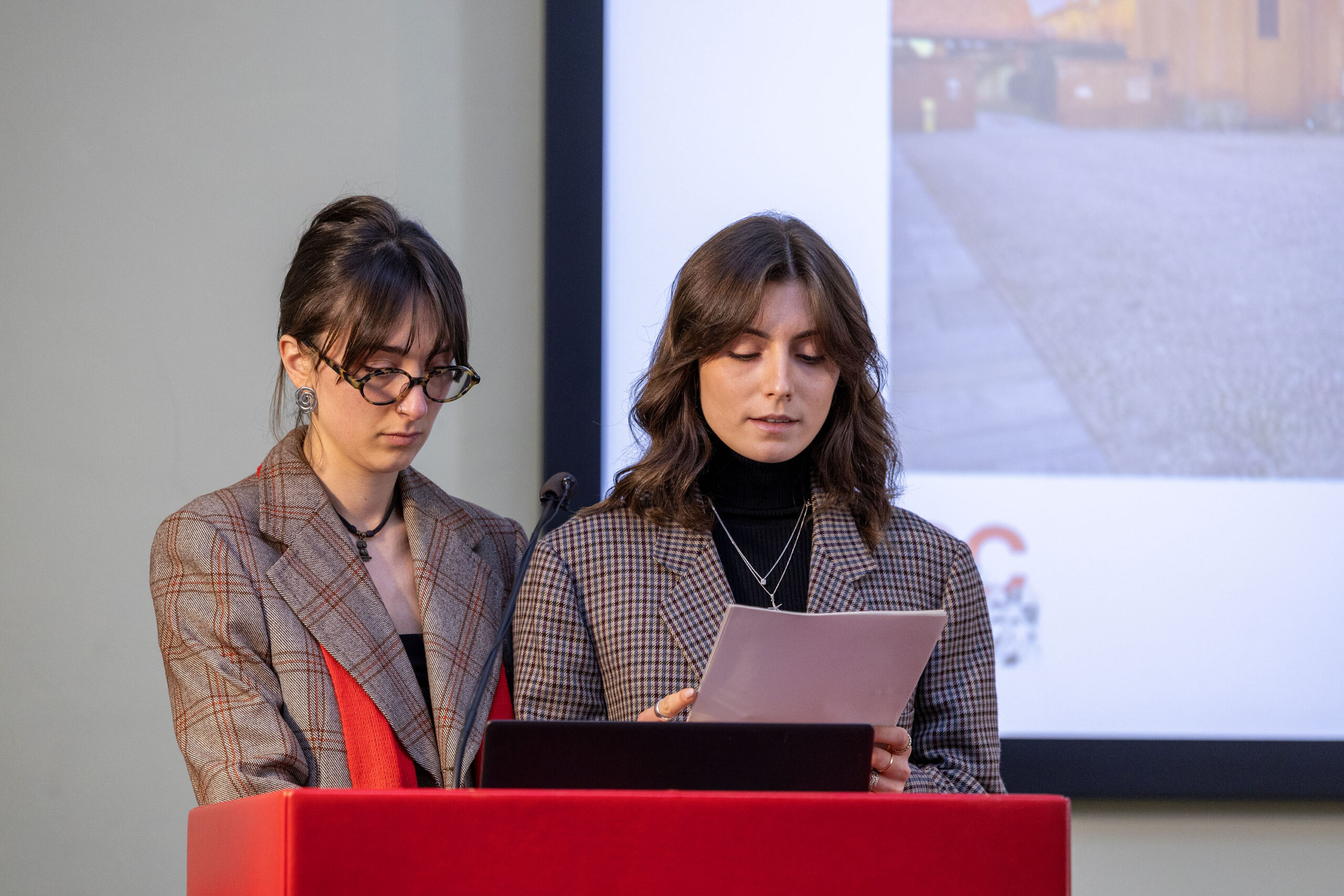
Subsequently, student representatives Emma Maria De Andrea and Elisa Carone intervened, bringing urgent questions into the lecture hall: climate crisis, eco-anxiety, eating disorders, the political use of food in global conflicts.
De Andrea underscored how future gastronomists must "be custodians of a reconnection between soul and nourishment," while Carone made an appeal to teachers and institutions to support students in building critical thought that is not fragmented.
Their participation represented a disruptive, passionate, and profound moment, as well as a heartfelt appeal for constructive dialogue between generations of the university community.
The Systemic Perspective: The Lectio of Prof. Paolo Vineis
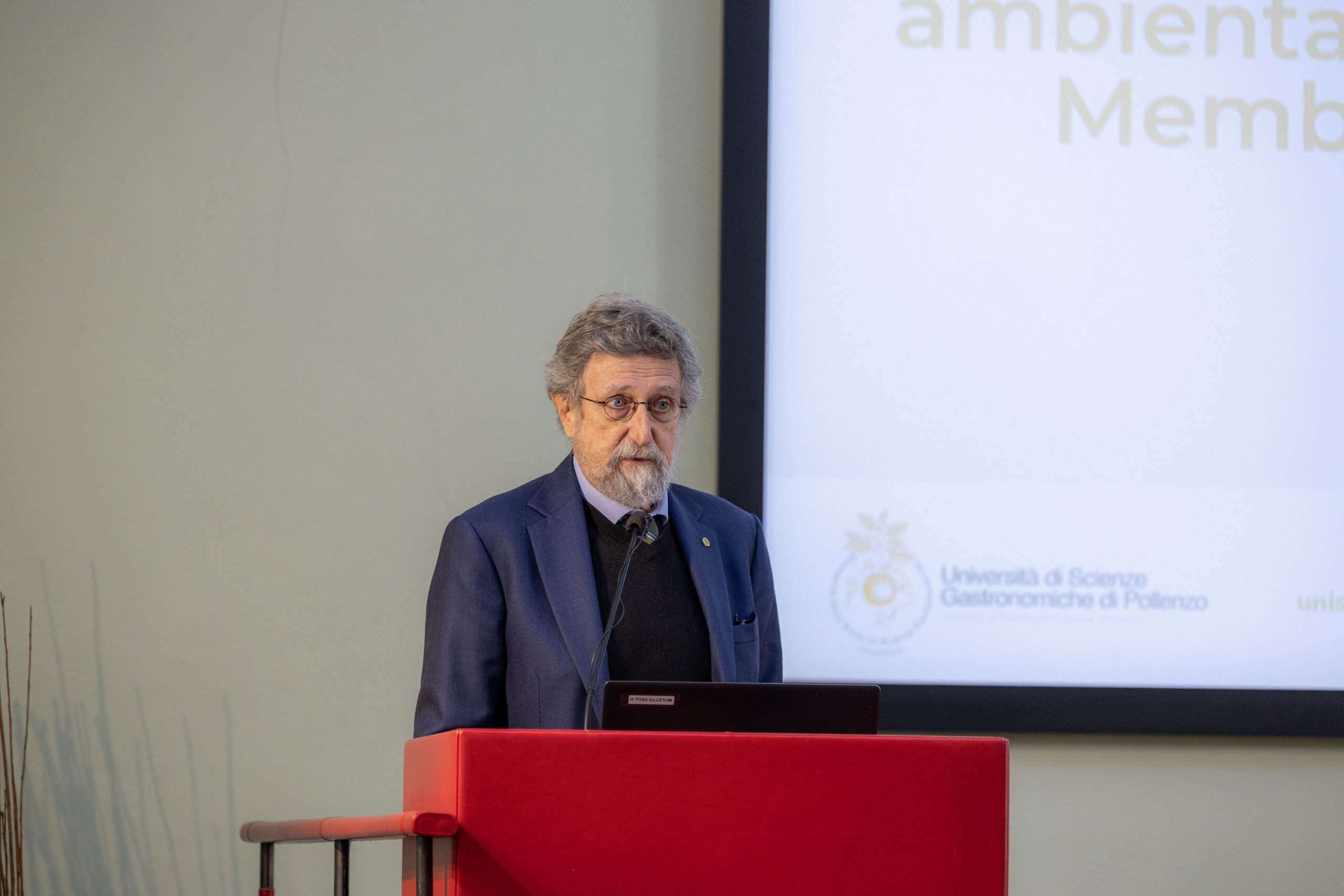
Epidemiologist at Imperial College London and member of the Accademia dei Lincei Professor Paolo Vineis offered a dense reflection on themes of food and cultural biodiversity, environmental crisis, and the role of science.
Starting from the Anthropocene – the geological era marked by humanity's transformation of the planet – Vineis articulated the tension between scientific reductionism and holism.
"Reductionism consists in thinking that there is one molecule for every problem. But we know that redundancy operates in biology," he explained, illustrating how systemic approaches can coexist with scientific rigour.
He presented research conducted on 500,000 Europeans demonstrating how food biodiversity – understood as variety in species consumed in diet – significantly reduces mortality. The 3V diet proposed by researchers such as Scrinis and Fardet (vrai, végétal, varié) not only benefits human health but also reduces CO₂ emissions and land consumption.
Vineis further addressed the question of responsibility in planetary crises, emphasising that the causes of polycrisises are not always identifiable in single responsible parties but rather in "system crimes" linked to complex productive structures.
He concluded by underlining the risk that artificial intelligence, while representing an important tool, risks crystallising dominant visions and excluding traditional knowledge of "other" peoples and cultures, compromising the cultural diversity necessary to face planetary challenges.
Carlo Petrini – The Vision of a University Pole and the Challenge of Cooperation
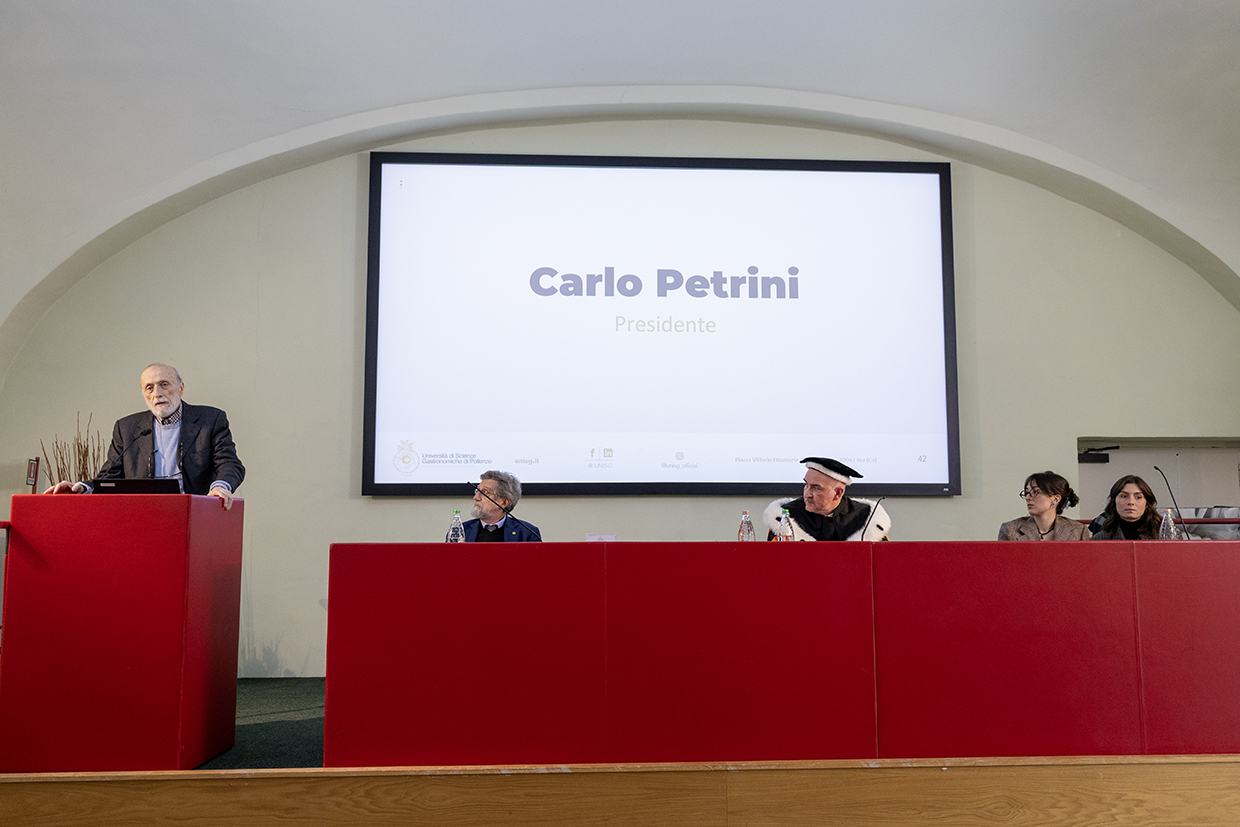
In conclusion of the ceremony, UNISG President Carlo Petrini took the floor, reaffirming the university's historical commitment to a multidisciplinary perspective on food, while tracing a conceptual evolution: from recognition of multidisciplinarity to recognition of the centrality of food as a discipline in dialogue with all others. He cited the example of Harvard, which is studying the Pollenzo model in relation to food and education.
Petrini also announced the intention to transform Pollenzo into a university pole integrated with other Piedmont universities, and to significantly increase the international component: from a current 42% to a target of 60% of non-Italian students within three years.
"If we respect other cultures we will be able to earn recognition for our own culture," he affirmed, drawing attention to diversity as a driving element of change.
He then stated: "Professor Vineis's lecture highlighted the theme of biodiversity, reminding us that everything is interconnected. At Pollenzo we have given substance to what Brillat-Savarin, father of modern Western gastronomy, had already intuited, valorising the disciplines connected to gastronomy. On this path we were born and we have dedicated 22 years of work to it. Food must move from a simply multidisciplinary dimension to a central dimension. Food is our life, and conceiving it as central requires awareness. And with reference to the beautiful lecture by our two student representatives, who proposed considerations and ideas full of feeling and positivity, I want to recall that the gastronomist of the future must also be a political subject."
He closed with a reflection on our historical moment: "The age of competition is over. The historical period that must be based on cooperation and shared responsibility has begun."
A challenge that places in the hands of the university community the responsibility to transform crisis into opportunity.