27 Giugno 2025
FOOD INDUSTRY MONITOR 2025 – 11th EDITION
"Governance Models and Growth Strategies"
Pollenzo, 06/26/2025
The observatory on the performance and business models of Italian food companies, created by the University of Gastronomic Sciences of Pollenzo and Ceresio Investors.
- Solid growth in the food sector: +5.9% in 2024, with optimistic projections also for 2025 (+4.6%) and 2026 (+4.4%), driven by domestic consumption and industrial investments.
- Export in substantial expansion: in 2025, an increase of +7.3% is expected, driven by key sectors such as wine (over €8 billion in exports), with uncertainty around U.S. trade policies.
- Family businesses leading the way: they represent 67% of the sector and record superior performance thanks to advanced governance models and shared strategic leadership.
The Research Project
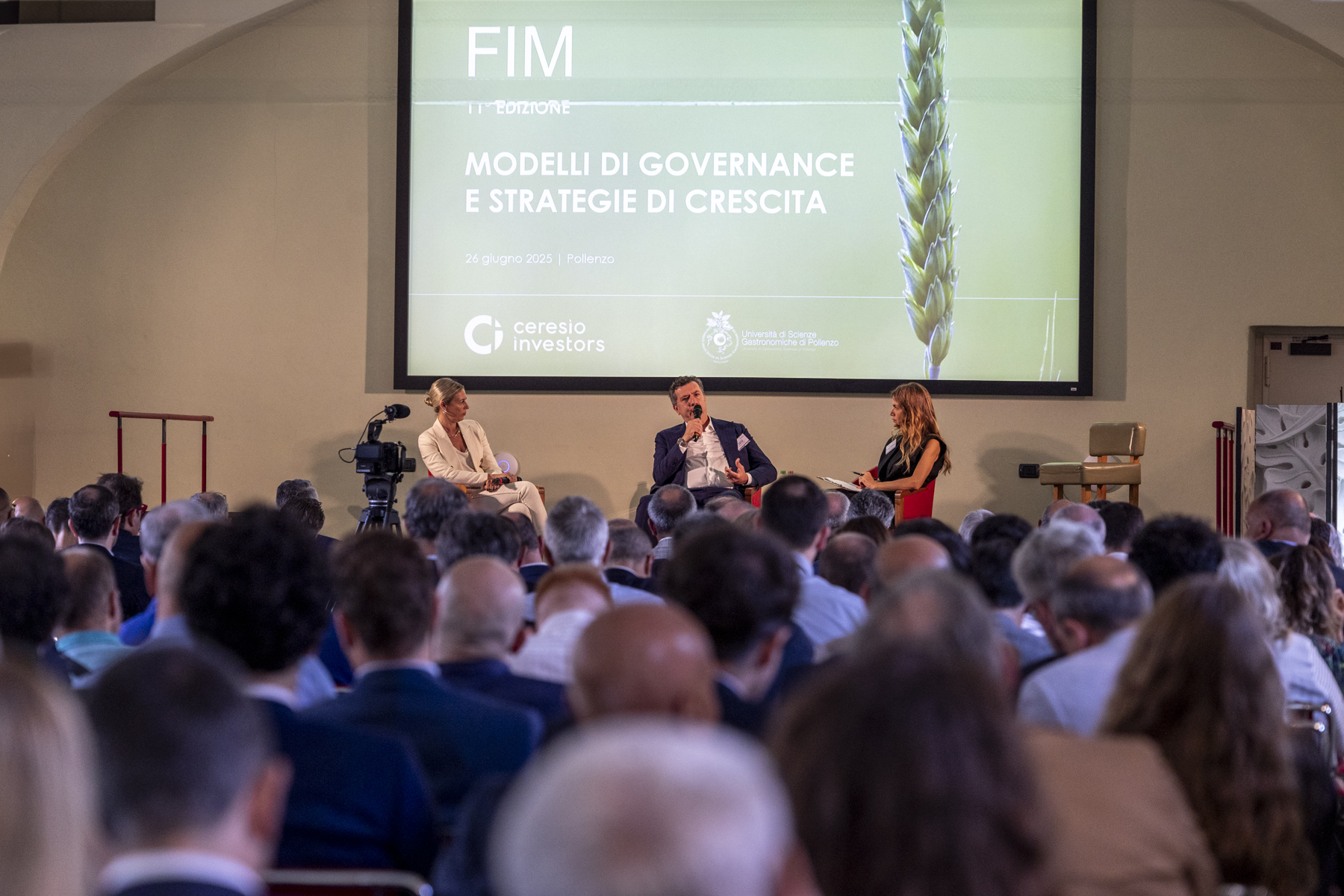
The Food Industry Monitor analyzes the performance of a sample of over 860 companies, with an aggregated turnover of about €87 billion, active in 15 segments of the food sector. The observatory analyzes historical performance from 2009 to 2024, focusing on the following dimensions: growth, export, profitability, productivity, and financial structure. For each segment, two-year forecasts (2025-2026) are made regarding revenue and export growth, as well as profitability trends.
PERFORMANCE IN 2024, PROJECTIONS FOR 2025 AND FORECASTS FOR 2026
In 2024, sector revenues grew by 5.9%, outperforming the Italian economy, whose GDP remained at 0.7%. The sector shows good commercial profitability levels with a ROS of 5.7% and a ROIC of 6.9%—positive values, albeit slightly lower than in previous years. Financial stability remains high, with a debt ratio of 1.19 (third-party capital over equity).
For 2025, the food sector is expected to maintain a positive trend with 4.6% growth, although at slightly lower rates than the previous year. A revenue increase of +4.4% is forecasted for 2026.
The domestic market is expected to remain stable thanks to positive employment dynamics, which are expected to stimulate consumption and, consequently, demand for food products. Wage growth remains a key variable for a qualitative leap in internal consumption. The positive trend in industrial investments confirms that the Italian industry, particularly the food sector, is responding to the productivity challenge. Segment-wise, significant growth is expected in 2025 for flour (+9.9%), coffee (+6.9%), oil (+6.3%), and frozen foods (+5.6%).
EXPORT EVOLUTION
The food sector's export (at current prices) for the segments analyzed by FIM (with the related ATECO codes) is expected to grow by 7.3% in 2025, slightly lower than the 8.2% growth in 2024. Forecasts remain positive for 2026, with an estimated 7% increase.
Exports in the segments mapped by the Food Industry Monitor reached €47 billion, of which around 13% is destined for the United States. Wine alone generates over €8 billion in exports, with approximately 30% of these exports going to the USA.
Food sector exports (including wine) increased by 5.5% in 2024, marking a clear recovery from the -1.6% recorded in 2023. However, U.S. import policies could significantly impact sales in the USA.
FOCUS ON FAMILY BUSINESSES, GOVERNANCE, AND PERFORMANCE
For the 11th edition of the Food Industry Monitor, a specific focus was developed on institutional structures and governance models adopted by companies. The food sector remains strongly characterized by the presence of family businesses, representing 67% of the analyzed sample (870 companies). Analyses were also conducted by segment. The flour (95%), spirits (83%), oil (82%), and coffee (81%) segments exceed 80% in family ownership. Even in segments with major international players, such as frozen foods, beer, and wine, family businesses remain predominant, albeit with slightly more than 50%.
Governance varies according to the nature of ownership: in family businesses, 75.8% are managed through a Board of Directors (BoD), while a Sole Director leads 24.2%. In non-family companies, the structure is more formalized, with a clear predominance of the BoD (93.6%) and minimal presence of Sole Directors (6.4%). In terms of gender composition of the BoDs, family businesses show a female presence of 24.7%, significantly higher than the 10.1% observed in non-family businesses.
The food sector demonstrates good business longevity: 53.3% of family companies in the sample are led by third-generation members, while another 36.8% have surpassed the third generation. Only 9.9% are led by first- or second-generation immigrants. Segments with a prevalence of first and second-generation companies include flour, pasta, spirits, and sweets. Segments with the longest-standing companies (beyond the third generation) include beer, oil, flour, and water.
In terms of economic performance, family businesses tend to achieve higher average results compared to non-family companies. Return on Invested Capital (ROI) and Return on Equity (ROE) are significantly higher for family businesses.
Generally, for all companies, advanced governance models lead to superior performance. Notably, the presence of collegial leadership—i.e., distributed responsibilities—significantly improves performance, positively impacting key profitability indices. Even more significant is the positive impact of having board members who are also shareholders; their presence leads to a notable improvement in ROA. In family businesses, having a family president who acts as a strategic bridge between the family and the company has a substantial influence on profitability performance.
STATEMENTS
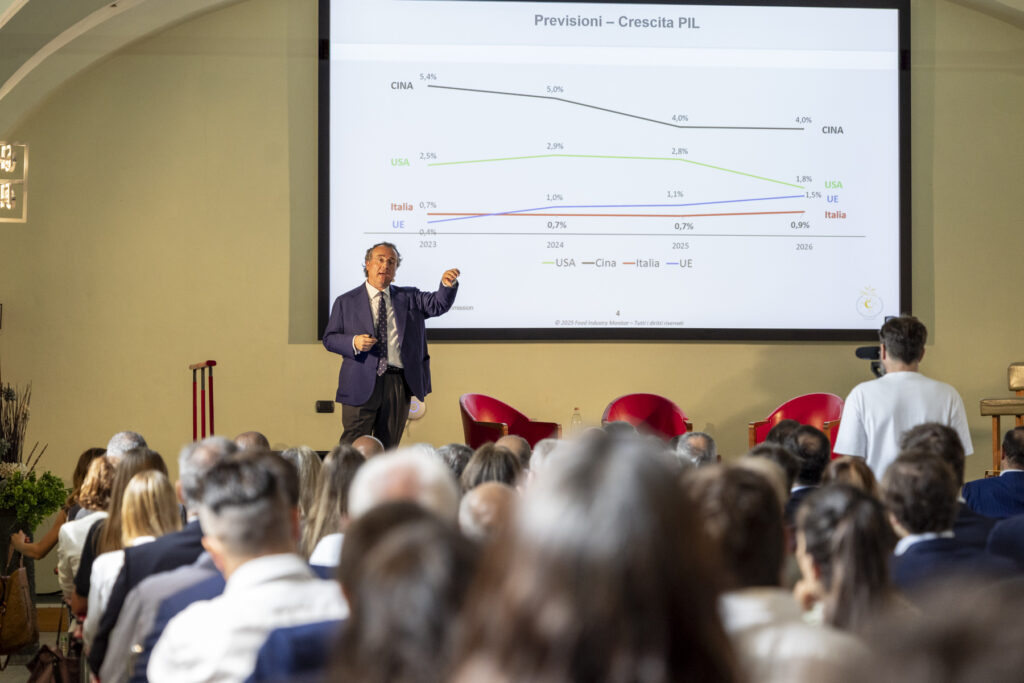
"2024 was a transitional year for the food sector, which grew at a slower pace than projected at the start of the year, aligning with what was observed for GDP. The outlook for 2025 is positive but may require downward revision if tariffs are implemented and the Middle East conflict leads to a significant decline in oil production and tourism flows. The evolution of the international market must be closely monitored. In particular, the introduction of tariffs could drastically reduce exports. Only a few Italian players have production facilities in the USA and could thus preserve market shares—an option not available to all companies."
—Carmine Garzia, Professor of Management and Scientific Director of the Food Industry Monitor Observatory, University of Gastronomic Sciences of Pollenzo.
"What is happening internationally should prompt serious reflection on the need for Italian companies to strongly accelerate internationalization strategies by investing directly in foreign production structures. We should not see 'Made in Italy' merely as a model based on exporting finished products but also as the export of know-how in innovation and production, which can be embedded directly in destination markets. The 2026 forecasts are positive; however, we may face U.S. tariffs and potential countermeasures in key markets, such as China. External growth to boost critical mass and foreign presence remains one of the most effective options to meet international market challenges and sustain growth trends."
—Alessandro Santini, Head of Corporate & Investment Banking, Ceresio Investors
ROUND TABLE – SPEAKERS
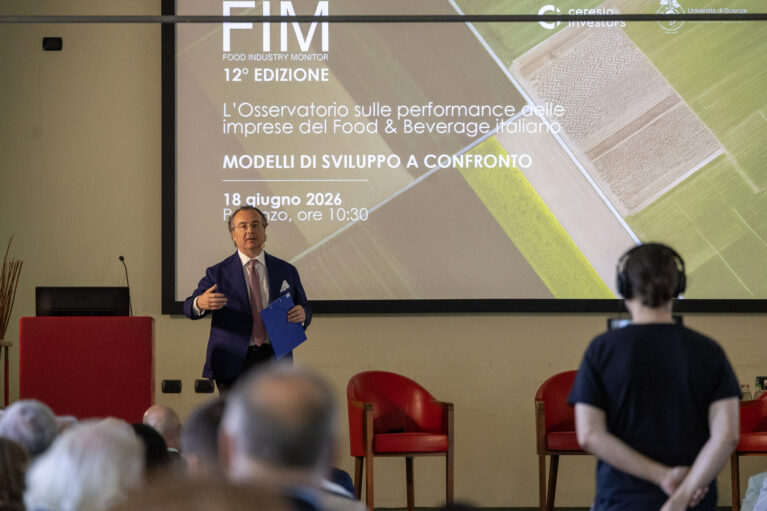
The conference was introduced and moderated by Silvia Sciorilli Borrelli, Italy correspondent for the Financial Times. Following institutional greetings from Prof. Nicola Perullo, Rector of the University of Gastronomic Sciences, and Gabriele Corte, General Director of Banca del Ceresio SA, Prof. Carmine Garzia, Scientific Director of the Observatory, presented the findings of the latest edition of the Food Industry Monitor, with a focus on growth and export over the next two years. Unpublished data were presented on ownership structures and governance models in the food sector, as well as their impact on performance.
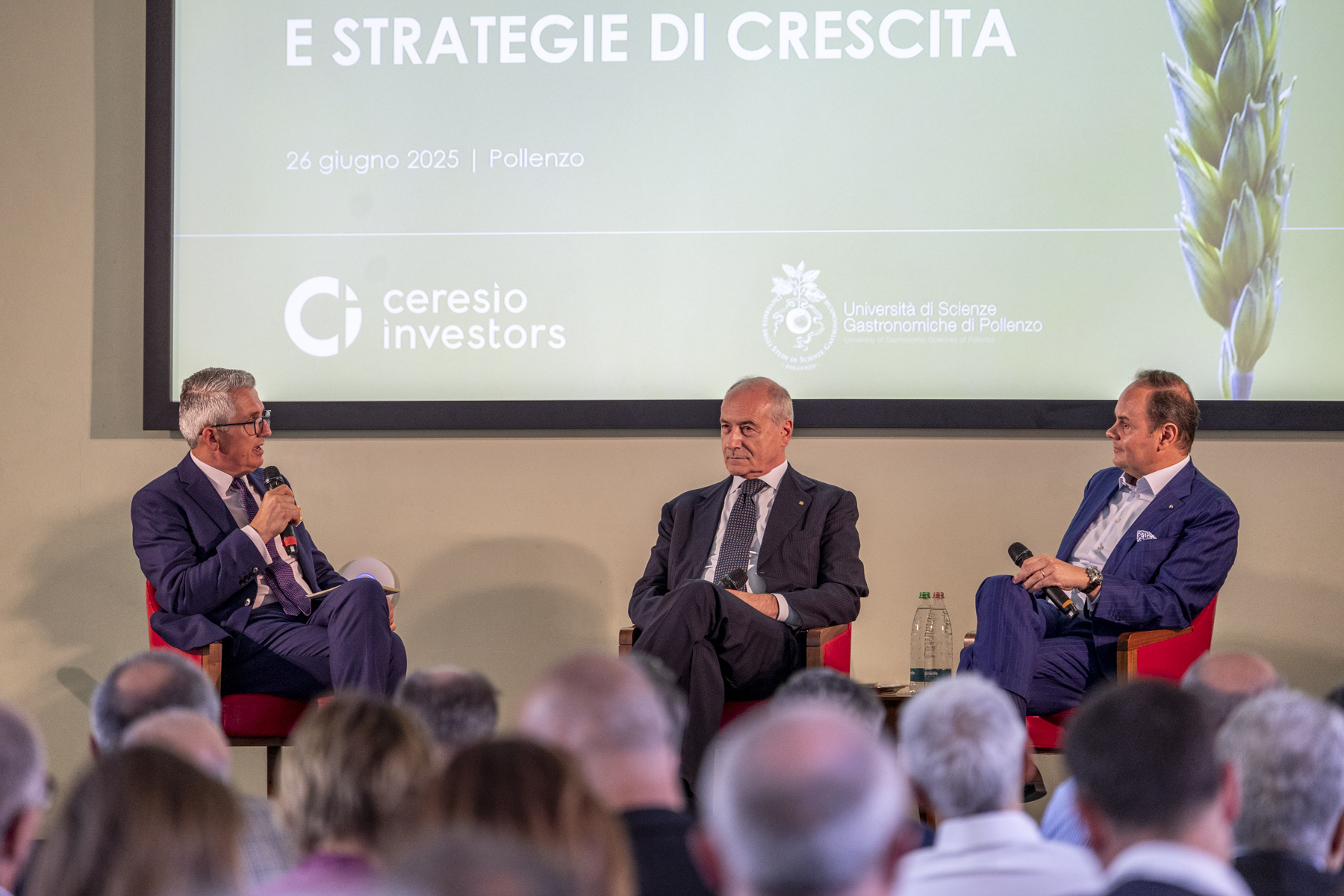
Prof. Michele Fino moderated a debate on the value of "Made in Italy" with contributions from Matteo Lunelli, President and CEO of Ferrari Trento, and Guido Repetto, President of Elah Dufour.

Silvia Sciorilli Borrelli moderated a second session focused on financial tools for growth and internationalization, featuring Maria Luisa Miccolis, Head of SME Sales at SACE, and Alessandro Santini, Head of Corporate & Investment Banking at Ceresio Investors.
The conference was concluded, as tradition dictates, by Carlo Petrini, founder of Slow Food and President of the University of Gastronomic Sciences.
DOWNLOAD AND READ THE 2025 REPORT
—
The University of Gastronomic Sciences of Pollenzo, founded in 2004 on the initiative of Slow Food, is a legally recognized non-state university in Italy, established to confer academic dignity on gastronomy and promote an interdisciplinary approach to studying food. A dynamic and strongly international institution, UNISG has welcomed over 4,000 students from more than 100 countries in its twenty-year history. The university trains food specialists with professional skills, enabling them to guide food production, distribution, and consumption in a sustainable manner.
https://www.unisg.it/
Ceresio Investors represents the Swiss banking group led by Banca del Ceresio, which specializes in asset management, securities custody, corporate and investment banking, and fiscal and asset consolidation. Founded in 1919 in Milan by Antonio Foglia, the group has a long history. The third generation of the Foglia family is now active in Lugano through Banca del Ceresio and Lagom Family Advisors; in Milan through Ceresio SIM, Global Selection SGR, and Eurofinleading Fiduciaria; and in London through Belgrave Capital Management. Its capital solidity (simplified leverage ratio 42.7%), reputation in asset management (CHF 9 billion in assets under management), and co-investment philosophy between ownership and clients are its defining features.
https://www.ceresioinvestors.com