Katherine Harris, alumna UNISG and Marketing Coordinator, helping grocery stores reduce food waste
Where does your passion for gastronomy come from and what brought you to enroll at UNISG for the Master in Food Culture, communication and marketing?
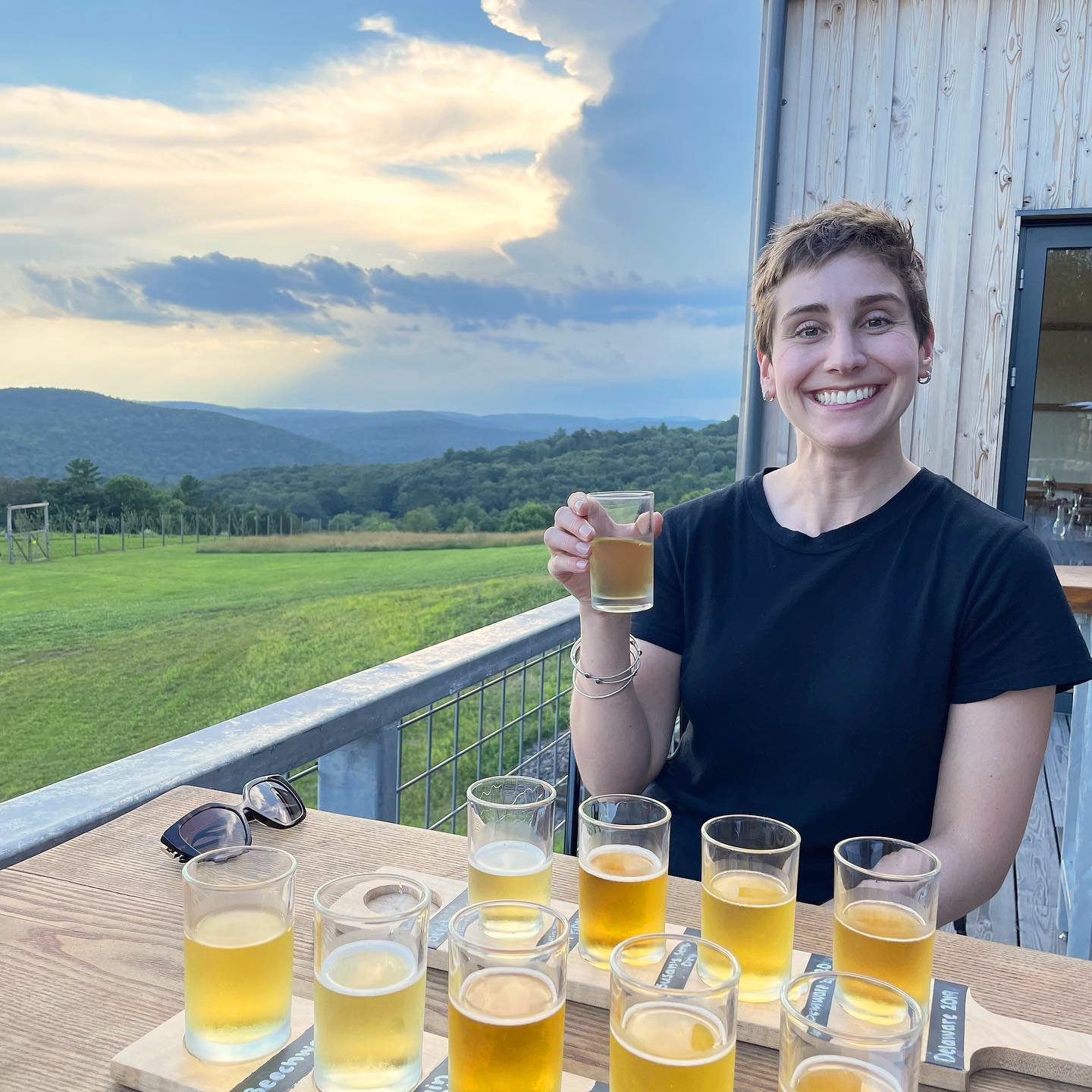
I grew up in Northern California in a family where we ate simple, nourishing food, and there were 2 farmers' markets within a 10-minute drive of my house. Still, I didn’t realize how important food was to me until I went across the country to attend a liberal arts college in rural Vermont. The campus was surrounded by dairy farms, orchards, and farmland – which meant so much great cheese, cider, and produce to enjoy.
I spent my junior year studying abroad in Argentina and during that time, I started a blog. Ever since I was young, I’ve always loved to write, but I came to see the act of synthesizing lived experiences through written words as an even more meaningful form of internal reflection and outward communication.
When I came back to the States for my final year of college, I knew that I wanted to apply my communication skills to a mission-driven career. I always talked about, thought about, wrote about, and posted about food more than anyone I knew, so I decided to look for a job in the sustainable food space.
I didn’t know anyone who worked in food and because I didn’t have any professional experience yet, so I found an internship on Good Food Jobs to work for the summer at the Good Food Foundation. (GFF was founded by Sarah Weiner, who used to work for the Slow Food Communications office.) After that was over, I decided to go to UNISG to explore gastronomy from an interdisciplinary angle, knowing that I would be approaching it from a lens of writing, but with the curiosity to soak as much of it up as I could. Given I was just starting out, I wanted to see all the possibilities ahead of me.
I had such a great time a few years earlier living in Argentina and traveling around South America, so I knew that I would love to be back in an environment where I was meeting people from all over the world. I didn’t quite know what to expect, but the most valuable parts of my time at Pollenzo were the rich experiences I had eating, drinking, laughing, traveling, and learning with such a unique group of people.
Plus, my maternal grandmother’s side of the family is from Calabria, so I feel like there was also a part of me that was just destined to live in Italy!
Can you sum up your path after Pollenzo and what values did you carry with you that enriched you during your time as a student?
After Pollenzo, I moved to a small town about an hour and a half away from Napa Valley. I worked at a place that was a gastronome’s dreamland – it had a small grocery store, a coffee bar, a charcuterie and cheese department, classes on how to make kombucha, and a restaurant. Curiosity is a really important value to me that served me well at UNISG when we were taking so many different classes. It also came into play later on when I was working and learning about natural beekeeping, how to make a commercial line of jams, and run a photo shoot, all on the same day.
Another value I had at Pollenzo that came up when interviewing for my last role is owning being a generalist. I think society really values specialists, and you see a lot of that reflected in job descriptions. On the other hand, I love learning, ask a lot of questions, and know a little bit about a lot of things. The food system is so broad, which often seems overwhelming to people who are just trying to get started. To me, it’s a huge opportunity if you’re open to seeing where it takes you.
From there, I worked again with the GFF, helping cultivate community among the best independent grocery stores in the country. Food producers are so important, but if there aren’t grocers who are willing to take a chance on a new granola that someone has made, we’ll always be eating the same things.
Then last fall, I made the leap into food tech, which was a bit scary but also aligns with my love of learning. I now work for a company called Afresh that makes software to help grocery stores reduce food waste. The iPad app is powered by artificial intelligence and tells produce managers, “You should order 5 cases of bananas, instead of 6.” Over the course of a year, that extra case of bananas really adds up. By the end of this year, we will have helped grocery stores reduce 34 million pounds of food waste.
I was interviewing for a new job for a long time before I found Afresh because I really did not want to compromise in my job search. It’s super important to me that I am applying my skillset at a company that is doing good for the world. I kept having people tell me, “Maybe you need to drop the sustainability part of your career for now and come back to it, or just work in marketing, but not for a food company.” I’m proof that persistence pays off!
Working in marketing and communication, what are the challenges that you face the most and what would you suggest to someone that wants to start such a working career?
One of the challenges in marketing is that things are always changing. Whoever tells you they have the Instagram algorithm figured out likely doesn’t. On the other hand, that means there’s always a lot of room for trying new things out and seeing how they go. If you’re someone who likes to take risks and has the self-awareness to learn from them, marketing is a great space to be in.
I wouldn’t say this is so much of a challenge, but a key learning is that design is a huge component of marketing. I’ve always been a strong writer, but over my career, I’ve learned to work closely with designers to help bring those words to life visually. If you’re writing a blog post, what is the image going to be? It’s not enough to just focus on the words. I’m grateful to have worked with some very talented graphic designers so far in my career.
Lastly, marketing is a broad field. There’s content marketing, brand marketing, field marketing, product marketing, and so much more. I spent months doing informational interviews after asking strangers on LinkedIn for 20 minutes of their time. About 80% of people said yes and I went in with pre-prepared questions to ask them. Over time, I found out that content marketing would be the area that I wanted to go into, but it took a lot of research to get here.