Alumna Christina Gutiérrez-Williams on How Culture, Policy, and Sustainability Intersect at the Dinner Table
For Christina Gutiérrez-Williams, food has always been more than just sustenance — it’s a passion, a responsibility and a powerful tool for change. From her childhood love of cooking to her academic focus on food and agricultural policy, her journey has been guided by a deep curiosity about where our food comes from and how it shapes our health and environment. That curiosity led her to the University of Gastronomic Sciences (UNISG) in Italy where she enrolled in the Masters in Food Communication & Marketing program, immersing herself in a global community of food thinkers and learning firsthand how culture, policy and sustainability intersect at the dinner table.
Now, as the Senior Director of Culinary Research and Development at Daily Harvest, Gutiérrez-Williams carries forward the ethos of Slow Food — prioritizing taste, sustainability and responsible farming practices in the products she helps create. In this conversation, she reflects on how her time at UNISG influenced her career, the importance of consumer choice in shaping the food system, and why there’s no single path to making an impact in the world of food. Her story is a testament to the idea that gastronomy isn’t just about eating well — it’s about making choices that nourish people, communities and the planet.
Q: UNISG is located in Pollenzo, Piedmont, which is in one of Italy’s most iconic food and wine regions, and it brings together students from all around the world. How did this environment enrich your educational and personal journey?
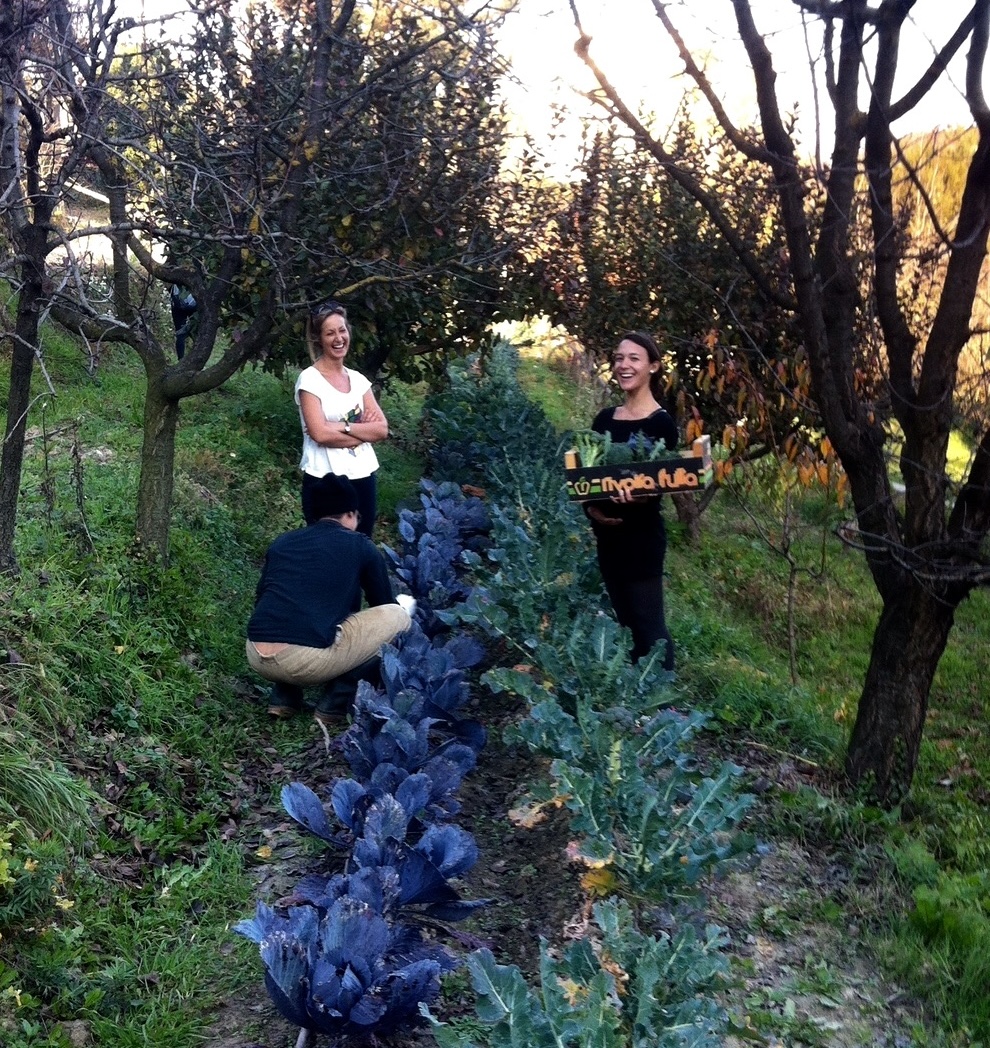
A: It is impossible to not fall in love, or even more in love, with food when you’re in a place like Italy and a place like Piedmont that is so focused on the tenets of Slow Food. There is a strong culture of understanding where your food comes from and supporting local agricultural systems. You stop and enjoy your meals and take your time with food preparation, cooking and enjoying food with others. It was an amazing backdrop for the kind of academic studies and other academic pursuits they offered to us. Most of us actually commuted to school via bike, and we would bike through farms on our way to school, which was incredibly idyllic.
In my specific program, there were about 30 of us, with only six of us being from the U.S. and the rest from a dozen different countries. It made it really special to go to school with people from all over the world and also all different ages. Some of us were freshly out of undergrad, others had many years of experience working and others had entire careers and were either deciding to take a sabbatical or pivot, which I think also really enriched our experience.
Q:What does it mean to you to be a gastronome today, especially as someone who’s studied at UNISG? How do you carry that identity in your home country and in your work today?
A: Carlo Petrini’s idea to form the university so that it could develop the future food leaders of the world, the future gastronomes of the world, is something I take very seriously. I think he’s been such a revolutionary in the world of food that it’s our mission as graduates of the university to carry that legacy forward. Since graduating, I have very intentionally sought out jobs that address issues within our food system in a way that I believe are positively impacting both public health outcomes and the environment at a large scale.
And so, it’s been really fulfilling to be able to do things in my career that I believe are advancing the kind of Slow Food ideals and values around, in my case, the U.S. And I know that my fellow classmates are doing it in their various countries of origin as well.
It’s a huge responsibility and also a privilege to get to work in food. I feel proud that in my current role I get to develop food that I know is not only delicious, which is a core tenet of Italian culture and the Slow Food movement, but also food that supports regenerative, low-input farming practices, responsible land stewardship, and better health outcomes for both people and animals.
Q: Your passion for food clearly plays a big role in your life. Could you tell us how that passion has evolved and how UNISG has helped turn it into a career or calling?
A: I’ve always been obsessed with food, and it started pretty young. I was that weird kid who checked out cookbooks from the library instead of storybooks and watched Jamie Oliver on the cooking channel instead of cartoons. By twelve, I was making dinner for my family every night. In high school, I started our first community garden because I was fascinated by the idea of growing your own food — especially since so many people in my generation didn’t really know where their food came from.
My youngest brother was diagnosed with cancer at the time, and although we didn’t know the cause, it really shifted my perspective. I always thought about the pleasure of eating and cooking and agriculture and growing food but really hadn’t thought about the negative impact food could have on your health, no matter how old you are. Around that time, books like The Omnivore’s Dilemma by Michael Pollan and Animal, Vegetable, Miracle by Barbara Kingsolver were coming out, and it felt like this whole movement around food and sustainability was really picking up.
That all led me to studying food and agricultural policy at Notre Dame, where I started digging into how big-picture decisions — like government subsidies — shape what ends up on our plates.
Eventually, I found my way to the University of Gastronomic Sciences, which was the perfect place to take all these big ideas and turn them into something real. Through internships, writing my thesis and meeting people from all over the world who were dealing with their own food challenges, I was able to focus my passion into a clear path. I honed in on ways I can use good, sustainable food to improve public health and the food system as a whole after I graduated.
Q: What’s something you gained at UNISG that maybe still impacts your life every day, whether it’s professional or personal? Is there anything that stands out?
A: There are three main things that stand out to me.
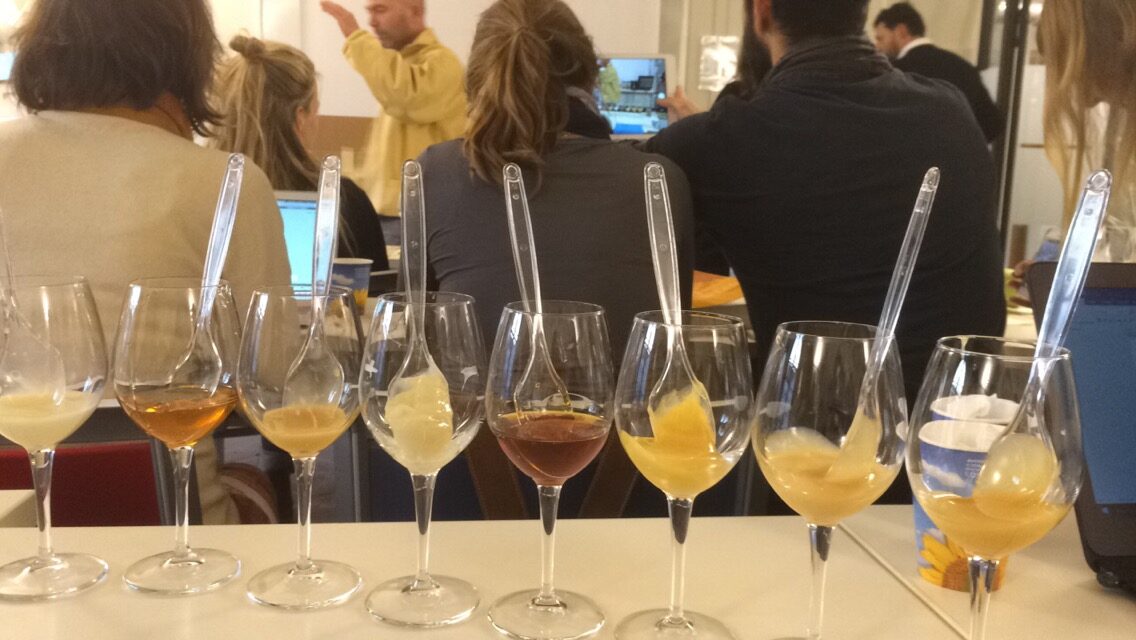
One, my sensory courses. There were a lot of courses in blind tasting and evaluating high quality ingredients like olive oils or honey. For olive oil, they might all look exactly the same, but you taste them blindfolded so that you can identify different flavor notes. Maybe one’s more grassy or one’s more peppery. In the case of honey, they may all look different and have different aromas and consistencies, and it’s helpful to be able to tie those sensory differences to differences in where the honey came from, or the flowers and plants that bees collected nectar from. Those are skills that I apply in my job today. As I lead a team of recipe developers and work on new product innovation, I’m thinking about the foods that I know people should be eating more of, but also thinking about how to make those foods as delicious and appealing as possible. How you taste food is subjective, and yet there are commonalities that can be found and there are ways that you can make things more appealing to more people. It’s a really fun challenge to marry a lot of different considerations to meet people’s needs.
I think second is lifelong friendships and connections with people who I met there and continue to stay in touch with and visit when I’m traveling around the world. Two of my bridesmaids were classmates. It’s such an amazing network. Applying for jobs, multiple companies I interviewed with highlighted that my degree from the University of Gastronomic Sciences was a plus to them. Whether it was because they had heard about the program or they knew someone who had graduated from it, or they were familiar with Slow Food or they were familiar with Carlo Petrini, it helped me stand out.
And then I think the third is my thesis I did on the food co-op model throughout the world. One of the key examples of a very successful long-lasting food co-op is located in the neighborhood I live in today, called Park Slope, in Brooklyn. I had studied this food co-op and written about it well before I moved to Brooklyn, and so it feels pretty special and full circle now, 10 years later, to live in this neighborhood that I wrote about. I love being an active member at this co-op and shop there every week.
Q: The world is full of challenges but also opportunities for change. From your perspective, what makes this moment of time exciting, and what advice would you give to someone who wants to follow a similar path?
A: There’s a lot of work to still do to improve our food system, and the world has a lot of challenges right now, so I would encourage people who feel a calling to address those challenges to not lose hope and not feel discouraged.
There has been a ton of progress even in the last 10 years since I was at the university. I think consumers are seeking out better food. More consumers are understanding the impact of one’s food choices on their health and on the health of the environment. I am personally hopeful that more than ever, people understand the power that they have in the foods and systems of agriculture they choose to support and the way that they vote with their fork.
There’s not one right way to go about a career in food, but for those who feel our food system isn’t best serving us, I encourage them to pursue ways they can make it better.