12 February 2025
I ate a tortoise caught by a 76-year-old man in the Amazon forest. I tried a spoonful of milk collected from the trunk of a tree he had planted 30 years earlier. I savored one of the best fish I ever had, baked on banana leaves he skillfully cut and tied with his hands. I enjoyed an açaí bowl from berries he washed and processed, with cassava flour he grated, pressed and toasted.
He would sit on the hammock in his backyard kitchen and tell us, “Whoever says they hunt tortoises is lying; you don't hunt a tortoise; you see them, you go up to them, and they are there, waiting for you," and laughed. "But if you want to hunt armadillo, you have to sweep off the dried leaves of the path you're walking with a branch because they can hear your footsteps, and if they hear you, they run.”
Mr. Antonio is the son of an indigenous woman of Juruna ethnicity and a white man from northeast Brazil. At that time, it was common for indigenous women in the Amazon to marry - not always willingly - men who went there to extract latex from trees. Many of those men were exploited by their employers and became dependent on the forest for sustenance and their livelihood. Today, some of them belong to traditional communities living in Reservas Extrativistas - protected areas that allow for the sustainable harvesting of natural resources by people whose livelihoods have relied on them for generations. For Mr. Antonio, having an indigenous mother and a father whose livelihood depended on latex extraction meant having a life based on the forest. This is the backstory of many Brazilians from the Northern region, including Marina Silva, the Minister of The Environment and Climate Change in Brazil.
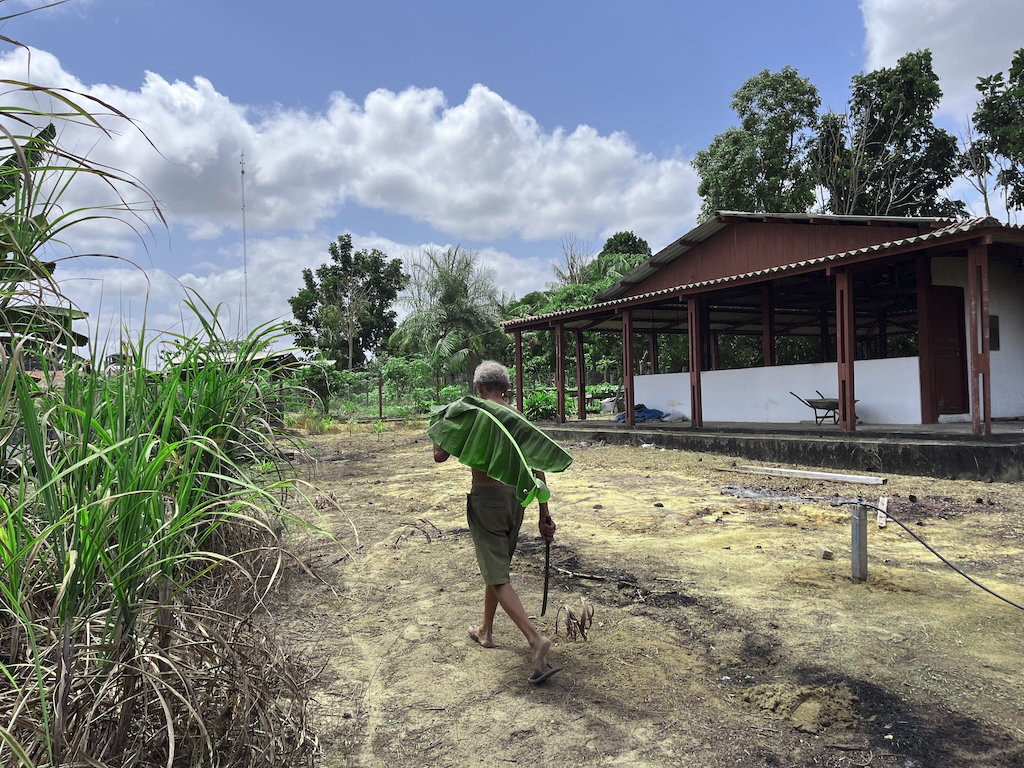
Today, Mr. Antonio and his family reside in the Aldeia Indígena Boa Vista, an Indigenous Reserve - territories recognized by the Brazilian Constitution as areas of traditional occupation (attention: it's not the same as reservas extrativistas!). In these reserves, Indigenous peoples have the right to permanent and exclusive use of the resources found within, including the soil, rivers, and lakes, which allows them to preserve some of their foodways. The indigenous people of the Boa Vista village, part of the Juruna communities of the lower Xingu, are among the few remaining in the region from an ethnic group that migrated to the high Xingu when violence there threatened their lives. This means they were subjected to that violence, and their stories reflect the history of the Amazonian Rainforest itself. While the forest was invaded by loggers, miners, land grabbers, and agribusiness, the Juruna culture was also invaded by westernization. Their language, body painting, rituals, and much of their culture were lost. Today, many of them travel 40 km to meet the Jurunas who had migrated and were able to retain more aspects of the culture, with an intent to recuperate some of it.
However, much of the food culture has persisted, providing a means for continuing traditions and connecting with ancestral heritage. To the extent of a Slow Food Convivia being created in the region. Murilo, the spokesperson for Slow Food Xingu, is Mr. Antonio’s grandson and an agronomy student who fights to preserve his community's ancestral food and production systems. His appreciation for indigenous culture and cuisine was passed down to him by his grandfather: “Slow Food for me is what my grandpa taught me; it’s what we live every day”.
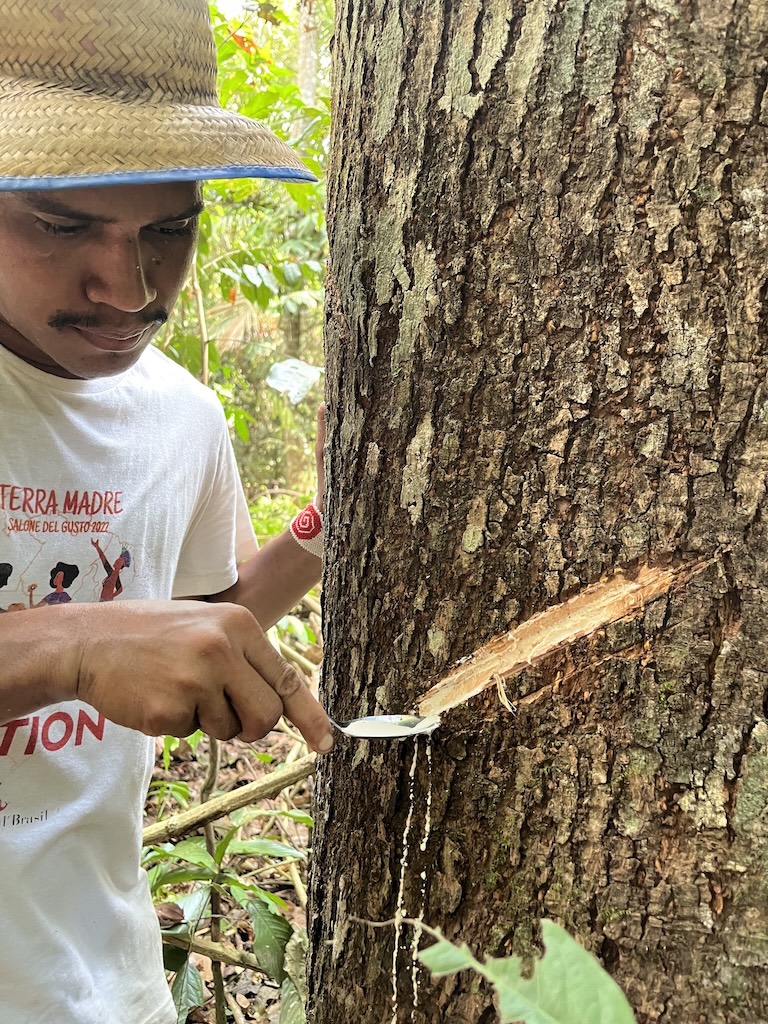
Murilo and I met online through the Slow Food network when I first went to Amazon and wanted to get in contact with Slow Food Convivium in the region. I told him I was a student at the University of Pollenzo and the representative of SFYN Bra-Pollenzo, and he told me he was the leader of Slow Food Xingu, a community that valued cassava most of all. We wanted to meet, but we were eight hours away from each other on a very dangerous road. However, his invitation to have baked fish in his community stayed on my mind, and a couple of months later, I found myself planning my trip there. In the period of six months, we collaborated to raise money to bring another representative of his convivia to the Terra Madre event, to create a space for both of them to speak at the UNISG stand, and to distribute a zine with interviews I made with them during the time I was able to meet them in the Amazon (a week prior to Terra Madre). The story you read here is me sharing the experience of being hosted by kind, generous people who have so much to teach us.
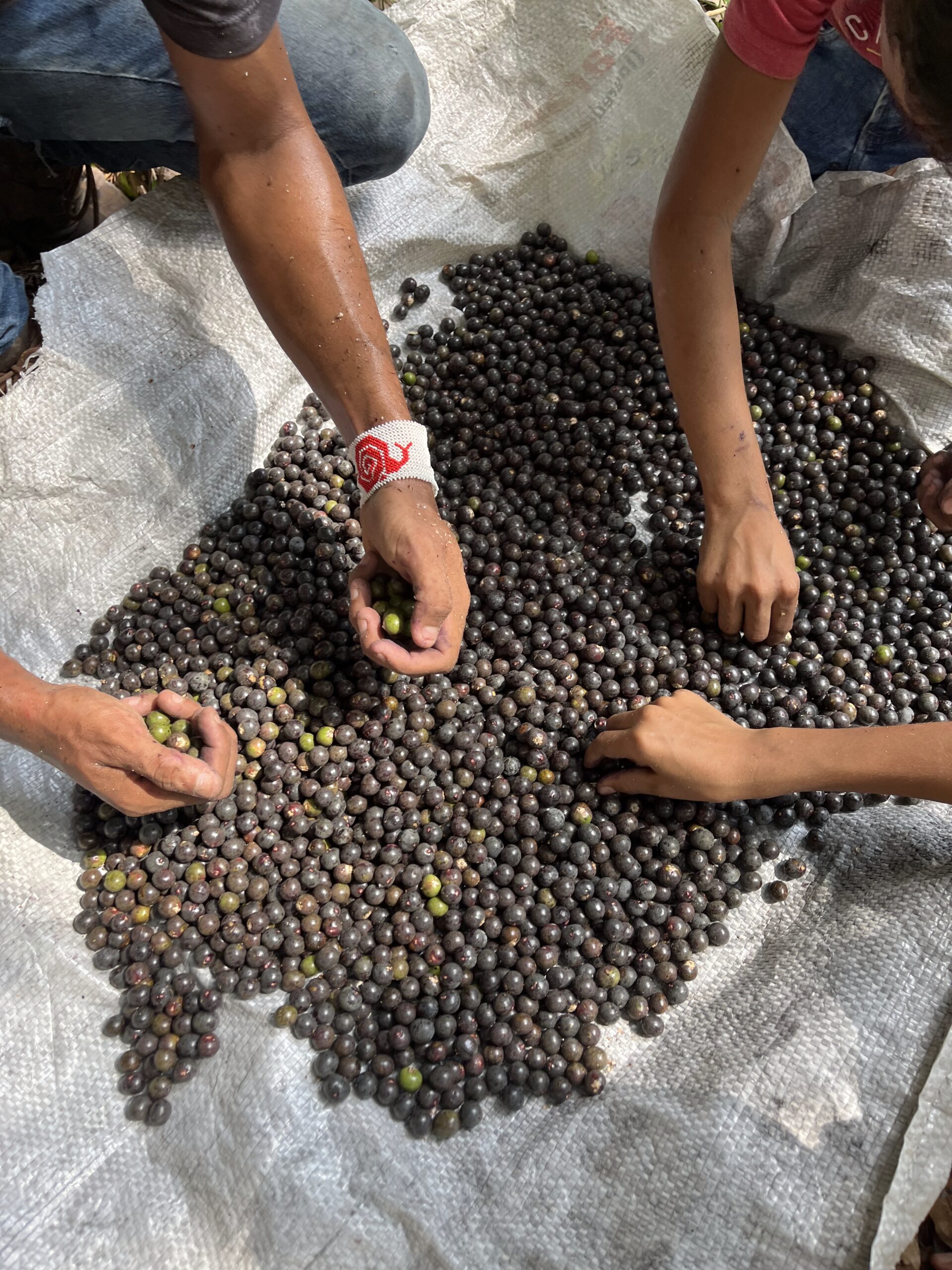
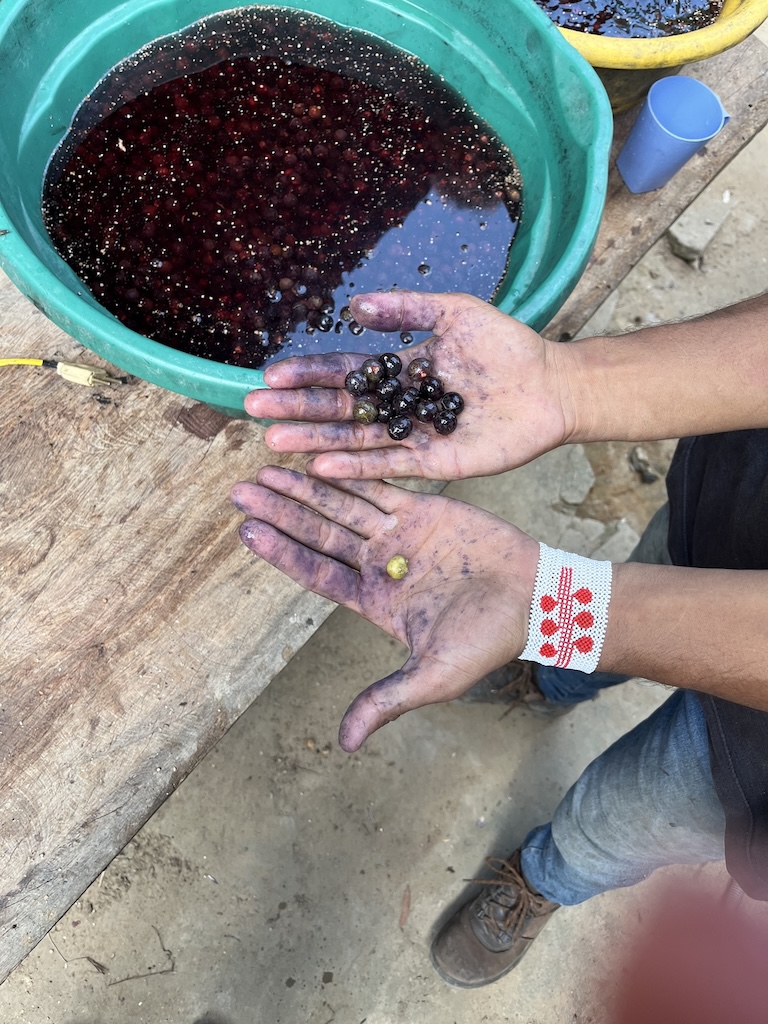
On my first day at Boa Vista, Mr. Antonio's sons and grandsons, including Murilo, took me to harvest açaí. Just a quick walk away from the houses, we found ourselves in the forest. While we walked, the children asked me if I knew this or that tree and brought me fruits I had never seen. Murilo told me which trees had been planted by his grandfather 20 or 30 years before. There were also younger açaí and Golosa trees Mr. Antonio might never see bear fruit. It struck me how the forest, often called "virgin" by outsiders, actually has a deep relationship with indigenous inhabitants. One that's not primarily extractive nor keeps the forest locked in a glass dome. The forest provides them with fruit and animals, while they give back by planting trees, caring for the land, and protecting the territory. Their lives are deeply intertwined with the forest; preserved doesn't mean untouched. During the açaí and Brazil nut season, many put food on their tables by climbing palm trees and collecting fallen nuts. Danilo and Murilo, Mr. Antonio's son and grandson, were more accustomed to climbing the palms, while the children tried to go up shorter ones but couldn’t make it to the top. Even in the Amazonian summer, they all wore jeans and boots since the palm trees get so hot they can burn. Before climbing, a band made of fiber bags is strapped around their feet to stabilize their bodies. After cutting the açaí bunch from the top of the palm, they swiftly slid down, holding the bunch in one hand. It is then laid on bags and placed down by the children, and everyone works together to debulk the bunches. Next, it's time to sort the berries: the green ones must be taken out so the açaí liquid can maintain its characteristic purple color, not a “duck’s blood” color, as they say.
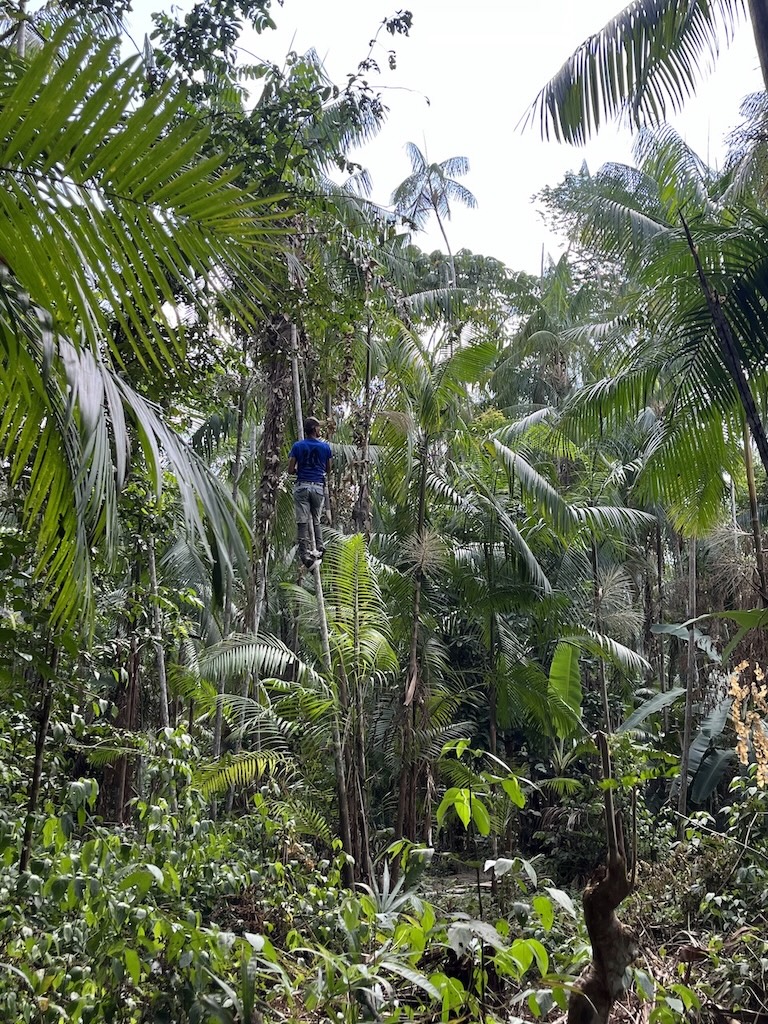
After repeating the process several times, there’s finally enough açaí for the next step. The children open palm hearts by removing the outer layer of some fallen açaí trunks, revealing the tender interior. We go up to Mr. Antonio while still chewing some palm hearts. Upon delivering the picked berries to him, we watch as he washes and places them in a rotating drum that crushes the açaí berries while expelling its seeds. He then throws the seeds onto a growing pile on the floor, making me realize he has done this routine many times during the season. Mr. Antonio tells us that before getting the machine, everything was done by hand in a mortar that now serves as legs for his support table. He reminisces on how technology has improved life; everything was harder back then. It’s interesting to notice how despite these advancements, he hasn’t lost his ancestral practices—the process remains the same, only faster and less tiring. Once the açaí liquid is ready, it's commonly consumed with cassava flour and sometimes accompanied by dried shrimp and sugar. But Mr. Antônio had another recipe up his sleeve: a slow-cooked açaí dessert his mother taught him. In a pan over the wood fire, he puts the açaí juice and a little bit of sugar, letting it cook for hours, stirring from time to time. The next day, we tried this jam inside a tapioca pancake; hours and hours of work transformed it into something so flavorful.
Unpretentiously delicious things would come out of Mr. Antonio's backyard kitchen. The day I tried tortoise, Murilo casually called me over, saying, “Gabi, come try this.” Holding the pressure cooker, he showed me what was inside. At first, I didn’t understand what this stew was. It consisted of pieces of meat with brown and orange skin. Until I saw little nails coming out of a tiny paw. I put two pieces on a plate with a little bit of cassava flour and tried it. The meat was tasty and tender, and it fell off the tiny bones. It reminded me of fatty fish, only a little gelatinous.
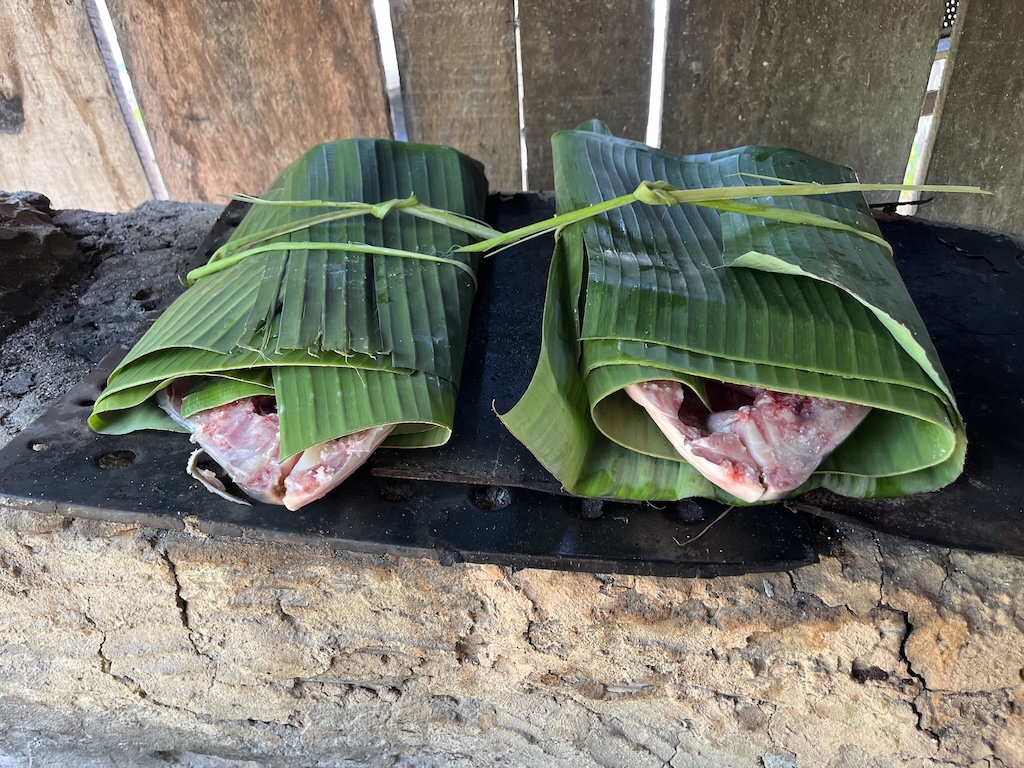
The next day, Mr. Antônio made us fish. A Tambaqui cut in half, with skin and bones, was washed and put on the table. Leading us into his backyard, he showed us his banana trees, cut some leaves with a machete and took them back to his kitchen on his shoulders. After separating the wings of the leaves from the stem, he used them to wrap the fish. Next, he took a thin string out of the stem and tied it at the end. Carrying the wrapped fish, he made his way to the wood fire, which now had two metal plaques on top, hot and ready for cooking. While the fish was baking inside the leaves, Murilo took us to the village fields where cassava (known as mandioca brava), beans and peanuts were being planted. Trees overflowing with cashew fruits surrounded us, some guarded by dogs tied to their trunks to keep away unwanted visitors. Filled with excitement, the children climbed up one of the trees without any dogs and picked some cashew fruits for us. After eating the pulp of the cashew, we saved the pods to burn so we could get cashew nuts. Murilo then told me the area would flood during winter, which was ideal for planting rice. Now it doesn’t and it’s hard to find criollo rice seeds. When we returned to Mr. Antonio’s house, he was asleep, but the fish was ready. The meat was golden, soft and juicy. We ate it with salad, vinaigrette, and cassava flour (a staple in every meal).
In every Amazonian house I’ve been to, there was always a bucket full of cassava flour at the table during lunch and dinner. The flour’s omnipresence could suggest its easy availability, but the reality is far from it. Days of labor and collaboration are required to produce it. Huge amounts of cassava, after being harvested, are peeled and grated, then put into a cloth and squeezed. The extracted liquid settles, creating two products: tapioca flour on the bottom and Tucupi, a yellow liquid, on top. Simply drying the tapioca transforms it into the familiar form we know. On the other hand, the Tucupi made from mandioca brava is poisonous and must ferment for two days to acquire an acidic flavor before being boiled to ensure it is safe for consumption. It’s often used as a preserved pepper sauce and in duck and fish stews. The unboiled tucupi had been the cause for the persecution of indigenous people when farmer's cattle or even dogs would die after consuming it.
While the liquid of the squeezed cassava gives rise to Tapioca and Tucupi, the solid part is the one used to produce cassava flour. The cassava mass must be pressed to remove more liquid. The pressing is followed by sifting, and the big fibrous pieces of cassava become pork feed. The finer ones are toasted in a large metal plaque on top of a wood fire until golden. The result is a yellow flour with small round grains, irregular and firm. To make all of this possible, every village has a casa de farinha, a place with all the machinery needed for the process. Nowadays, they are more modern than they originally were. Mr. Antonio tells us about how they used to grate the cassava by hand and how it sometimes meant their hands as well, or how they used to burn their legs in the big clay furnaces used to toast the flour. He enjoys the changes to the machinery; the only new thing he couldn’t get used to was the press, so he still uses his old one.
Cassava is deeply important to indigenous peoples' food security and sovereignty in Brazil. For starters, they domesticated the root before colonization. Indigenous knowledge and technology made it possible for it to be consumed and preserved in the many ways I just described and will still mention.
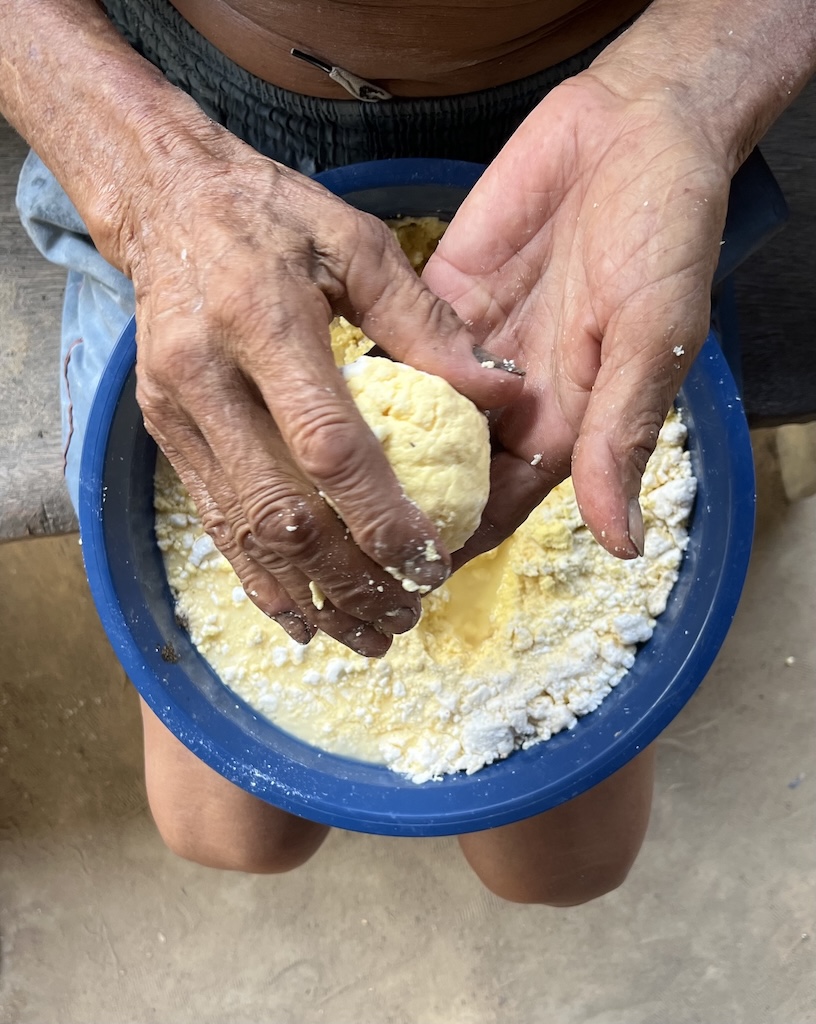
During the time I spent at the Boa Vista indigenous village, Mr. Antonio would talk a lot about what he learned from his mother. Following her around allowed him to learn every recipe she made. One time, he showed us a bucket full of massa puba, which is an alternative cassava preparation. After peeling, grating, and letting it ferment underwater for two days, it becomes a mildly acidic yellow dough, used in various preparations like cakes and porridges. Mr. Antonio took a little bit of it in his hands and made it into a ball. Making gestures with his hands, he told us how his mother would throw it in the flames of the wood fire, to later take it out after it had carbonized on the outside. “When it’s burnt, it might look like it won’t taste so good, but when you open it, it’s perfectly cooked; it’s delicious,” he said, his eyes smiling with the memory of his mother.
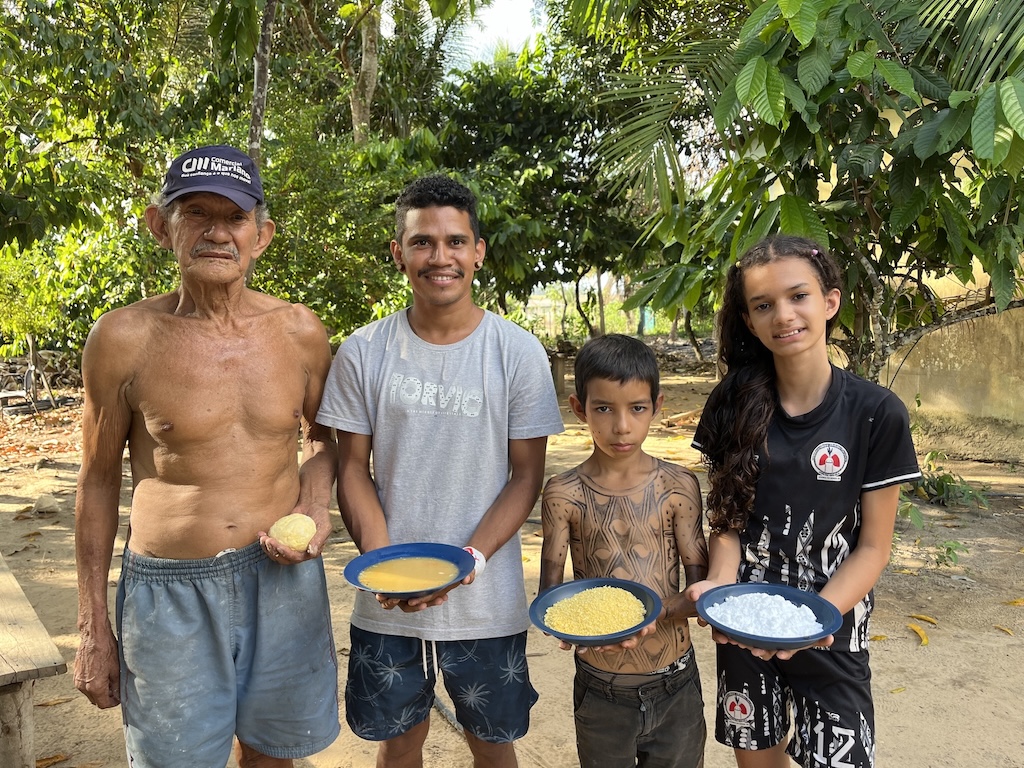
Mr. Antonio continued sharing stories; he told us his mother spoke her language, but it was hard for her to translate it to Portuguese, and how his father never got bothered by her speaking the language and teaching their children about indigenous culture. Though he appreciates his "portuguese" side, he says he's prouder of being indigenous. When he was younger, people would ask him, "Are you Indian?" to which he would reply, "I'm proud to be". Taking açaí and knowing about the forest is part of indigenous culture, he explained. "In the regions of São Paulo or Ceará there is no açaí, no castanha-do-Pará [Brazil nut], no Andiroba [tropical tree native to the Amazon]. Everything is from here, from our region. We are accustomed to it; it's our tradition. We know the time they'll fall from the trees, the time they are ripe. And then we make the best of it to feed ourselves. This is our culture. The whole world doesn't have that".
In the middle of his tales, Mr. Antonio told us about the time he was getting a bus back home from the city (to which most of the community referred as “the road”). As he stood up to leave at the stop near his village, an older woman asked him if he was going to the Boa Vista Village. He replied that he was. She then said, “I heard there are angry Indians there, are you not afraid?, he recounted laughing.
Boa Vista village is home to almost 50 families, occupying a piece of land cut by a road and surrounded by agribusinesses trying to take a bit of their preserved land every year. A place where some passerbyers find it hard to imagine generous and kind people living, and sharing indigenous knowledge kept in the forms of stories, commensality, and foodways.
I found it darkly amusing how the woman on the bus held such misconceived views about indigenous peoples—the kind of amusement that comes from witnessing an aggressor's ignorance. Yet now, away from Mr. Antonio's peaceful life, his loving family, and his deep appreciation for their foodways, I recall my own fears before visiting the Amazon. I departed São Paulo fully aware I was heading to one of Brazil's most dangerous cities, notorious for having the highest rate of murdered environmental activists in an already violent country. Though I never feared the indigenous people themselves, I remain deeply concerned for their safety. Upon my departure, Murilo thanked me for having the courage to visit them. But I could never adequately thank them for their intimate hospitality nor fully express what their welcome meant to me. All I can do now is share their stories and convey their kindness as faithfully as possible.