19 November 2026
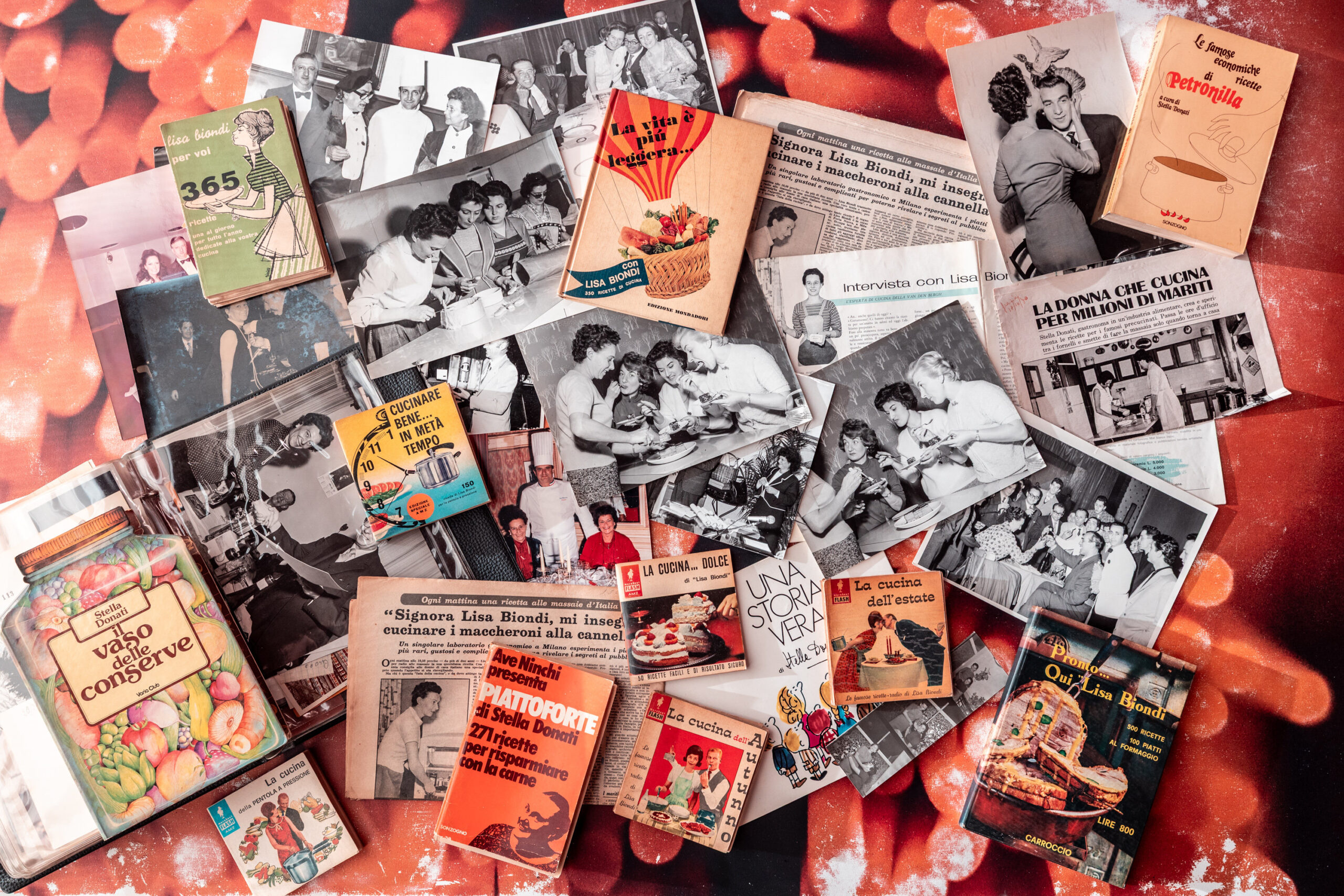
The Pollenzo Library recently received an important donation from the heirs of Lisa Biondi, an almost legendary figure in Italian popular food culture between the 1960s and 1980s.
The collection brought to Pollenzo includes 317 books and an extensive archive of historical photographs.
Behind that name was Rosanna Pellini, whose real name remained unknown to most people. For decades, her public identity was built around pseudonyms associated with major food companies: Lisa Biondi and Stella Donati, pen names linked to brands such as Van den Bergh and Star.
Anyone who grew up in Italy during the economic boom and the decades that followed encountered her without even knowing it: on the radio, in women's magazines, and in complimentary recipe booklets associated with established brands such as Gradina, Knorr, Bertolli, Calvé, Findus, Braun, Lagostina, Milkana, Riso Gallo and Star, as well as various wines. A reassuring, all-knowing voice, an almost familiar guide in the kitchen, never seen in person but present in millions of homes.
These names served as distinctive authorial signatures: fictional yet recognisable identities that lent authority to recipe booklets sponsored by major brands. This is why her story represents a cultural phenomenon even more than a biographical one: a name that helped shape trends, tastes, products and dreams of domestic modernity in the collective imagination.
A Cultural Shift
Her career reflects a profound transformation. During the years of Italy's economic boom, Italian cooking underwent significant changes: new ingredients, new household appliances and new consumer habits emerged, while recipes ceased to be merely knowledge passed down within families and became media content, circulated through radio, magazines and companies.
Figures such as Lisa Biondi accompanied this transition, translating modernity into everyday practices and creating a shared language for millions of people. This is an example of what might be called the archaeology of consumer products and advertising, illustrating how food communication created figures that have endured in the collective memory.
A Resource for Research
The value of this donation also lies in its future use. The books and historical photographs provide scholars and researchers with valuable material for theses, research projects and studies on the history of food, advertising, publishing and consumption, as well as the relationship between commercial communication and popular culture.
By becoming part of the Pollenzo Library, this collection is now available for consultation and can inspire new interpretations of a chapter of Italian history that, in one way or another, we have all had in our kitchens.