08 October 2026
At Pollenzo, Carlo Petrini's legacy becomes a research project: the first volume devoted to his intellectual and cultural legacy is born.
A book, over 20 international contributions, a previously unpublished photographic archive and a new area of research on food as cultural heritage. In this way, the University of Gastronomic Sciences turns the memory of its founder into a tool for questioning the present and future of food.
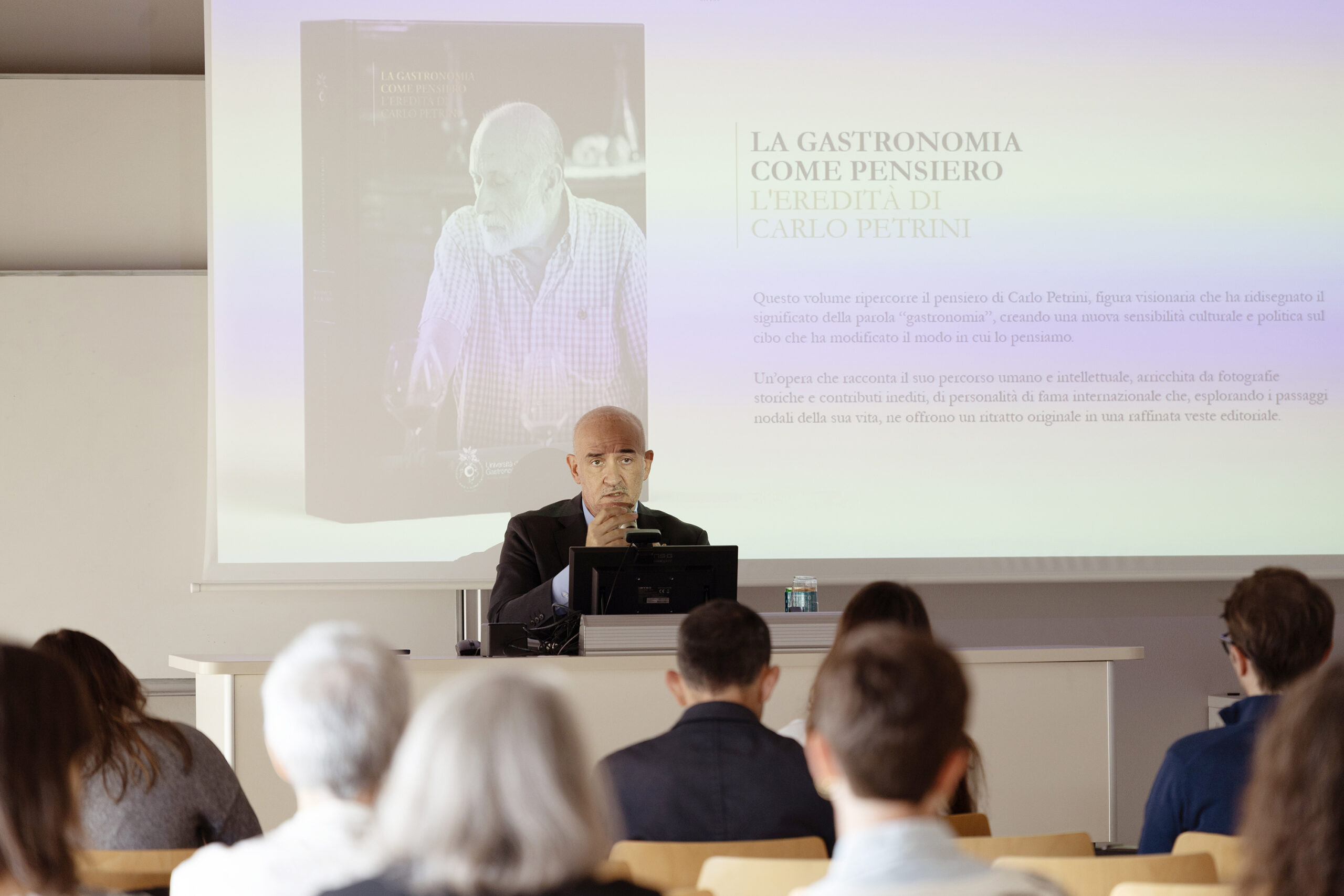
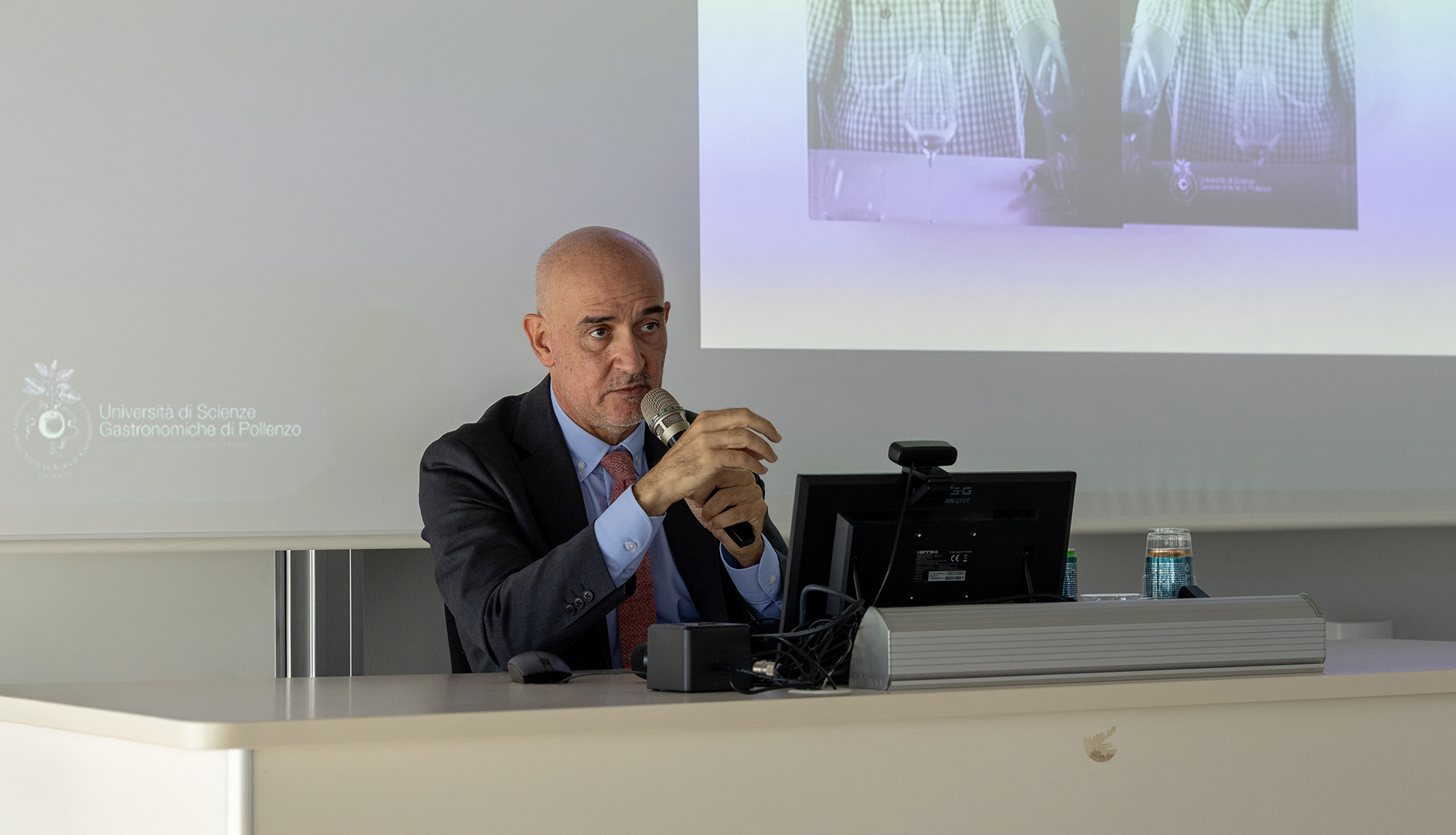
POLLENZO, October 8, 2026 – Carlo Petrini's legacy enters the field of academic research. This is the significance of the project presented today in Pollenzo by the President and Rector of the University of Gastronomic Sciences, Nicola Perullo: "Gastronomy as Thought. The Legacy of Carlo Petrini" an unprecedented editorial work dedicated to reconstructing and interpreting the intellectual and cultural path of the University's founder.
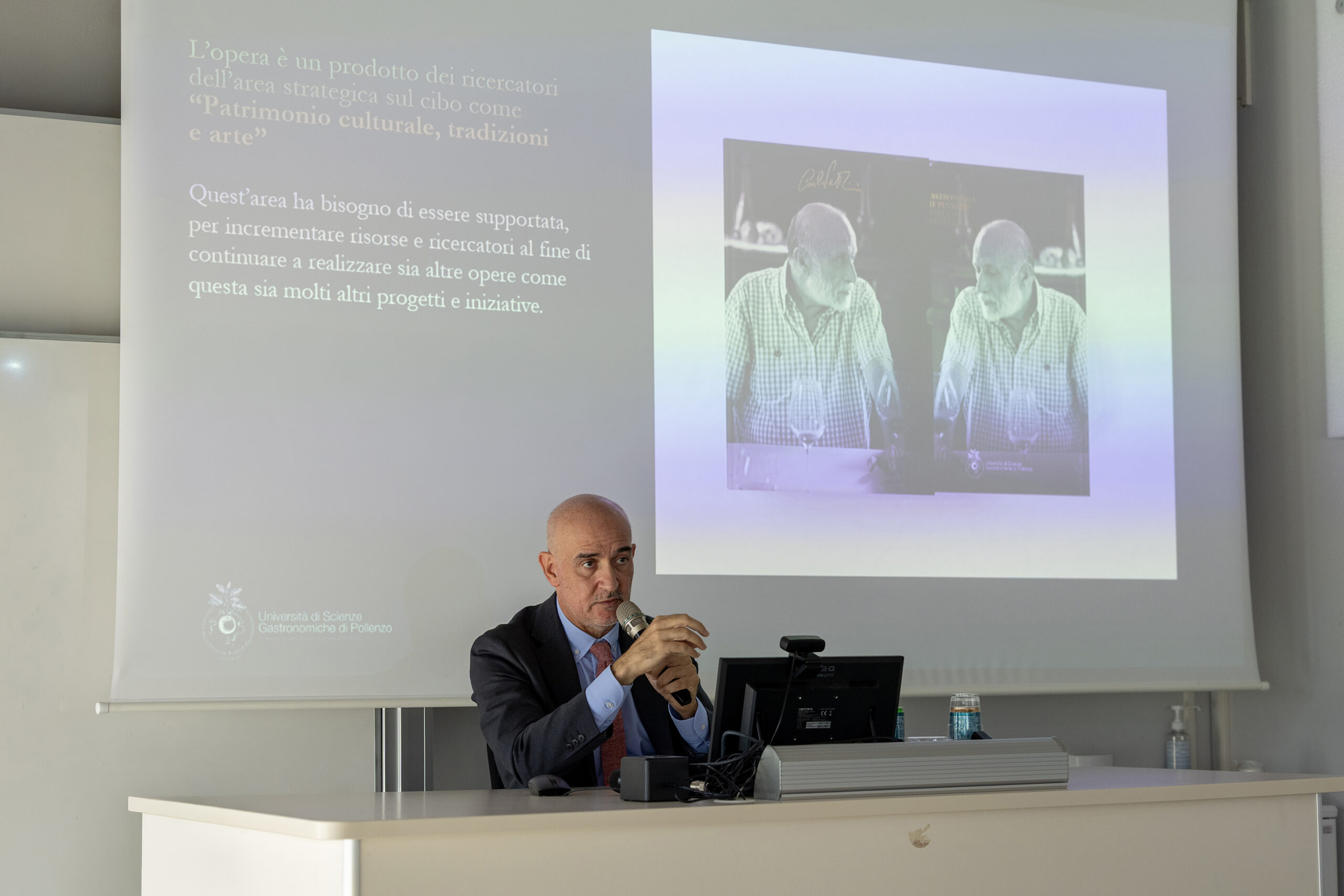
Not merely a commemorative book, then, but a work of research that originates within one of the five new strategic areas identified by UNISG for its development: food as cultural heritage, memory, traditions and savoir-faire. This is a field that coincides with one of the University's original foundations and is now being relaunched as a fully fledged interdisciplinary research area.
"We are building a new Pollenzo, an evolution of what we have been over these 22 years," Nicola Perullo explained. "The fifth area concerns food as cultural heritage, memory, traditions and savoir-faire. This is also the area through which the original idea of this university developed. Thanks to Carlo Petrini and his visions, his intuitions, his projects."
The project took shape in the months following Petrini's passing and chooses to approach his memory not only through remembrance, but through the tools of research. The volume reconstructs almost eighty years of personal and cultural history, connecting biography, territory, gastronomy, politics, biodiversity, social transformations and the birth of the University of Gastronomic Sciences.
Its structure follows ten phases of his life, from his family roots and his relationship with the land to his final years, taking in the birth of Slow Food, the battles to protect traditions and biodiversity, the great international encounters and the founding of Pollenzo. A chronological narrative that also becomes a key to understanding the evolution of contemporary gastronomic thought.
Woven into this reconstruction are over 20 previously unpublished contributions from Italian and international figures who shared experiences, ideas and journeys with Petrini. The authors include Alberto Capatti, Alice Waters, Antonio Spadaro, Fritjof Capra, Gaston Acurio, Gilberto Gil, Isabella Rossellini, Massimo Bottura, Massimo Montanari, Michael Pollan, Satish Kumar, Stefano Boeri and Stefano Zamagni.
Their voices make up a necessarily plural portrait, one capable of conveying the breadth of an experience that spanned gastronomy, culture, the environment, politics, education and reflection on the future of the planet.
"It will be a book rich in new, original contributions, written by many people of international standing who knew him closely," Perullo emphasized. "Alongside these contributions, we are pairing an unpublished collection of historical photographs and iconography, images of Carlo and of his life and story, as well as texts written by us, by our researchers, which serve as a common thread to reconstruct the enormous legacy he left us."
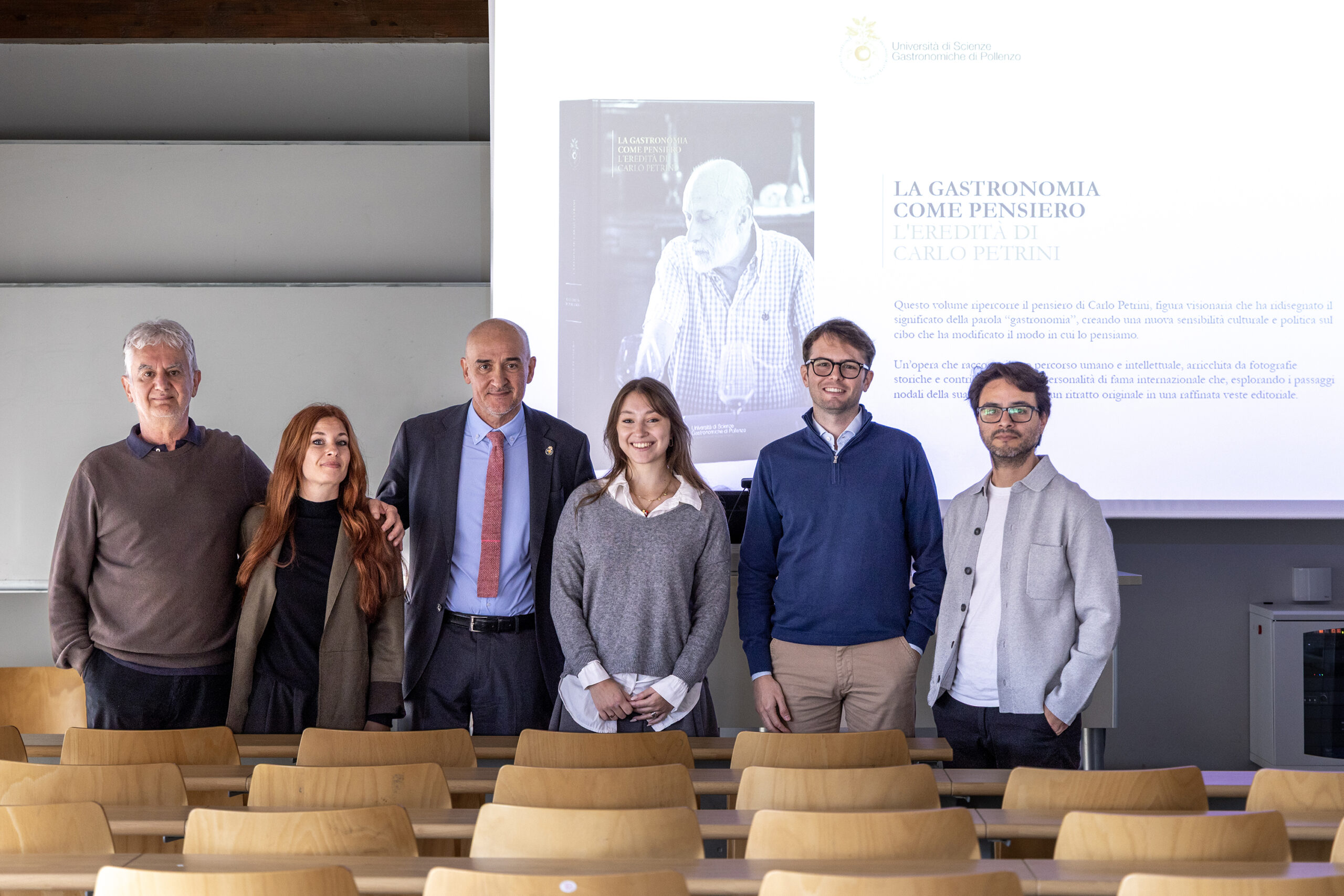
The volume will be enriched by a historical and original photographic archive and by particular editorial and material care. Produced with a hardback cover and high-quality materials, it will not be sold commercially and will be tied to a campaign in support of research.
The initiative includes a fundraising campaign in support of the research area on cultural heritage, intended to fund further activities on gastronomic memory, traditions, intangible heritage, practices and knowledge related to food.
"In this area on cultural heritage, we need to keep working on these themes and on related topics, also thanks to everyone's contribution," Perullo stated.
The value of the work therefore also lies in its ability to go beyond the celebratory dimension. "Gastronomy as Thought" turns a memory into a research program: it gathers the traces of a story, connects them, and uses them to pose new questions about the role of food in contemporary society.
In this sense, it also marks a significant moment for Pollenzo. The intuition that gave rise to the University, recognizing food's full cultural and academic dignity, now finds a new expression in the study of heritage, memory and gastronomic knowledge.
From memory to research, then; from the legacy of a story to the building of new knowledge. This is the perspective with which the University of Gastronomic Sciences opens a new phase of its journey, making the cultural heritage of food one of the instruments through which to read the present and imagine the future.