19 May 2026
by Nicola Perullo, Rector and Full Professor of Aesthetics at the University of Gastronomic Sciences of Pollenzo
On the eighth and ninth of May, the University of Gastronomic Sciences of Pollenzo hosted Artisan Wine: Responsibility, Communication, Future, a short "summer school" that I conceived and led, with the collaboration of Matteo Gallello. Two days of shared work addressed to a deliberately heterogeneous audience – winegrowers, communicators, sommeliers, wine merchants, industry professionals, doctoral students and undergraduates – with a declared aim: to rethink our relationship with wine and with the languages through which we narrate it. The protagonists of the second day were six of the most influential estates in the Italian artisan wine landscape: Azienda Agricola Foradori (Mezzolombardo, Trentino), Azienda Vinicola Gravner (Oslavia, Friuli), Tenuta Migliavacca (San Giorgio Monferrato, Piedmont), Azienda Agricola Pacina (Castelnuovo Berardenga, Tuscany), Azienda Vinicola Emidio Pepe (Torano Nuovo, Abruzzo) and Azienda Agricola Tinessa (Montesarchio, Campania).
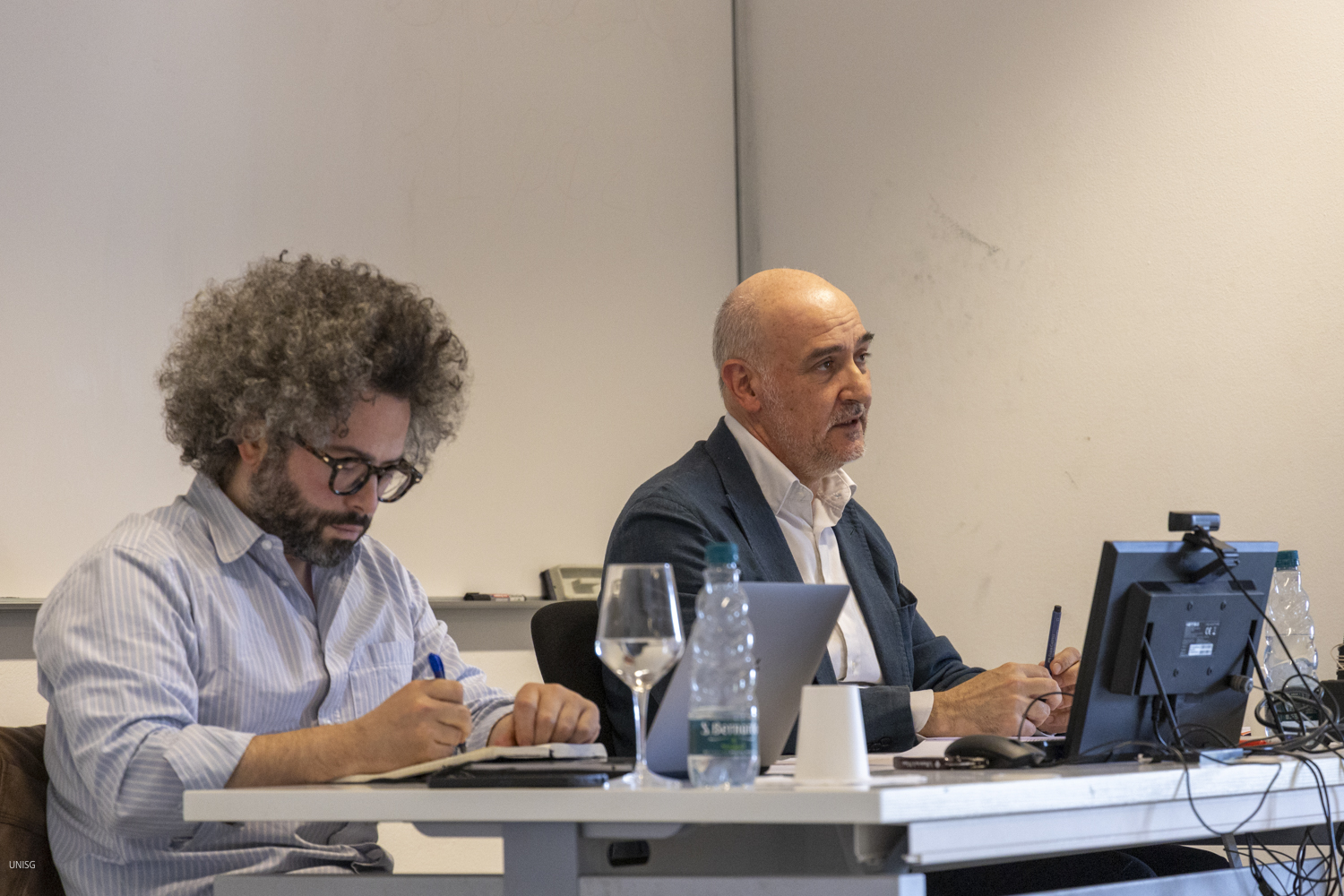
This text grows out of the reflections that surfaced during the round table, in an attempt to give form to the thinking that moved through these two days spent with wine alongside some of the sector's finest practitioners.
For years I have been working on the idea that wine is not an object to be measured but an encounter to be realized. A relational event rather than a substance to be decoded. And yet the vocabulary that dominates wine communication continues to treat it as if its essence resided in molecules rather than in relationships and in the experience one makes of them. And so: scores, aromatic profiles, technical data sheets, rankings. There is a precise risk in this attitude: that of speaking about wine while remaining forever inside a self-referential circle that reduces a living artefact — child of agriculture, of seasons, of climates, of people — to a cult object for initiates. The problem is not wine: it is the world of wine. And the wager is to step outside it, to bring wine into the world.
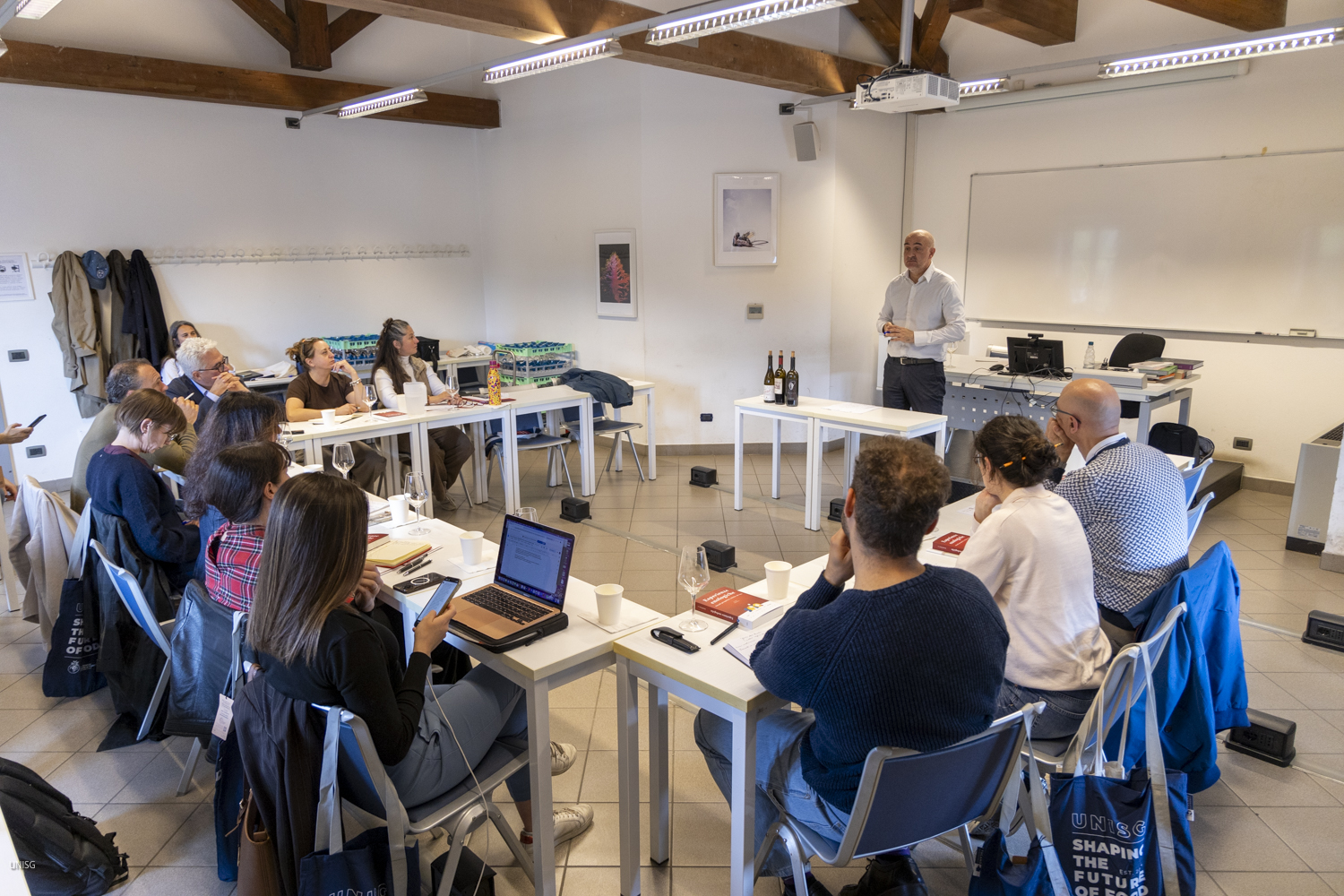
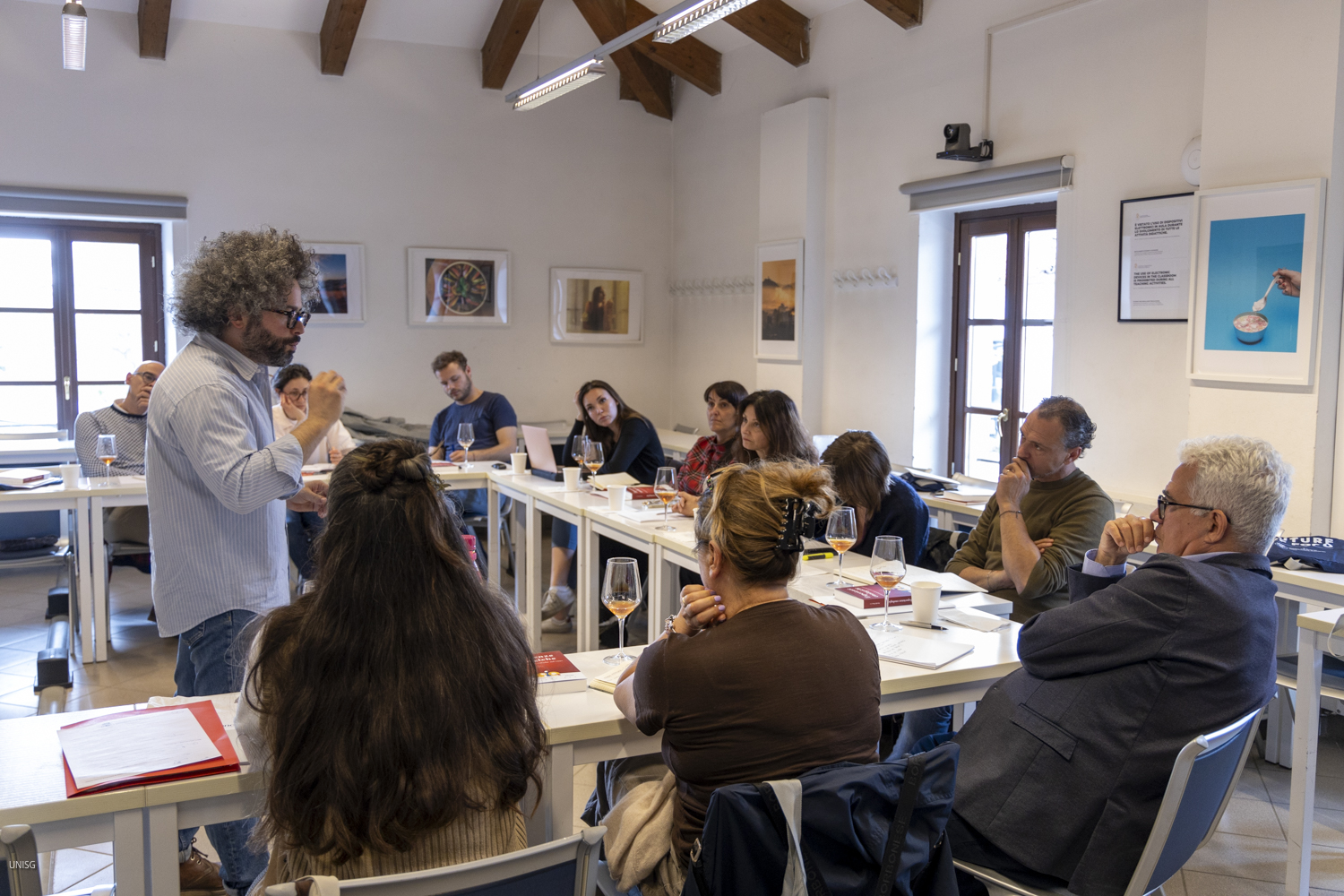
I invited these six producers, who may be regarded as custodians of the land, because I consider each of them, in their own way, bearers of this tension. They are not witnesses to a uniform ideological position: quite the contrary. They are voices distant in territory, generation and approach, yet united by a shared underlying seriousness: that of those who have never stopped questioning their own work. Listening to them, one after another, was something rare: each contribution opened a perspective that the next did not exhaust, but complicated.
Stefano Borsa of Pacina immediately named what is so often left unspoken: the environmental question as a material condition, not as rhetorical premise. We are farmers, he said, and this implies actions that can become irreversible. The emphasis on the agricultural dimension, so often obscured by wine culture, allows us to think of wine as a daily practice, embodied in communities, in seasons, in bodies — as it was until a few decades ago, above all in Italy. But that time has passed. The artisan dimension has given way to wine as a standardized commodity suited to the global market. The question that remains open is how to transform that memory into a proposal and a relaunching, without nostalgia and without surrender. In a certain sense, the phenomenon of experiential tourism is a growing tendency and offers a world still to be developed.
On a different but converging plane moves Marco Tinessa of Tinessa: an economics background, a clear-eyed view of market mechanisms, and a sharp diagnosis. The crisis running through the sector is not a crisis of wine: it is a crisis of content. Marketing works, he said, but only when there is something to communicate. And to find that content one must return to agriculture, to territory, to a genuine bond with the land. Invoking Oscar Wilde's celebrated aphorism that fashion is something so ugly it is constantly forced to change, he recalled that wine differs from any other alcoholic beverage precisely because of what it carries with it. When that content empties, nothing worth communicating remains. The internet has democratized voice, but democratizing voice does not mean always having something to say: first one must know how to feel what the wine communicates, and to know it well. France, in the history of wine, represents a case that is difficult to equal.
Theo Zierock of azienda Foradori brought into the room the tension between the dream of agriculture as root and the unstoppable pull toward cities, which distances people from the land and makes them strangers to the rural world. He raised the Italian question with clarity: the inferiority complex in relation to France has pushed the country to prostrate itself before the expectations of foreign tourists, secularizing wine, transforming it from a daily experience into a luxury object, from shared culture into a classist product. We were like Georgia until the 1950s. And then we chose otherwise. Winegrowers bear the responsibility of communicating something complex: the meaning of wine lies in returning to the idea of the taste of place. The measure he proposes is provocative: one must also engage in a little (humble) propaganda. One must venture into provinces far from the usual circuits, avoid displaying superiority, and communicate always in relation to who is listening. After all, wine communication should stop speaking to those already convinced.
Chiara Pepe's contribution was the one closest to the philosophical core I have been developing for years on this subject. Communicating not about wine but with wine: a subtle but decisive distinction. The craftsperson who explains is often superfluous: it is the wine that speaks for itself, when it is allowed to. The cards on the table are thus reshuffled with regard to the question of communication: the wine, when it arrives, silences. No discourse is needed. It demands attention, imposes silence, suspends judgment. Perhaps this is its most authentic power, and one would need to find a way of speaking about it that is equal to this moment. She introduced a Japanese word and concept, that of the shokunin — the artisan who never ceases to improve, who cultivates attention as daily discipline, in making as in communicating. And then a correction to the concept of terroir that resonated throughout the room: terroir is not only the geography of a place, it is also the intelligence and the palate of the person who makes the wine, the individual behind it, with their history and their choices. The future of (her) wine, she concluded, is the future of a person who has kindled a fire. A fire she intends to keep burning.
From Migliavacca came the most radically agricultural, and also the wisest, voice of the morning: wine comes after, says Francesco Brezza. First you talk about barley, wheat, fruit. First you go to the field, then to the cellar. Speaking of wine together with the rest of the agricultural world, he argued, is a commonplace — yet for many it is an absolute discovery. There is here a precise critique of the way in which even those who love artisan wine continue to think of it as an autonomous category, separate from the system that produces it. Climate changes are waves of time, to be read with the same attention one brings to reading the soil. The Migliavacca experience was born from a chance encounter between Francesco's father and a Turinese doctor and scholar, Professor Garofalo, who gave him the first impulses to develop a new kind of agriculture — one of the first linked to biodynamics in Italy. This reminds us that the most enduring things often arise from unexpected connections, not necessarily from programmes.
Mateja Gravner opened by immediately admitting the snobbery of the sector in which their work moves. What ought to interest winegrowers, instead, is drawing people closer to their world; and for this, openness of mind is required on both sides. The problem is the loss of the capacity to listen to one another, to have a taste without making it absolute, to engage without judging. One must instil more doubts than certainties in consumers, she said. Is there a solution to all this? Perhaps not — and yet it is evident that there is a great deal of curiosity and interest on the part of young people. Winegrowers should engage in self-criticism and seek to be more inclusive. There is no right fair, no right winegrower, no right wine. And the past is not better: it is past. Wine must be considered not only as the apex of agricultural and technical production, but also as a social product sui generis.
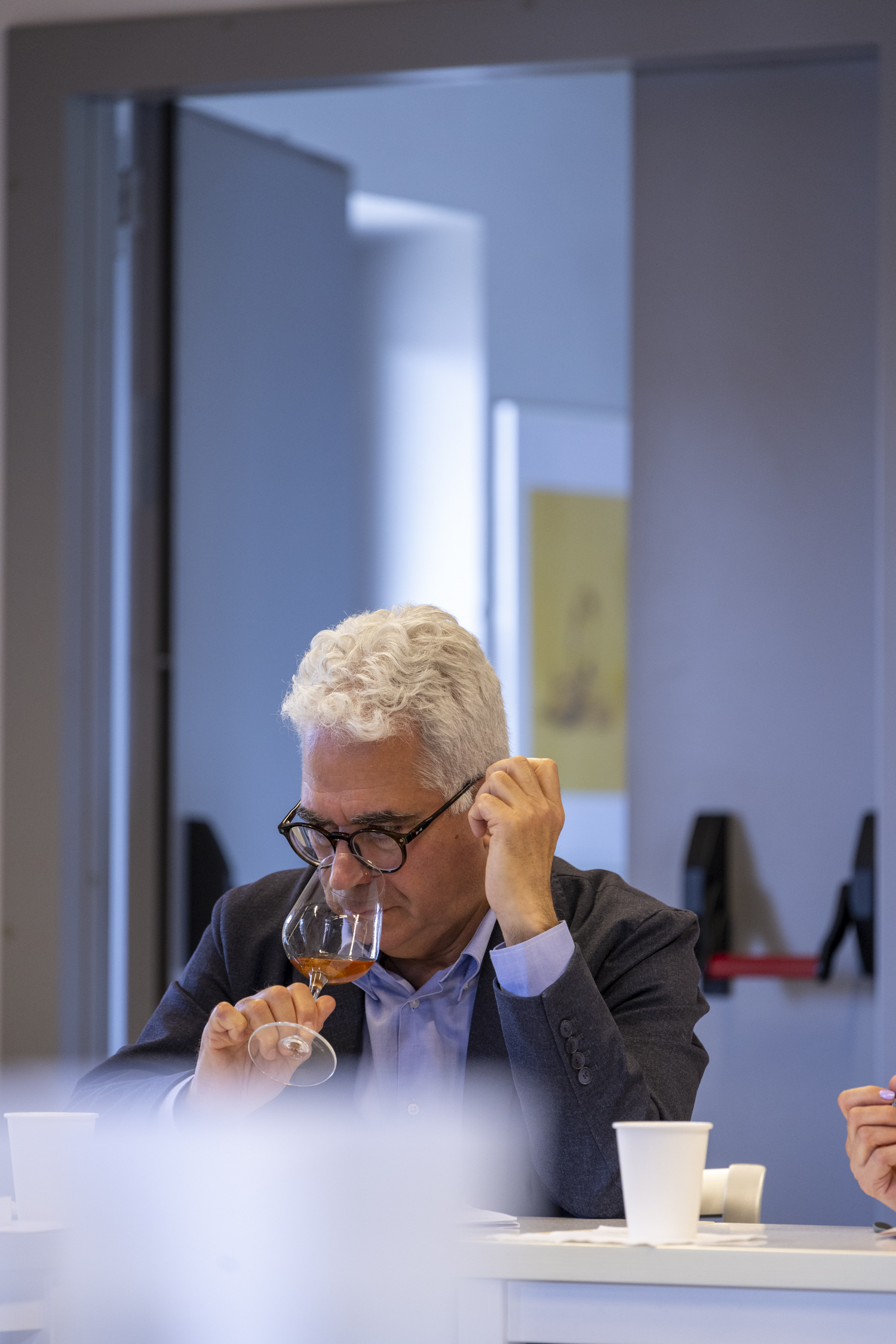
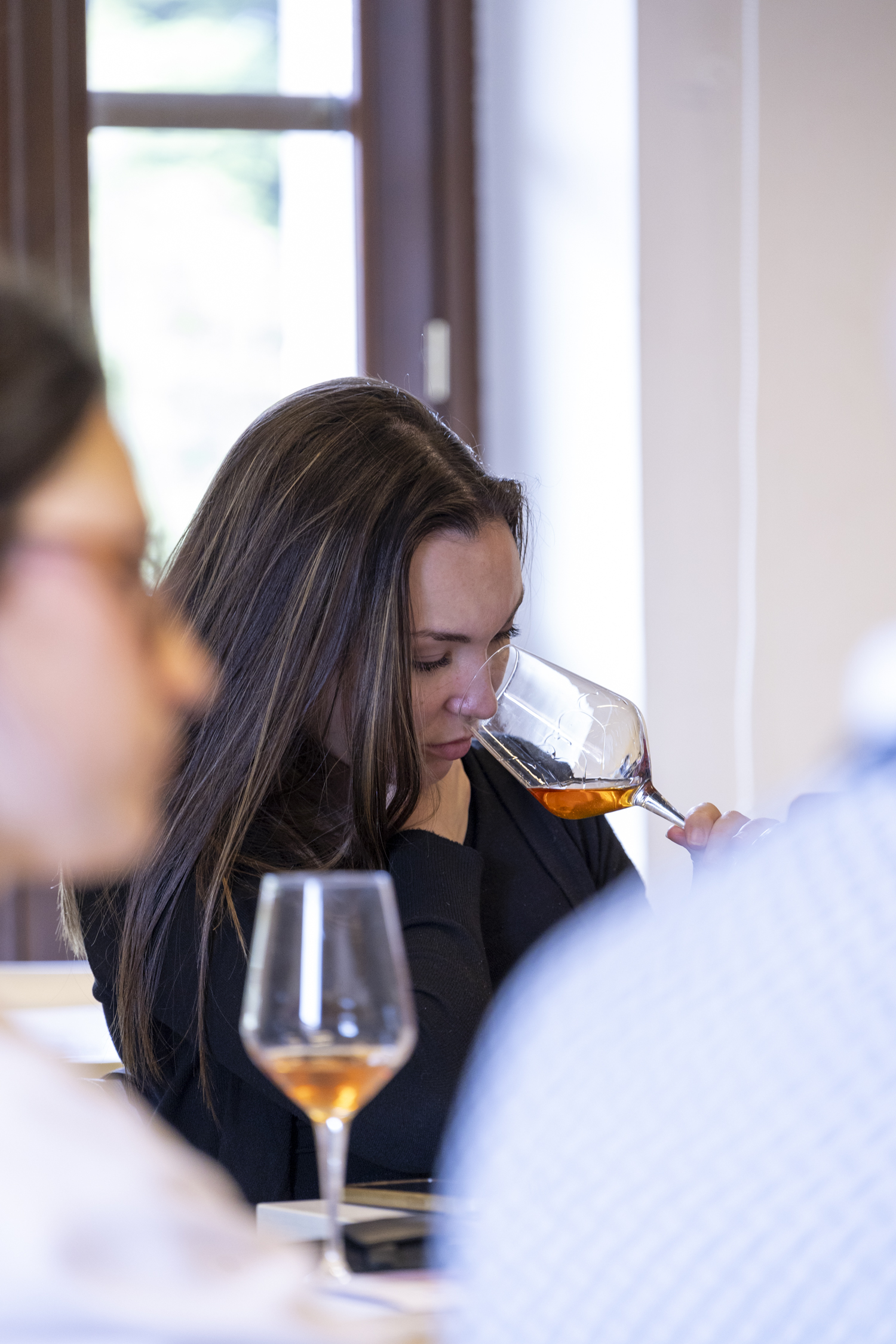
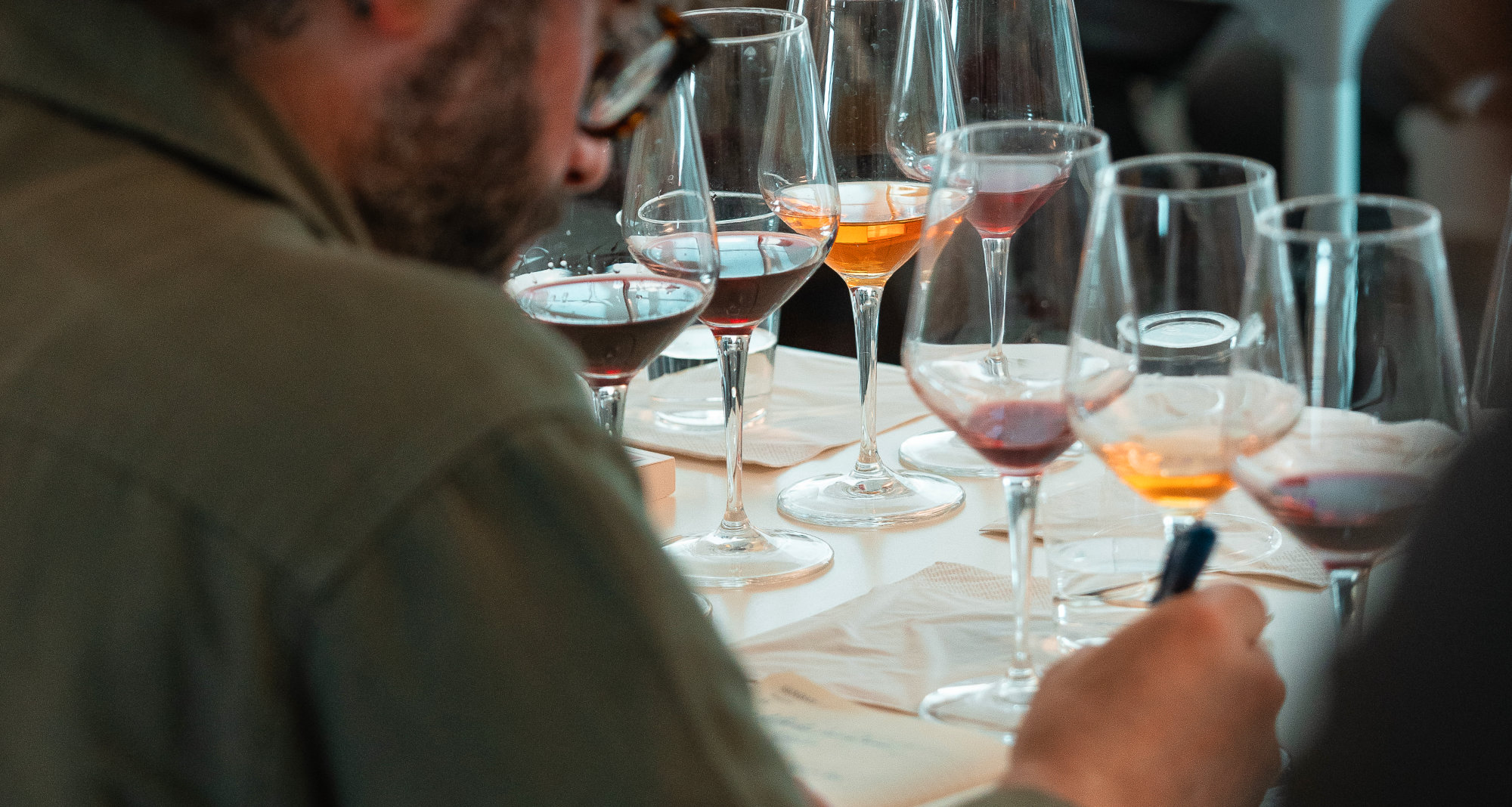
During the morning we tasted six of their wines (the Grignolino from Migliavacca, the Ribolla from Gravner, the Teroldego Morei from Foradori, the Montepulciano d'Abruzzo from Pepe, the Villa Pacina from Pacina and the Ognostro from Tinessa) and then invited the participants to share their experience and their thoughts.
What these six interpreters of territory share is the capacity to remain within the question. What I have gained from these two days, therefore, is not an answer, but a disposition that found confirmation, in all the polychromy of its styles. Artisan wine, in the voices of these six artisans of territory so different from one another in history, zone and character, does not ask to be understood through pre-existing categories. It asks to be encountered. It asks for an interlocutor willing to change in the course of the encounter. This, I believe, is also the responsibility of a university such as ours. Not to transmit an already formed lexicon, but to train the gustatory and imaginative capacity to bring out the value of wine in the world we share and are called to re-invent: with wine, with those who produce it, with the land from which it comes. To form people capable of feeling, before they can describe. Artisan wine takes shape as one way of loving wine and its ecology, turning its gaze toward other realities that concern it: the economy, culture, language.