03 April 2024
If there's one dish with a truly universal appeal, it's ravioli. It's hard to find a culinary culture anywhere in the world that doesn't include some version of a handcrafted stuffed fresh pasta.
No matter the shape, the composition of the dough, the nature of the filling, or the cooking method, this dish is beloved everywhere. Whether it's ravioli, tortelli, Italian cappelletti, Polish pierogi, Chinese jiaozi, xiao long bao, shao mai, Nepalese momo, Japanese gyoza, or South American empanadas, just to name a few types, the humble ravioli is cherished on tables around the globe.
What is internationally known today as a dumpling is a food with ancient origins. In fact, recipes resembling ravioli appear in Roman texts, and Chinese stuffed preparations are certainly even older.
Ravioli likely originated independently in different cuisines and took on various characteristics, but all share a common and surprisingly simple origin.
Presumably, ravioli were invented—like every popular dish—to find a way to feed more people with a small amount of meat. Just add a bit of cabbage and onion or other vegetables to taste, and the ravioli filling is complete.
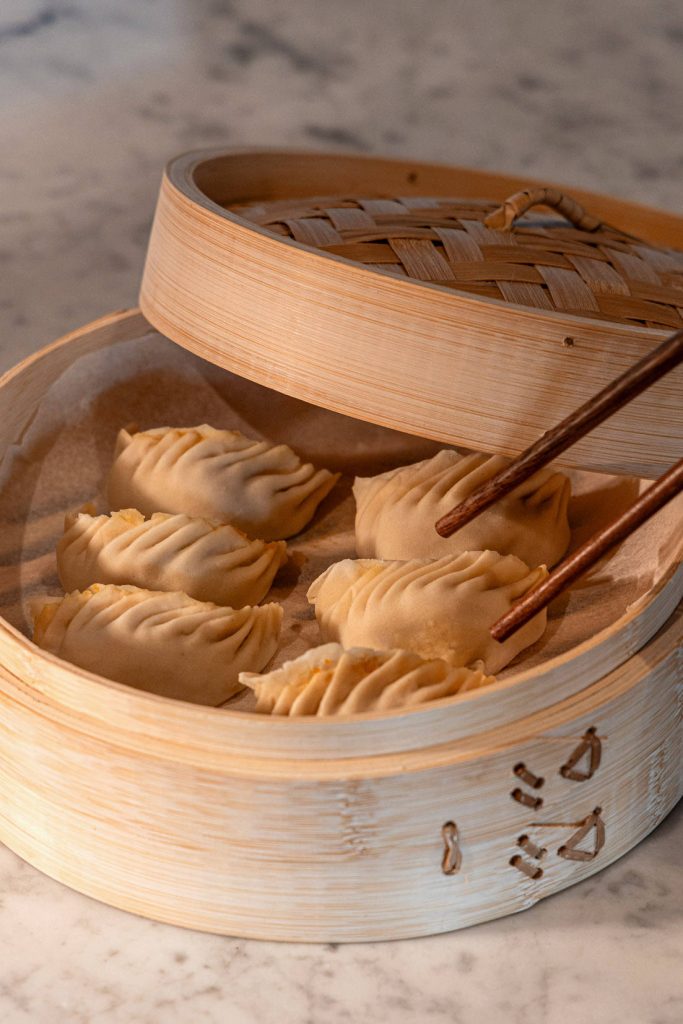
In China, jiaozi has been around for at least 1,800 years. According to legend, these predecessors of the ravioli were invented during the Han dynasty by a medicine man named Zhang Zhongjian. On a cold winter, Zhang returned to his home village after a long absence. He noticed many villagers suffering from frostbite there, particularly on their ears. To solve this problem, he prepared a mixture of meat, chili, and healing herbs, divided it into small portions, wrapped them in dough sheets, folded the ravioli to resemble small ears, boiled them, and distributed them to the sick. Whether they cured the frostbite or not, we'll never know, but they were liked so much that the preparation and enjoyment of jiaozi continued.
In more recent times, numerous varieties of ravioli have spread, such as Xiao Long Bao. These are steamed meat dumplings typical of Shanghai, consisting of a thin dough layer enclosing a juicy and fragrant filling. Among the most famous and appreciated Chinese dishes in the world, they differ from traditional ravioli for a particular feature: the liquid filling, which, in addition to containing pork flavored with sauces and aromas, consists of a fresh and delicious soup.
Xiao Long Bao is believed to have originated in late 19th-century Shanghai. Huang Mingxian, a restaurant owner, invented these dumplings to stand out from the competition and offered them in his Ri Hua Xuan restaurant in the Nanxiang area of Shanghai. What made Xiao Long Bao different from other steamed dumplings was the addition of gelatinized meat broth, which, after steaming, melted into an intensely flavored broth.
In Shanghai, this novelty was an immediate success, and their popularity spread through word of mouth: referring to their shape, they were called xiao ("small"), long ("basket"), and bao ("bun").
These special dumplings are one of the dishes studied and offered by UNISG alumna Elisa Neri at Tuttofabrodo in Turin, where every dish is made with knowledge and great attention to raw materials. To make the dough of Xiao Long Bao, a typical Eastern technique is necessary: starting with a small amount of dough, which is rotated together with the rolling pin in a concentric manner to obtain a disc with thin edges and a slightly thicker central part so that it can contain the liquid filling.
This is why, in the kitchen, Elisa wanted chefs with expertise from the Far East, whom she specifically recruited after a meticulous search, bringing them to Turin from the Philippines.
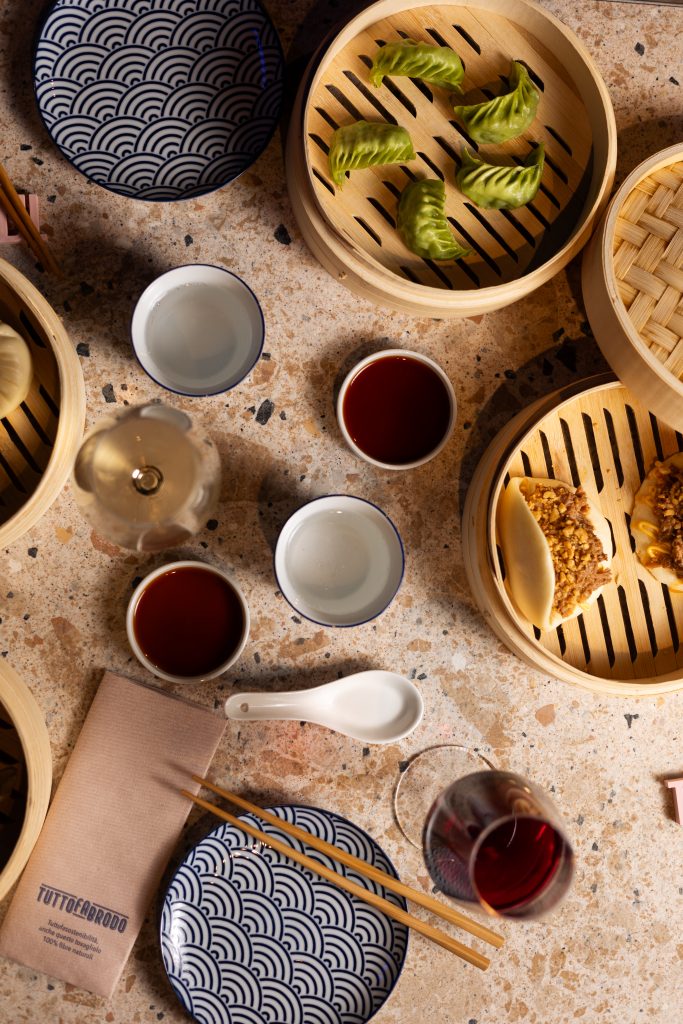 Since January 2024, Tuttofabrodo has become a supplier of the Academic Tables of UNISG.
This is a sort of return to Pollenzo for alumna Elisa, who can thus delight the lunches offered to the university's students with exotic flavors.
Four specialties from Tuttofabrodo are present on the university cafeteria's menu: the classic dumplings filled with pork and vegetables, those with toasted peanuts, and an innovative "sweet" offering, namely Xiaolongbao with red bean filling and a version with red beans and chocolate. This "dessert" idea represents a creative and original approach to pique the curiosity of our Italian and Western palates.
These dishes thus enrich, with a component of multicultural flavors, the gastronomic offer of the university restaurant in Pollenzo, in step with the growing internationality of the UNISG student body.