02 July 2026
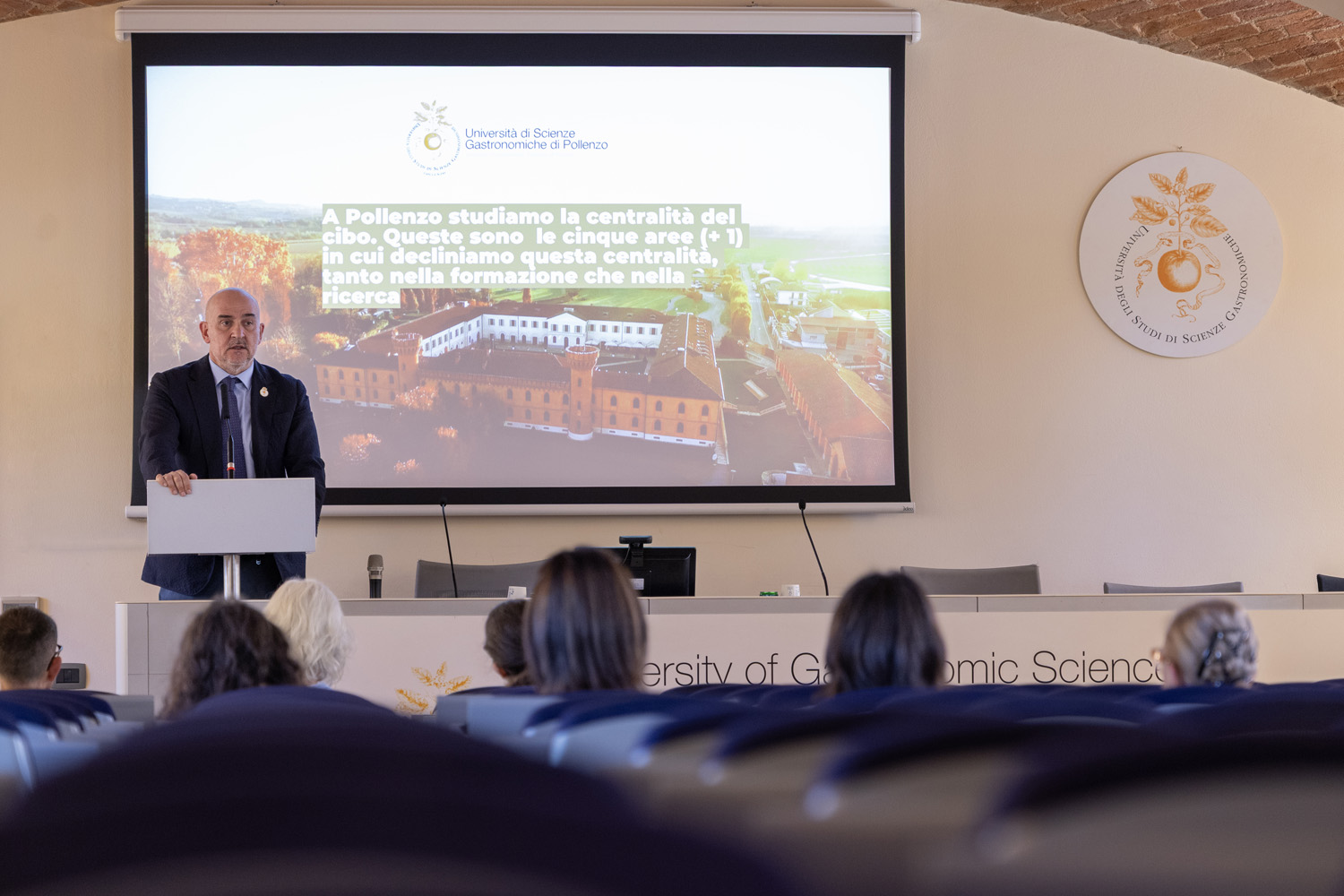
President and Rector Nicola Perullo outlines the university's evolution strategy: strengthening Pollenzo's identity, expanding its network of collaborations, and becoming the international point of reference for interdisciplinary food research.
Pollenzo, 2 luglio 2026
The University of Gastronomic Sciences of Pollenzo is entering a new phase of its history, marked by continuity with Carlo Petrini's vision and by its capacity to address the profound transformations affecting the international university system.
In his address, President and Rector Nicola Perullo emphasized that the legacy left by the founder represents a heritage to be preserved and developed. The Pollenzo model, which has inspired numerous universities around the world and contributed to the spread of Gastronomic Sciences as an academic discipline, remains an international point of reference. Today, however, the university is called upon to evolve in order to respond to the demographic, economic, and competitive changes that are redefining the higher education landscape.
Nicola Perullo highlighted that the university's future depends on building a network of strategic alliances with academic institutions, public bodies, and private partners, while keeping intact the autonomy and independence that have characterized the institution's first twenty years. Within this framework are the collaborations already underway with the Politecnico di Torino, the University of Maastricht, the "Foro Italico" University of Rome, and numerous other national and international entities, which are giving rise to new degree programs, master's programs, research projects, inter university centers, and shared initiatives.
The goal is to strengthen Pollenzo's role as an international center for food research and education, enhancing a scientific community that is already recognized today for its interdisciplinary approach, yet still not fully known relative to its research potential.
To achieve this goal, the Rector presented a development model based on five major strategic areas, around which to build shared projects and attract partners who will support their growth over the long term.
The first area concerns Health, Wellbeing, and Sport, with particular attention to the themes of Planetary Health, Food Medicine, and the relationship between diet, physical activity, prevention, psychology, and eating disorders. This is an area that already sees important collaborations with the healthcare and academic worlds and that will be further developed.
The second area is dedicated to Quality, Innovation, and Technology, leveraging the expertise of the Food Lab and the Sensory, Behavior and Cognition (SBC) Lab, applied research activities, and the growing collaboration with the Politecnico di Torino in the fields of food technology, innovation, and advanced training.
The third pillar is Economics, Management, and Policy Making, a sector in which the university intends to consolidate its role through dialogue with the production system, the development of agrifood sector management, and the strengthening of expertise in food policy.
The fourth strategic area concerns Ecology, Climate Change, and Biodiversity, themes that are now central to the future of food systems and international research. The university aims to further strengthen its scientific activities in these areas, building on existing expertise and expanding research opportunities.
The fifth area is dedicated to Cultural Heritage, Traditions, and Art, encompassing studies on food culture, the history of food, gastronomic traditions, and artistic expressions connected to food, elements that have always been distinctive features of Pollenzo's identity.
Alongside these is a sixth, cross cutting dimension: Field Experience, which includes educational trips and all experiential activities carried out in the field, considered an essential component of the university's educational model.
The President explained that the new organizational model aims to ensure greater economic sustainability and long term planning capacity, moving beyond a logic based exclusively on revenue from tuition fees. The strategy involves building a network of major institutional and industrial partners who share the university's cultural and scientific project and who will participate in its growth through co design initiatives and multi year investments.
The ambition is to make the University of Gastronomic Sciences of Pollenzo the most authoritative international center dedicated to the study of food from a holistic perspective, simultaneously strengthening the university's research, education, infrastructure, and international positioning.
According to the President and Rector, this evolution represents the natural continuation of Carlo Petrini's original vision. Not a change of identity, but an evolution of it, one capable of preserving its founding values while preparing for its future. The coming months will be decisive in consolidating the new partnerships and turning the projects already underway into a stable development plan, with the aim of ensuring the university sustainable growth and an ever greater scientific and cultural relevance on the international stage.
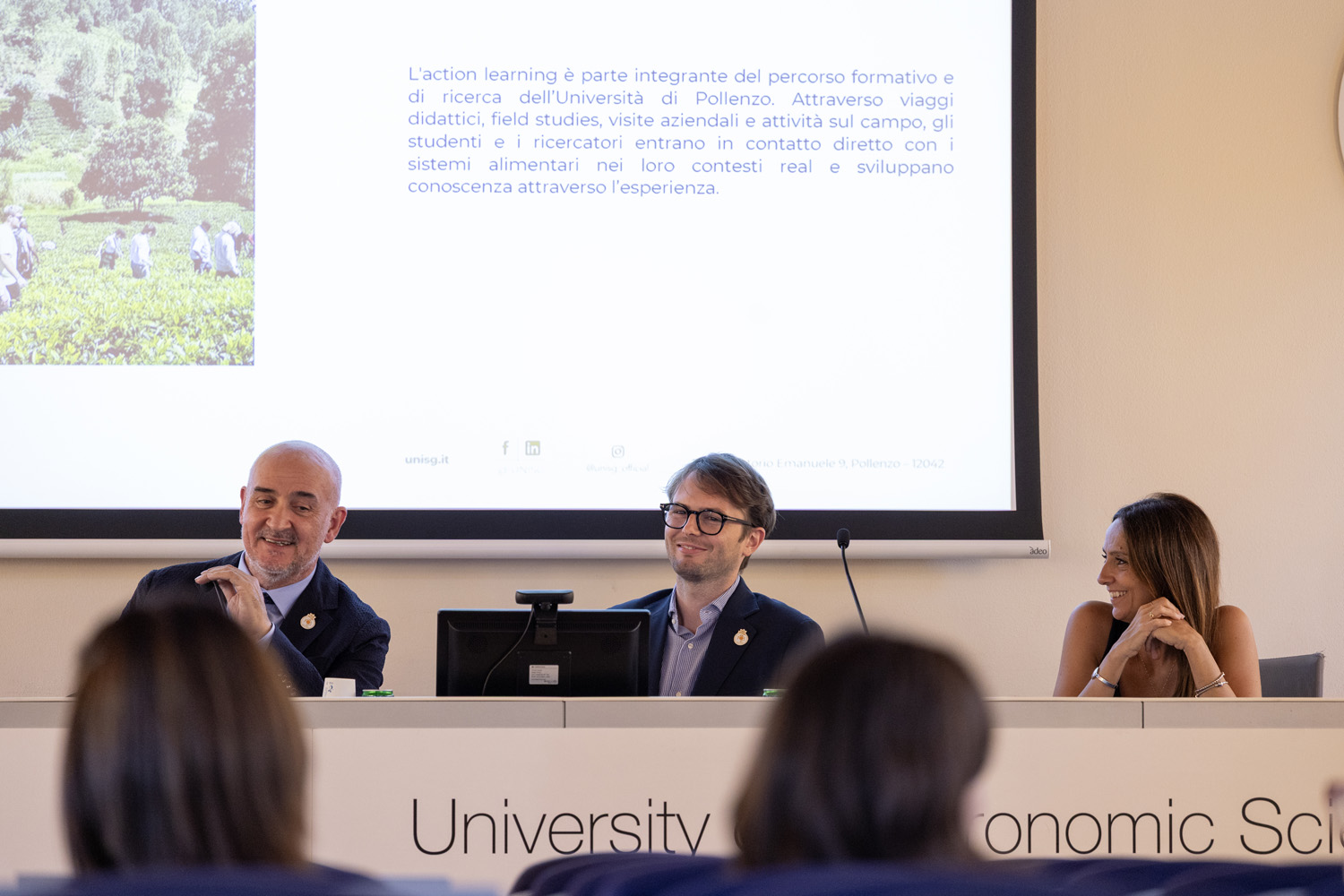
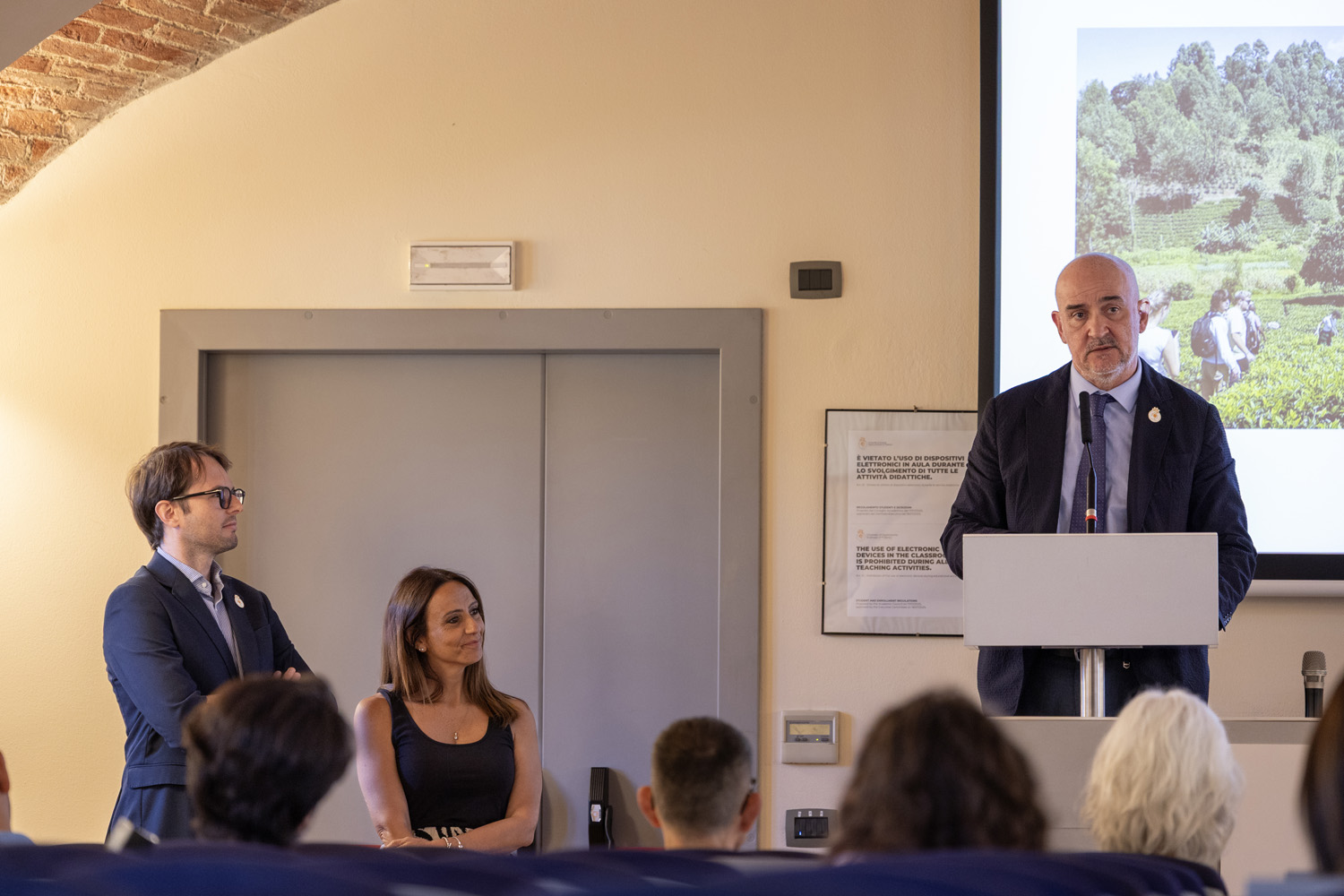
Concluding his address, the President and Rector introduced the newly appointed Vice President, Luca Martinotti, and the Delegate for Education and Training, Professor Donatella Saccone.