18 June 2026
:
The results of the 12th edition of the Observatory promoted by
the University of Gastronomic Sciences and Ceresio Investors were presented in Pollenzo.
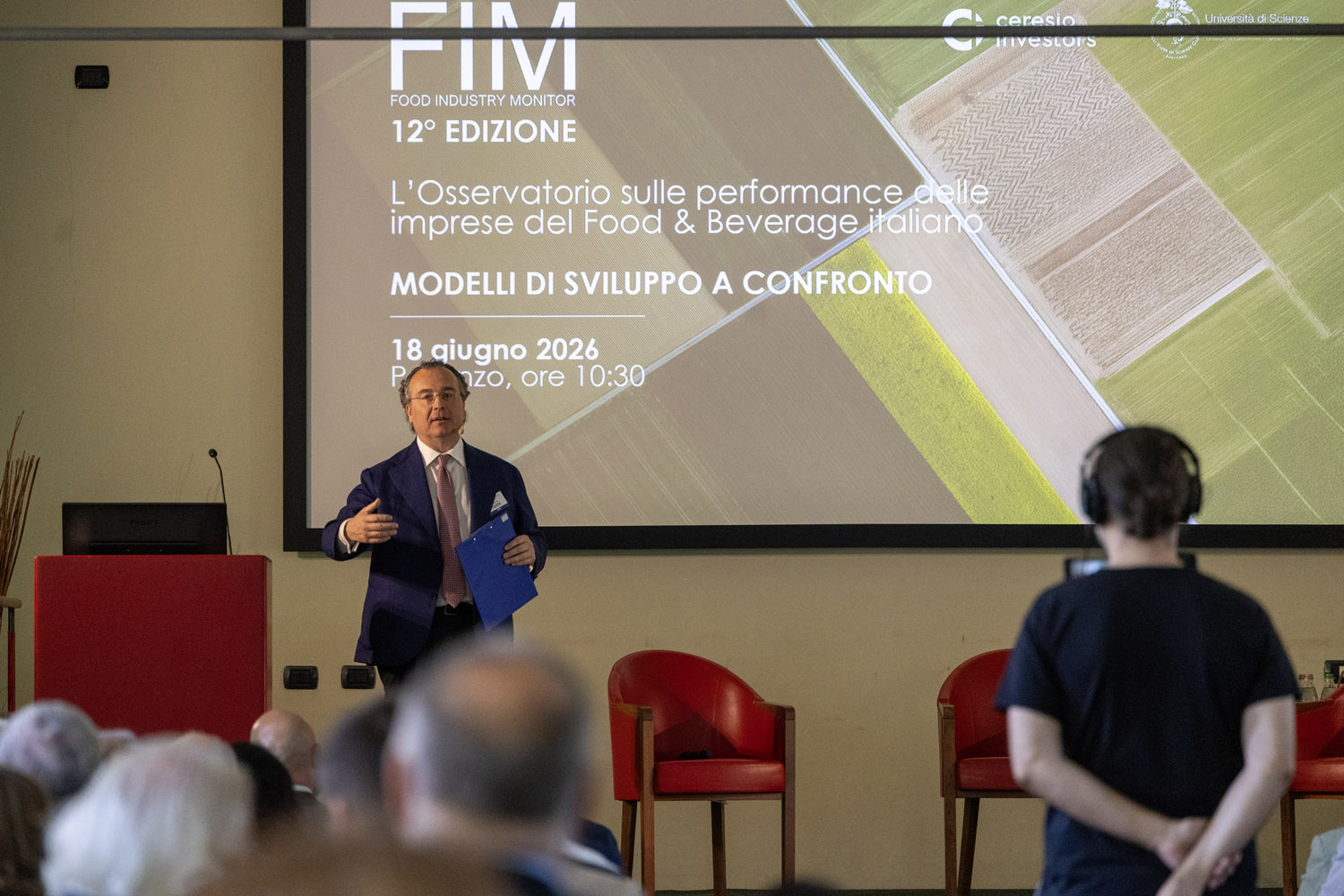
Pollenzo, June 18, 2026 – The Italian food sector continues to demonstrate a strong capacity for resilience in a complex macroeconomic environment, while showing increasing pressure on profitability. This is the key finding of the 12th edition of the Food Industry Monitor, the Observatory on the performance and business models of Italian food companies conducted by the University of Gastronomic Sciences of Pollenzo in collaboration with Ceresio Investors. The results were presented today in Pollenzo during the conference “Comparing Development Models.”
MAIN RESEARCH FINDINGS
• The sector continues to grow, albeit at a more moderate pace: in 2025, food sector revenues increased by 3.3%, a figure below expectations but in line with the performance of the Italian economy.
• Profitability weakened: ROS declined from 6.6% to 4.6%, while ROIC fell from 8.9% to 5.2%, reflecting margin compression and increased invested capital.
• Exports slowed but remain a strategic driver: after growing by 8.7% in 2024, food exports increased by 4.4% in 2025. For the 2026–2027 period, however, the Observatory forecasts annual growth above 7%, provided that the US-Iran crisis is resolved by the end of June, leading to a consequent reduction in energy prices.
• Governance is becoming increasingly important: companies with more open, inclusive, and structured governance systems, as well as those with shared leadership models, achieve higher levels of profitability.
The Observatory analyzes more than 820 companies, representing aggregate revenues of approximately €85 billion across 14 food industry segments. It provides an integrated view of the main economic, financial, and strategic dynamics, along with an outlook for the 2026–2027 period.
A RESILIENT SECTOR UNDER PRESSURE
In 2025, the food sector recorded revenue growth of 3.3%, confirming its resilience in a complex macroeconomic environment. Although positive, this figure fell short of expectations and reflects slower domestic demand and increasing cost pressures.
The profitability picture appears more critical. The decline in ROS and ROIC indicates that many companies chose to defend volumes and maintain their commercial presence within Italian distribution channels, even at the expense of margin compression. The sector’s financial strength remains high, although a slight deterioration in debt levels has been observed.
EXPORTS: SLOWDOWN IN 2025, RECOVERY EXPECTED IN THE FOLLOWING TWO YEARS
Following strong export growth in 2024, supported in part by advance purchasing ahead of potential tariff measures in the United States, exports of food products increased by 4.4% in 2025, the lowest figure of the post-pandemic period.
Nevertheless, the outlook for 2026 and 2027 remains positive. The Observatory forecasts export growth exceeding 7% in both years, driven by international markets and the ability of Italian food products to maintain a strong competitive position abroad. However, uncertainties remain regarding the evolution of the US economy, price stability in international markets, and the global geopoliti
cal and trade environment. It should also be noted that tensions driven by energy prices could lead to a significant revision of export flows.
At the segment level, the most promising performances in 2026 are expected in flour (+5.9%), olive oil (+6.3%), coffee (+4.8%), and frozen foods (+3.8%). The wine sector also shows positive prospects (+3.6%), supported primarily by demand for sparkling wines and, in particular, Prosecco in international markets.
INFLATION AND CONSUMPTION: THE RISK OF PURELY NOMINAL GROWTH
Forecasts for 2026 indicate sector growth in line with 2025 at 3.3%, while expected growth for 2027 stands at 3.4%. However, these figures should be interpreted with caution. Inflation in Italy is expected to exceed 3% in 2026, partly due to energy cost pressures, potentially absorbing a significant portion of the sector’s nominal growth.
For 2027, the Observatory forecasts a return to more normal inflation levels, around 1.9%, making the sector’s growth dynamics easier to assess. In this scenario, the food industry continues to confirm its countercyclical nature, although it is not immune to macroeconomic pressures affecting household purchasing power and domestic spending.
THE STRATEGIC CHALLENGE: PRODUCT SEGMENTATION AND BUSINESS MODELS
The analysis of business models shows that just under 60% of the companies in the sample offer multiple product lines. In several segments, such as milk and cheese and wine and spirits, segmentation is widespread. However, the data show that diversification is not always synonymous with better performance.
Looking at revenue trends between 2018 and 2024, companies focused on a single product line show a slight advantage. This finding suggests that, in some cases, greater concentration on a single business line can enable more effective market coverage, stronger specialization, and more targeted investment allocation.
This result is consistent with the structure of the sample, which includes a strong presence of small and medium-sized family-owned businesses, often oriented toward more focused business models and deeply rooted in a specific product category.
GOVERNANCE AND PERFORMANCE: ORGANIZATIONAL QUALITY MAKES THE DIFFERENCE
One of the most significant findings of this edition of the Food Industry Monitor concerns the relationship between governance and corporate performance. Companies with more open, inclusive, and structured governance models achieve higher profitability levels, confirming that governance quality is now one of the key enablers of competitiveness and long-term value creation.
The analysis also highlights a positive impact of female CEOs on both return on investment and return on equity. Shared leadership models, through the presence of multiple CEOs with strategic responsibilities, are likewise associated with superior performance, particularly when female executives are included among the co-CEOs.
The food sector remains strongly characterized by family ownership, with family businesses accounting for 70% of the sample. Within this group, multi-family companies outperform single-family businesses in terms of both return on investment and return on equity, suggesting that more advanced governance structures and more diversified ownership may foster greater managerial openness and a stronger ability to address strategic and generational challenges.
STATEMENTS
Carmine Garzia, Professor of Management and Scientific Director of the Food Industry Monitor, stated:
“2025 was a year in which the food sector grew less than expected, in a context characterized by rising energy costs and declining consumption. The sector remains countercyclical, but the outlook calls for a cautious approach, particularly in light of inflationary dynamics and uncertainty in international markets.”
Alessandro Santini, Head of Corporate & Investment Banking di Ceresio Investors, commented:
““Profitability trends are currently the primary area of concern. Margin compression, together with a gradual increase in indebtedness, makes it necessary to rethink both commercial and financial strategies. In this context, the quality of governance and the ability to effectively manage generational transitions are becoming increasingly decisive factors.”
THE CONFERENCE
The results were presented during the 12th edition of the Food Industry Monitor, dedicated to the themes of innovation, growth, and development models.
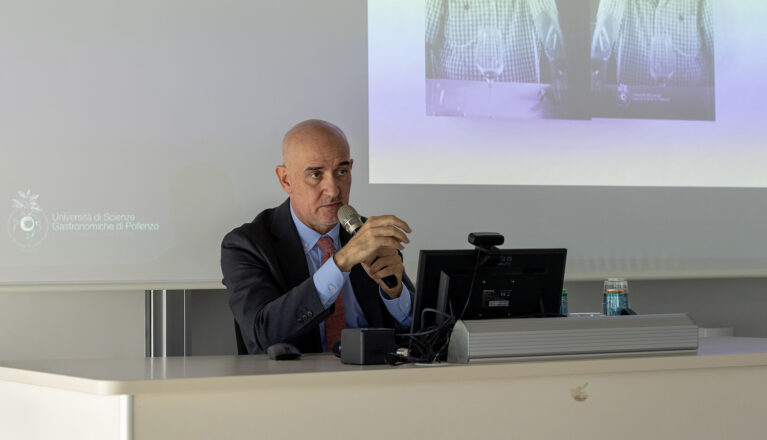
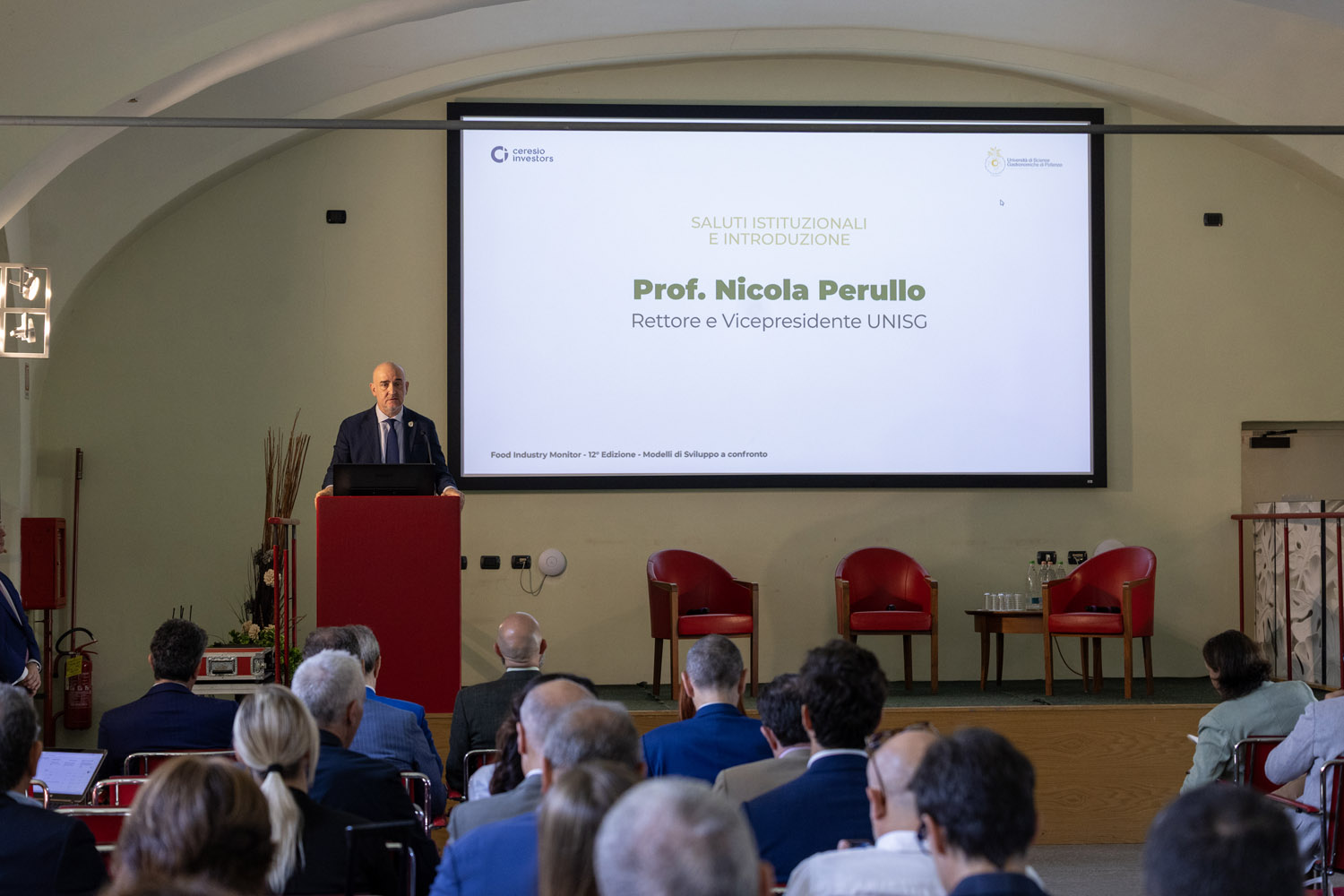
Following institutional greetings from Professor Nicola Perullo, Rector and Vice President, and Gabriele Corte, General Manager of Banca del Ceresio SA, Professor Carmine Garzia presented the main research findings.
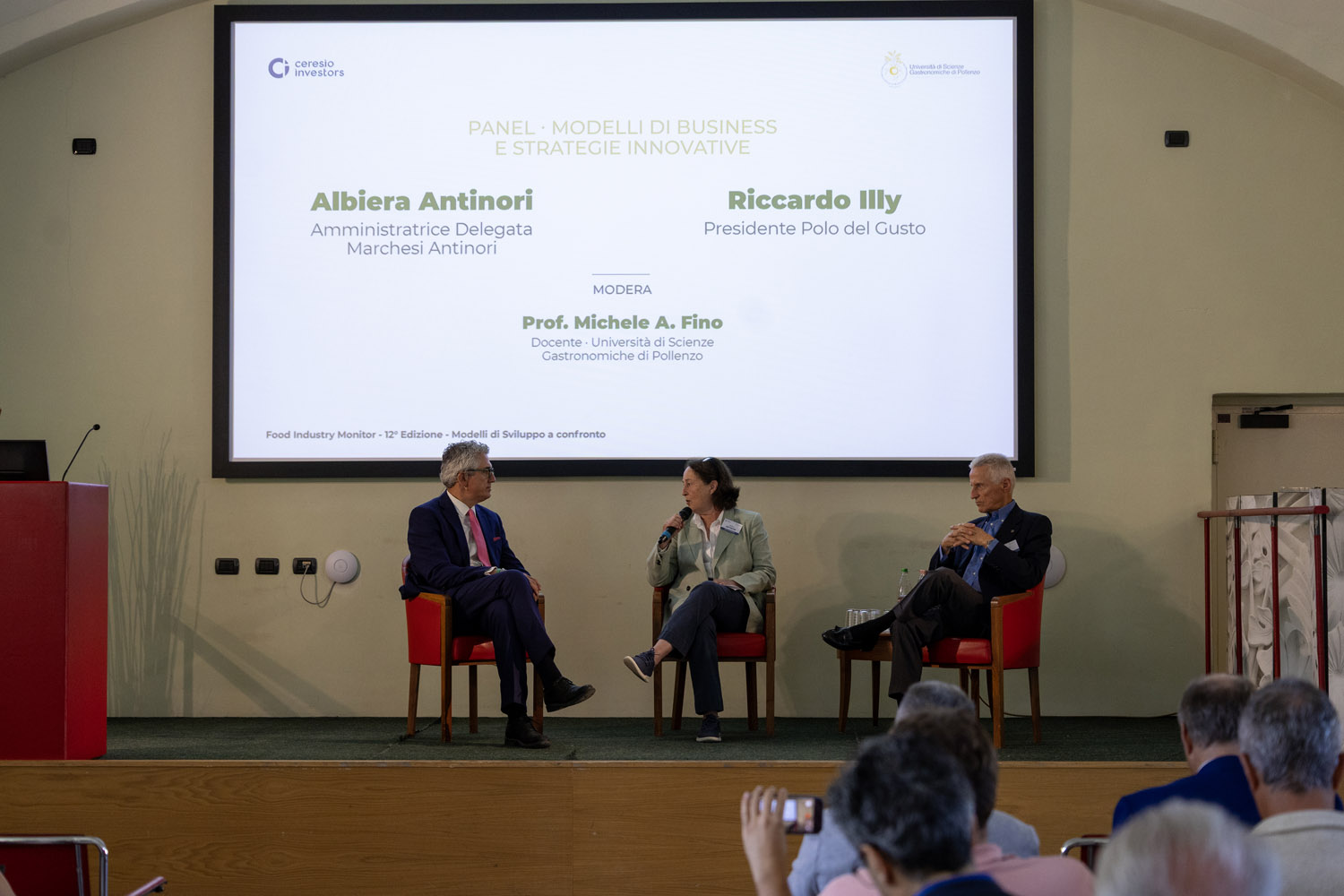
The event also featured two in-depth discussions with leading figures from the sector:
Albiera Antinori (Chief Executive Officer – Marchesi Antinori) and Riccardo Illy (Chairman – Polo del Gusto) discussed innovation strategies and business models.
Angelo Mastrolia (Chairman of Newlat Group and Chairman of Princes Group) joined Alessandro Santini in a discussion on growth and internationalization.
.

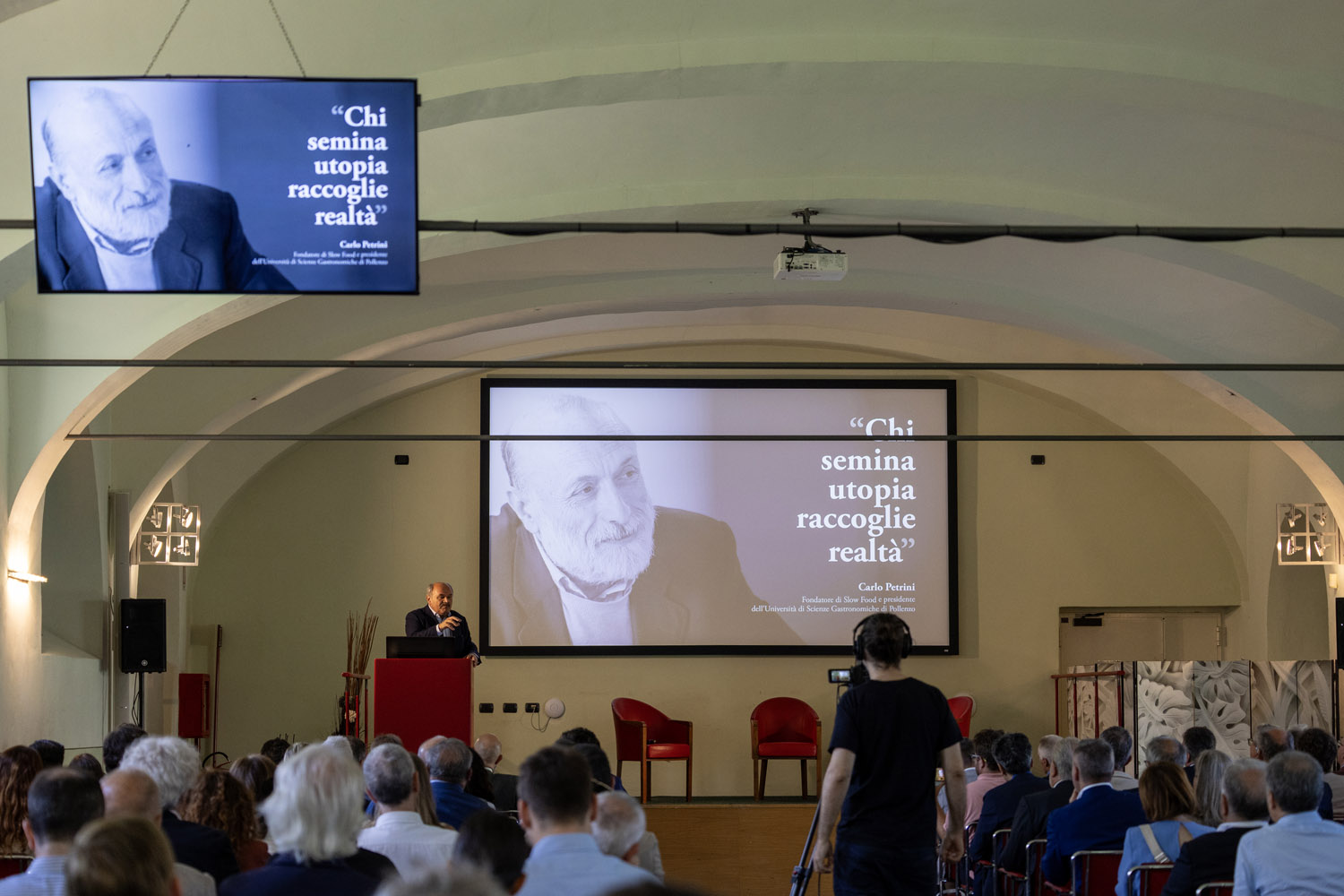
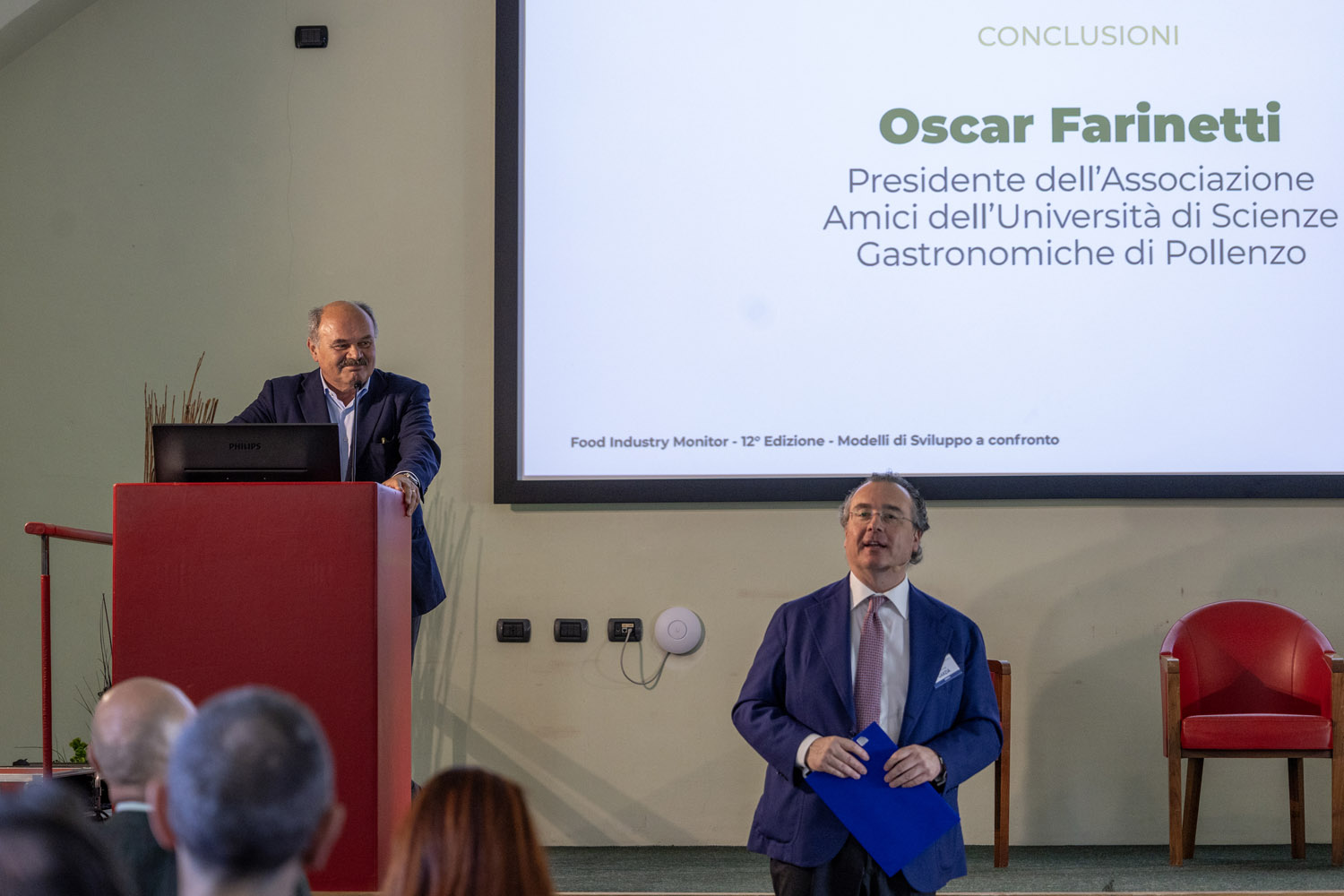
The conference concluded with a tribute to Carlo Petrini, founder of Slow Food and the University of Gastronomic Sciences, delivered by Oscar Farinetti, President of the Friends of the University of Gastronomic Sciences of Pollenzo Association.
**********************************************************************************************************
CONTACTS
Ceresio Investors
Francesco Putti – francesco.putti@ceresioinvestors.com
Università di Scienze Gastronomiche di Pollenzo
Alessandra Abbona – s.abbona@unisg.it
**********************************************************************************************************
Founded and promoted in 2004 by the international Slow Food association, the University of Gastronomic Sciences of Pollenzo offers a comprehensive and unique educational experience in the field of food studies. More than 4,000 students from 100 countries have chosen Pollenzo for their academic journey, recognizing the University as a dynamic, flexible institution with a strongly international outlook. The University trains food specialists—gastronomists with interdisciplinary expertise in the science, culture, politics, economics, and ecology of food—capable of promoting values such as sustainability and the sovereignty of global food systems while understanding every stage of the food chain, from production to consumption.
Ceresio Investors represents the Swiss banking group headed by Banca del Ceresio—specialized in wealth management, securities custody, corporate & investment banking, and tax and wealth consolidation services—founded in Milan in 1919 by Antonio Foglia. The third generation continues the business while preserving the unique co-investment model between ownership, clients, and management, maintaining the core values of confidentiality, reputation, and expertise, and prioritizing solidity over balance-sheet profitability (Simplified Leverage Ratio: 37.1%). Ceresio Investors (CHF 10.4 billion in assets under management) operates with a multi-family office approach, providing highly personalized services. The Group is active in Lugano through its parent company Banca del Ceresio and Lagom Family Advisors; in Milan through Ceresio SIM, Global Selection SGR, and Eurofinleading Fiduciaria; and in London through Belgrave Capital Management.