
26 March 2026
This thesis investigates fermentation as a material, philosophical, and relational practice, exploring the dynamic relationship between microbes, identity, and care. Moving beyond a purely biochemical understanding, fermentation is examined as a site where human and microbial agencies intersect, challenging anthropocentric assumptions about authorship, control, and subjectivity. By engaging with microbial life not merely as an instrument but as a co-creative presence, this research proposes a reconfiguration of identity that acknowledges interdependence, permeability, and relational becoming.
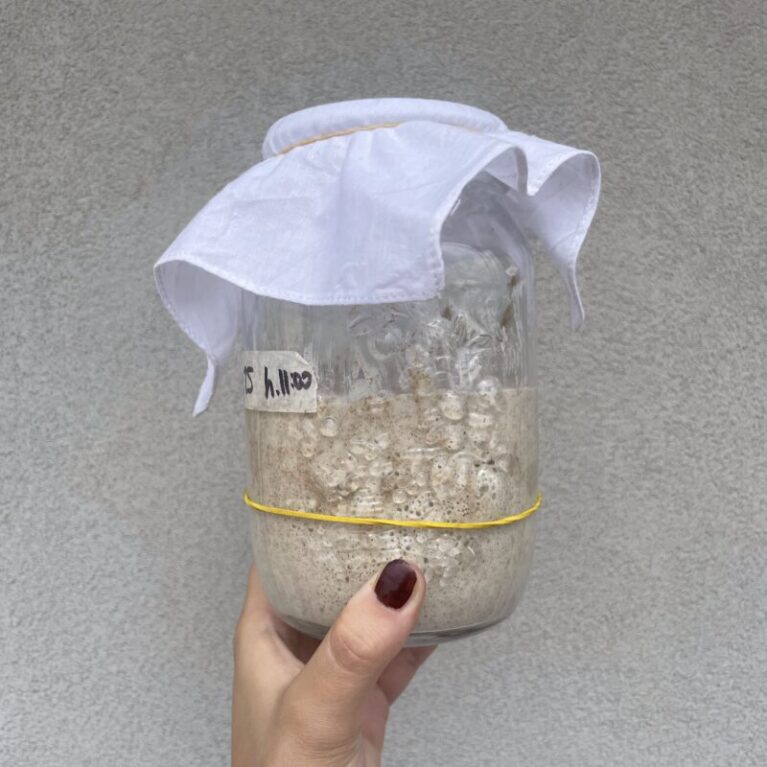
The work emerges from the convergence of academic inquiry in gastronomic sciences and professional experience in Michelin-starred kitchens, where fermentation operates both as a technique and as a living process. Drawing on socio-cultural theory, post-humanist philosophy, anthropology of food, microbiology, and chemistry, the thesis integrates theoretical reflection with embodied practice. Methodologically, it combines literature analysis, interdisciplinary case studies, and personal reflections grounded in hands-on fermentation workshops conducted throughout the development of this thesis. These applied laboratories function not only as empirical case studies but also as experimental spaces where theory and practice continuously inform one another.
The first chapter explores the concept of microbial subjectivity within post-anthropocentric thought. It engages with philosophical debates on more-than-human agency, arguing that fermentation destabilizes rigid boundaries between human and non-human actors. By recognizing microbes as active participants in transformation processes, the thesis questions hierarchical ontologies and proposes a relational model of identity shaped through multispecies entanglements.
The second chapter focuses on fermentation as an embodied and ethical practice of care. Through the lens of responsibility and attentiveness, fermentation is framed as a form of relational labor that requires sensitivity to time, environment, and microbial vitality. Care is examined both materially – through the maintenance of temperature, hygiene, and microbial balance – and philosophically, as an ethical stance toward the invisible yet indispensable microbial world. In this context, the act of fermenting becomes a gesture of stewardship and coexistence, foregrounding the responsibility humans bear within ecological systems.
The third chapter investigates the philosophy of taste and disgust, analyzing how sensory perception and cultural frameworks shape responses to fermented foods. Disgust is understood not as a fixed reaction but as a transitional threshold that evolves through knowledge and familiarity. As scientific understanding and experiential learning deepen, the boundary between decay and transformation is reconfigured, revealing processes once feared as loss to be forms of creative change. Fermentation thus becomes a privileged lens through which to examine how epistemology reshapes aesthetics and redefines the boundaries between edible and inedible.
The findings highlight a growing scholarly interest in fermentation from anthropological and philosophical perspectives. In dialogue with this evolving field, the thesis brings these approaches into conversation with insights from microbiology and chemistry, moving toward an interdisciplinary understanding of fermentation as a complex and interconnected phenomenon rather than a set of isolated processes. Ultimately, it frames fermentation as an act of creation, negotiation, and even quiet rebellion – one that invites a reconsideration of selfhood, responsibility, and coexistence within a more-than-human world.