24 September 2026
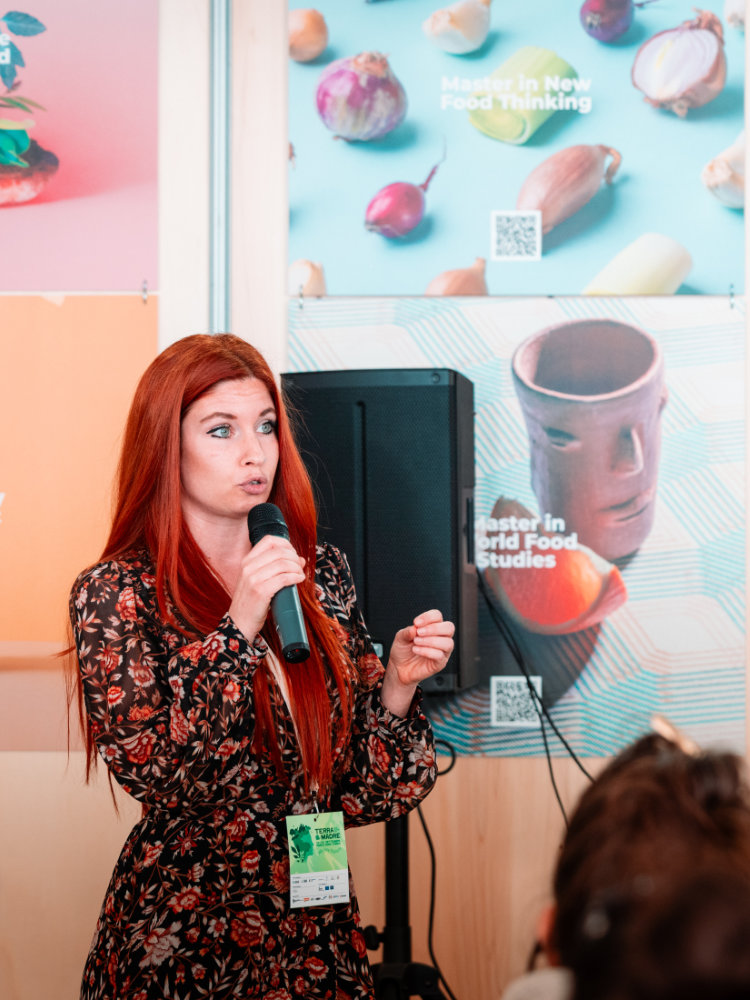
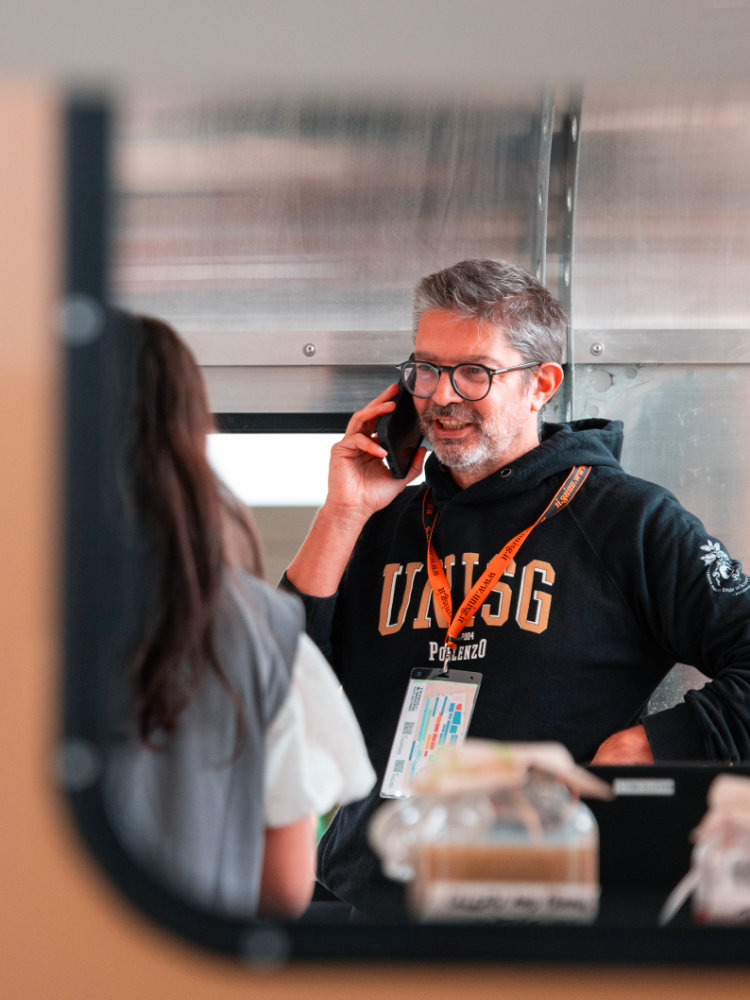
At Terra Madre Salone del Gusto 2026, the University of Gastronomic Sciences of Pollenzo presents a rich programme of activities centred around a large stand at the heart of the event, which this year returns to Turin’s city centre, in Piazza Castello.
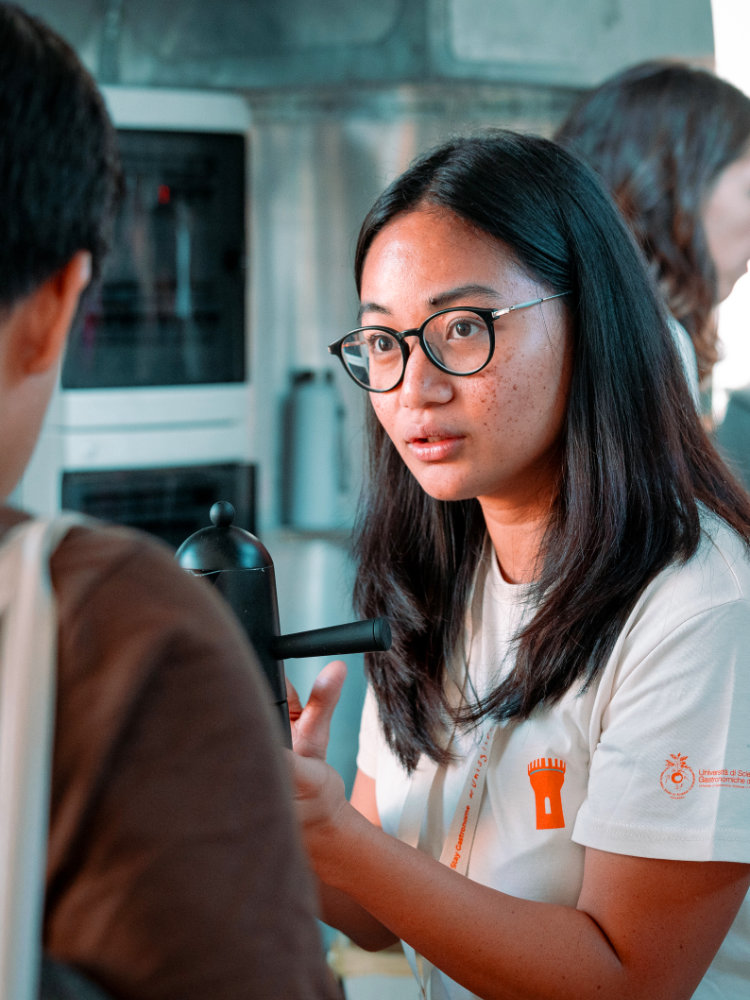
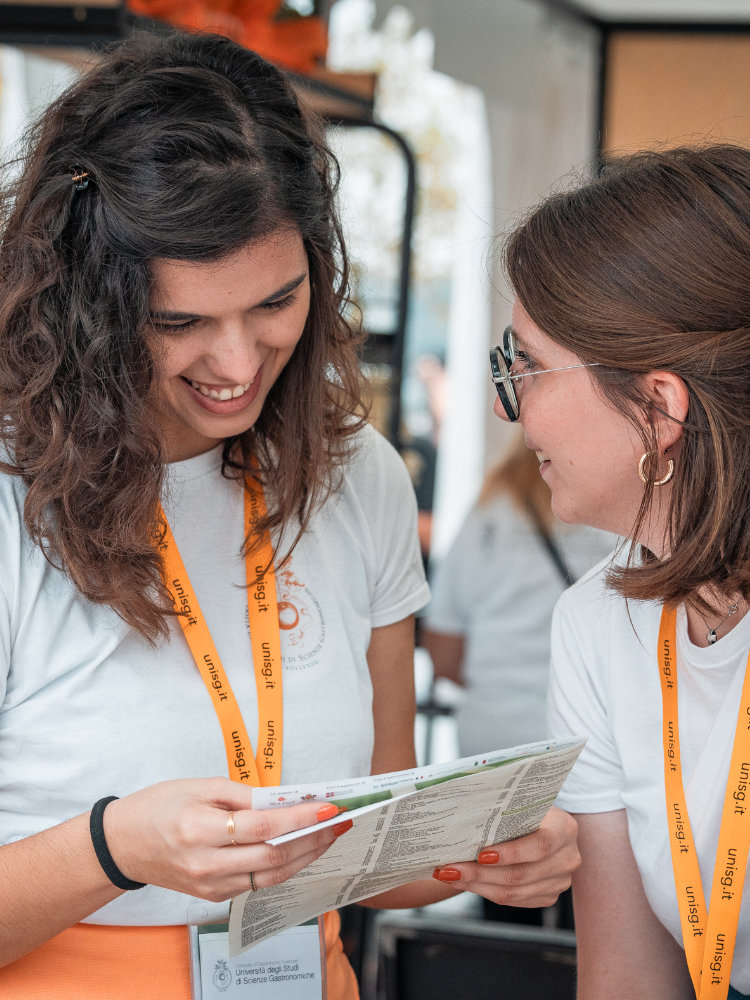
Activities at the UNISG stand include conferences, workshops, tastings and meetings, bringing together faculty members, students, alumni and companies from the University’s network.
Thursday, September 24th
The Whole Ingredient: Making the Most of Everything to Waste Nothing
Free admission, no booking required
This short activity offers an insight into the working and research methods of the Pollenzo Food Lab in the fields of food innovation and the valorisation of raw materials. A look at the FEAST project – Food systems that support transitions to hEalthy And Sustainable dieTs – will reveal, through the senses, the unexpected possibilities and resources that can be found within a vegetable, and their potential to contribute to a more sustainable future.
The activity will be available throughout the day and will take place inside the University of Gastronomic Sciences of Pollenzo’s Mobile Laboratory, an innovative space dedicated to sensory education and food culture.
UNISG TALK
Does the Mediterranean Diet Still Exist?
Free admission with booking
UNISG and AMD (Italian Association of Clinical Diabetologists) explore the contemporary relevance of the therapeutic and nutritional values of the world’s most celebrated diet. The event will also introduce the brand-new Executive Master in Food Medicine – Food as Medicine, which combines online classes with six weekends of in-person lessons in Pollenzo
The Relish Living Cookbook
Free admission, no booking required
Share a recipe. Tell a story. Help create a collective recipe book in real time.
What recipe tells a story about you, your family or your community? Terra Madre visitors are invited to share a family recipe passed down through generations, a traditional dish, or simply their favourite recipe—anything that holds a special meaning for them. Through postcards and QR codes distributed during the event, participants can contribute recipes, memories and food-related stories to the collective RELISH archive. Together, these contributions will create a living, dynamic collection of recipes reflecting the diversity, mobility and creativity of today’s food cultures.
Contacts: Simone Cinotto — s.cinotto@unisg.it; Claudia Sbuttoni — c.sbuttoni@unisg.it

ROUNDTABLE DISCUSSION
Drinks and Beverage with Materia Rinnovabile – Renewable Matter
Free admission with booking
The global beverage market is worth approximately €2 trillion and continues to grow, particularly in the non-alcoholic segment. Demand for alcoholic beverages is slowing, while interest in low- and no-alcohol alternatives is increasing—the non-alcoholic beer market alone is worth $24 billion—as is demand for functional drinks.
Consumers are looking for innovative beverages designed to promote longevity, strength and beauty, reminiscent of ancient elixirs, as well as new products emerging from the principles of a circular economy.
Materia Rinnovabile, the economics magazine, in collaboration with UNISG, presents its new issue dedicated entirely to the theme of Drinks and Beverage.
During this round table, moderated by UNISG Professor of Circular Economy for Food Franco Fassio, journalists from Materia Rinnovabile will discuss trends, innovation, the circular bioeconomy, packaging and decarbonisation. In collaboration with organisations such as the Center for Circular Economy in Coffee, Acetyca and Vigneti Vinessa, participants will also have the opportunity to taste beverages made from cascara and coffee leaves, non-alcoholic drinks based on Italian organic artisanal vinegars, and wines that contribute to the regeneration of territories through circular practices.
WORKSHOP WITH TASTING
Breads of the World: The Ark of Taste Between Africa and Asia
Paid event, booking required. €8 / €6 for Slow Food members, UNISG students and alumni
During this workshop, a student from Africa and a student from Asia will present a bread from their homeland, explaining its ingredients, how it can be made at home and most importantly the stories, traditions and memories linked to it.
The breads will be tasted on their own and paired with Ark of Taste products from the same continent, such as preserves, honey or cheese.
ROUNDTABLE DISCUSSION
UNISG PhD and Research Fellowship Projects
Free admission with booking
Food choices and psychology, health and nutrition, marketing, and the perception of insects are among the research topics explored by research fellows and PhD students at the University of Gastronomic Sciences. During the event, they will present and discuss their research projects.
Chiara Chirilli will discuss how psychological and behavioural characteristics can influence adolescents’ sustainable food choices, drawing on findings from the European FEAST project – Food systems that support transitions to hEalthy And Sustainable dieTs; Andrea Devecchi will explore how taste alterations in women with breast cancer can affect their quality of life and prognosis; Riccardo Migliavada will focus on the analysis of decision-making processes related to food choices and the promotion of sustainable diets; Dina Moawad will examine public and private resilience strategies in the Middle East and North Africa, drawing on new insights into the factors behind external stresses and shocks arising from international grain markets, as well as possible local solutions to address them; Joseph Umejesi will discuss the role of marketing persuasion in fostering consumer acceptance of edible insect-based foods, analysing the past, current trends and future directions
ROUNDTABLE DISCUSSION
Food in Transition: How Ecological, Energy and Digital Transitions Are Changing Today’s Consumption
Free admission with booking
The food system is at the center of major transformations that involve how we produce, distribute, communicate and consume food.
The ecological, energy and digital transitions, together with the evolution of diets towards more sustainable models and a greater presence of plant-based foods and alternative protein sources, are creating new challenges but also offering important opportunities.
Tackling these challenges requires new skills and an integrated vision. Food science needs to develop more sustainable processes and products and the ecological transition requires more efficient supply chains capable of reducing consumption, leveraging renewable energies and utilizing resources more responsibly. Monitoring the environment and resources through observation provides essential data for more informed decisions, while systemic design reimagines supply chains according to the principles of circularity and valuing resources. Additionally, the media can play a decisive role in narrating this change, shaping citizens’ perceptions, trust and behaviors.
This session is based around a dialogue between experts from different backgrounds who can reflect on how to accompany food system transitions, adding value to local areas, promoting a responsible use of resources and creating new expertise to help confront the challenges of the future.
During the meeting we will also present the new inter-university Undergraduate Degree in Food Tech for Ecological Transition.
With:
Piero Boccardo, professor of Geomatics, Turin Polytechnic
Paolo Dabove, associate professor of Geomatics, POLITO
Franco Fassio, lecturer in Design, UNISG
Luca Antoniazzi, researcher in Communication and Audiovisual Culture, UNISG
Moderated by: Maria Piochi, lecturer in Food Science and Technology, UNISG
WORKSHOP WITH TASTING
A Vermouth of Turin from Pollenzo
Paid event, booking required. €5 / €4 for Slow Food members, UNISG students and alumni.
A tribute to General Paolo Francesco Staglieno, the innovative winemaker from the Savoy court who worked in the Agenzia di Pollenzo cellars in the 19th century, Vermouth Pollentia is the result of a collaboration between the Wine Bank and Azienda Cocchi.
With a limited production run, it celebrates the enological history of Pollenzo and supports its future, with all sales proceeds being used to fund scholarships for students at the University of Gastronomic Sciences.
Spearkers:
Roberto Bava – Azienda Cocchi
Giusi Mainardi – Lecturer in History of the Vine and curator of The Great Book of Vermouth di Torino
Federico Piemonte – Banca del Vino
WORKSHOP WITH TASTING
Alta Langa Wines Meet La Granda’s Pollenzia Piedmontese Black Pork Charcuterie
Paid event, booking required. €12 / €10 for Slow Food members, UNISG students and alumni.
A meeting between two of Piedmont’s best products, united by a deep connection to the land, biodiversity and gastronomic culture.
On one side, the Piedmontese Black pig, a native breed recovered thanks to the commitment of a handful of farmers of La Granda, featuring in a cured meat tasting that tells a story of protection, quality and tradition. On the other, Alta Langa DOCG Metodo Classico sparkling wines, expressing the character of the Piedmontese hills and their extraordinary viticultural vocation.
Guiding the tasting journey are Sergio Capaldo, founder of La Granda and a key figure in the recovery and promotion of the Piedmontese Black pig, and Paolo Rossino, a UNISG alum and director of the Alta Langa consortium, who will accompany guests in discovering pairings between the cured meats made with Piedmontese Black pork and vintage sparkling wines made from Pinot Noir and Chardonnay grapes.
A dialogue between two excellent products that have transformed the protection of agrifood heritage into a model of quality and local identity.
Friday, September 25th
The Whole Ingredient: Making the Most of Everything to Waste Nothing
Free admission, no booking required
This short activity offers an insight into the working and research methods of the Pollenzo Food Lab in the fields of food innovation and the valorisation of raw materials. A look at the FEAST project – Food systems that support transitions to hEalthy And Sustainable dieTs – will reveal, through the senses, the unexpected possibilities and resources that can be found within a vegetable, and their potential to contribute to a more sustainable future.
The activity will be available throughout the day and will take place inside the University of Gastronomic Sciences of Pollenzo’s Mobile Laboratory, an innovative space dedicated to sensory education and food culture.
CONFERENCE
Sustainability, Biodiversity, Innovation: Results of the Research Project Run by CNH, UNISG and xFarm
Free admission with booking
An often-undervalued ecosystem, permanent pastures are crucial for soil health, biodiversity and the resilience of agroecosystems.
The University of Gastronomic Sciences of Pollenzo, in close synergy with CNH and xFarm Technologies, has carried out a study within a major agricultural operation in Germany, aiming to document and quantify the environmental and ecosystemic value of these grasslands through the monitoring of several indicators—including soil organic matter, biological soil quality (measured via arthropod communities) and pollinator activity.
The project made it possible to put together a picture of the health status of the permanent pastures under observation, comparing areas characterized by different management intensities, thereby providing a knowledge base useful for understanding the role these ecosystems play in agriculture and biodiversity.
During the event, we will present the results of the project and an UNISG-produced video.
With:
Maura Avallone, agronomist and sustainability specialist, xFarm
Daniela Ropolo, Head of Sustainable Initiatives, CNH
The Relish Living Cookbook
Free admission, no booking required
Share a recipe. Tell a story. Help create a collective recipe book in real time.
What recipe tells a story about you, your family or your community? Terra Madre visitors are invited to share a family recipe passed down through generations, a traditional dish, or simply their favourite recipe—anything that holds a special meaning for them. Through postcards and QR codes distributed during the event, participants can contribute recipes, memories and food-related stories to the collective RELISH archive. Together, these contributions will create a living, dynamic collection of recipes reflecting the diversity, mobility and creativity of today’s food cultures.
Contacts: Simone Cinotto — s.cinotto@unisg.it; Claudia Sbuttoni — c.sbuttoni@unisg.it
MEETING
Piedmont’s Living Agroecological Labs
The different locations of the Living Laboratory of Agroecology in Piedmont will come together for an informal and convivial exchange, weaving together ideas, experiences and perspectives developed in different areas.
Each location brings its own agroecological practices, challenges and visions for the future. The goal is to uncover connections, shared issues and possible collaborative paths. It will be an opportunity to meet in person, put faces to the networks, strengthen community bonds and imagine together how the Living Lab can grow.
Between coffee and conversation, we will build bridges between our fields.
Organized by Paola Migliorini, professor of Agronomy and Herbaceous Crops.
WORKSHOP WITH TASTING
From Idea to Bottle: How a Passion for Kombucha Turned into a Business
Paid event, booking required. €6 / €5 for Slow Food members, UNISG students and alumni.
From classes at UNISG to creating an artisanal beverage brand: What does it really take to start a business today?
Through the story of Kombrù, UNISG alumnus Paolo Brussino will guide participants through the practical, bureaucratic and creative steps necessary to launch and develop an artisanal venture in Piedmont.
UNISG Talk:
Making the Invisible Visible: An Ecofeminist Look at Ecosystem Services
Free admission with booking
We are surrounded by constant work between human and more-than-human communities that sustains life yet remains invisible: pollination, the slow formation of soil, the care that keeps communities alive.
Taking an ecofeminist look at the concept of ecosystem services, we ask why our food systems assign value only to what is marketable, and we attempt to uncover common patterns of devaluation and invisibility regarding nature’s labor and care work.
Can the concept of ecosystem services be a tool for revealing the threads of care and reciprocity that run through our food systems? Can it help us transform how we design policies, build agroecological systems and imagine agroecosystems that are more just and fair?
Organized by Chiara Flora Bassignana, research fellow in Agroecology.
UNISG Talk: Can Your Shopping Change the World? Sustainability on Labels and the Role of Consumers
Free admission with booking
The sustainability of food systems is at the center of policymakers’ agendas at all levels and is communicated by producers as an attribute of quality.
But how do you regulate such a multifaceted and variable aspect? How can we be sure that sustainability claims are reliable? Can a responsible consumer truly make a difference to food sustainability through their purchasing choices? These and other questions will be discussed by examining the most recent initiatives by public and private regulators on a global scale.
Organized by Lorenzo Bairati, professor of Comparative Private Law, and Elena Corcione, researcher in International Law.
WORKSHOP WITH TASTING: Colombian cacao is much more than just an ingredient—it’s a heritage of biodiversity, land, and communities
Paid event, booking required. €6 / €5 for Slow Food members, UNISG students and alumni.
At GALUP Store & Caffetteria Torino – Via Andrea Doria, 7, Turin
Cacao Disidente was born in Colombia with the aim of promoting specialty cacao through direct collaboration with growers, researching and selecting the varieties with the greatest aromatic potential and highlighting the diversity of Colombian territories.
Telling us about this experience will be Manlio Larotonda, a former student of the University of Gastronomic Sciences of Pollenzo, fermentation expert and founder of Cacao Disidente. Originally from Turin, Manlio has brought his expertise into the world of cacao, working on fermentation processes to enhance its aromatic profiles and create value for local producers.
A tasting event to discover the biodiversity of Colombian specialty cacao, learn about the work of those who grow it, and explore new possibilities for using cacao, from the chocolate bar to making the most of its shell.
CONFERENCE
Porta Palazzo: An Oral and Sensory History of Europe’s Biggest Market
Free admission with booking
A presentation of the book published by Donzelli that tells the story of Turin’s Porta Palazzo market through interviews with the eight main migrant communities.
Memories of migration, home cultures, ways of being in Europe and new diasporic geographies intertwine with food and sensoriality.
Organized by Gabriele Proglio, professor of Contemporary History.
WORKSHOP WITH TASTING
La Granda’s Pollenzia Piedmontese Black Pork Charcuterie
Paid event, booking required. €8 / €6 for Slow Food members, UNISG students and alumni.
Piedmont used to have its own native pig breed, the Cavourese, which was fairly widespread until the 1930s and ’40s, when the arrival of other breeds more suited to intensive farming led to its disappearance.
But in 2020, after around a decade of crosses, a few farmers, first and foremost Roberto Costa, managed to obtain a breed with similar characteristics, now officially recognized as the Piedmontese Black native pig breed.
The breed’s high-quality meat demands proper processing, which is where the La Granda consortium comes in, transforming the Piedmontese Black pork into pancetta tesa, mortadella, prosciutto cotto, guanciale, traditional lardo and salame crudo. Don’t miss this guided tasting of a selection of their products!
WORKSHOP WITH TASTING: Craft Beer? A Question of Style
Paid event, booking required. €8 / €6 for Slow Food members, UNISG students and alumni.
A journey to discover different styles of craft beer together with Sagrin, an independent brewery from Calamandrana (province of Asti).
Tasting four beers reveals how just a few simple ingredients can be used to create surprisingly diverse aromas, flavors and characters. Which will be your favorite? Each sip is paired with a small local specialty from the area where the brewery has its roots, between Monferrato, Langhe and Roero.
Saturday, September 26th
Sensory Journey to Discover Taste
Free admission, no booking required
Put yourself to the test with a unique experience: you will evaluate different samples using your senses!
A special opportunity to discover the world of sensory analysis and learn how to identify aromas, flavours, colours and textures.
The test will be available throughout the day until 3:00 pm and will take place inside the University of Gastronomic Sciences of Pollenzo’s Mobile Laboratory, an innovative space dedicated to sensory education and food culture.
The Relish Living Cookbook
Free admission, no booking required
Share a recipe. Tell a story. Help create a collective recipe book in real time.
What recipe tells a story about you, your family or your community? Terra Madre visitors are invited to share a family recipe passed down through generations, a traditional dish, or simply their favourite recipe—anything that holds a special meaning for them. Through postcards and QR codes distributed during the event, participants can contribute recipes, memories and food-related stories to the collective RELISH archive. Together, these contributions will create a living, dynamic collection of recipes reflecting the diversity, mobility and creativity of today’s food cultures.
Contacts: Simone Cinotto — s.cinotto@unisg.it; Claudia Sbuttoni — c.sbuttoni@unisg.it
WORKSHOP WITH TASTING
Breads of the World: The Ark of Taste Between Europe and Africa
Paid event, booking required. €8 / €6 for Slow Food members, UNISG students and alumni
During this workshop, a student from Africa and a student from Asia will present a bread from their homeland, explaining its ingredients, how it can be made at home and most importantly the stories, traditions and memories linked to it.
The breads will be tasted on their own and paired with Ark of Taste products from the same continent, such as preserves, honey or cheese.
Food Professions: Stories from UNISG Alumni
Free admission with booking
“Diversity” would be a good word to sum up the food industry job market.
Acting as cultural interpreters and bridges between communities, UNISG graduates create connections and value in the world of food. Entrepreneurs, communicators, marketing experts, trainers, project managers: Come listen directly to former students from around the world as they share their perspective on gastronomy and how they interpret it as a profession, a calling and a way of life.
WORKSHOP WITH TASTING
Legumes as Heritage and Innovation
Paid event, booking required. €5 / €4 for Slow Food members, UNISG students and alumni.
This workshop explores legumes both as cultural heritage and as forward-looking food innovation, featuring EarthPulse, a versatile legume-based pasta developed by alumni and students for the EIT Food Challenge.
Enriched with spices and flavors from different culinary traditions, EarthPulse has a complete amino acid profile. The workshop places this product within the broader context of food sovereignty, accessibility and protein diversification in sustainable diets. In collaboration with the Slow Beans network, the workshop also connects innovation to biodiversity and traditional legume varieties, highlighting how food systems can be strengthened through both scientific formulation and traditional knowledge.
WORKSHOP WITH TASTING: When Apples Speak Like Grapes
Paid event, booking required. €10 / €8 for Slow Food members, UNISG students and alumni.
Despite often being single-varietal, vintage-dated and aged in oak barrels, cider is neither wine nor beer, and it occupies a smaller niche compared to its grape- and grain-based counterparts.
This tasting will guide you on a journey to discover a craft—an art form that was banned in Italy in the early 20th century: the production of apple cider. We’ll explore the Italian terroir through a lens that has only recently been revived thanks to the work of a small group of passionate custodians, and we’ll discuss the future of this small industry.
Organized by cider expert and UNISG alum Ivo Freeman.
The Whole Ingredient: Making the Most of Everything to Waste Nothing
Free admission, no booking required
This short activity offers an insight into the working and research methods of the Pollenzo Food Lab in the fields of food innovation and the valorisation of raw materials. A look at the FEAST project – Food systems that support transitions to hEalthy And Sustainable dieTs – will reveal, through the senses, the unexpected possibilities and resources that can be found within a vegetable and their potential to contribute to a more sustainable future.
The activity will be available throughout the day from 3:30 pm and will take place inside the University of Gastronomic Sciences of Pollenzo’s Mobile Laboratory, an innovative space dedicated to sensory education and food culture.
MEETING
Viral Recipes: How Social Media Is Transforming Food Communication
Free admission with booking
How do recipes change when they circulate on social media? In conversation with Cooker Girl (Aurora Cavallo), historian Simone Cinotto (UNISG) and philosopher Andrea Borghini (University of Milan) will explore how digital platforms are transforming food communication, learning, creativity and authority. The discussion will reflect on the role of online recipes and food media in connecting communities, influencing habits and reshaping contemporary food knowledge. The event is part of the activities of the European RELISH research project.

WORKSHOP WITH TASTING
From Dumplings to Baozi to Buns: The Story of Tuttofabrodo
Paid event, booking required. €12 / €10 for Slow Food members, UNISG students and alumni.
Turin restaurant Tuttofabrodo came out of Elisa Neri’s passion for Asian cuisine and her desire to bring an authentic but little-known cuisine to Italy.
A graduate of UNISG, Elisa spent several years working in marketing for Caffarel and Saclà before deciding to turn her dream into a business venture. The idea took shape during her time in Singapore and China, particularly Shanghai, where she discovered the extraordinary culture of dumplings and fell in love with the famous soup-filled xiaolongbao. This experience sparked a vision: to create a place where quality, craftsmanship and accessibility coexist, allowing everyone to experience true Asian tradition.
To realize her project, Elisa returned to China to deepen her knowledge of traditional techniques and began a lengthy search for professionals specialized in dumpling preparation. After years of study, research and development, Tuttofabrodo finally came to life. Today, it is a restaurant dedicated to authentic, artisanal Asian cuisine, where every dumpling is handmade in respect of tradition, aiming to offer a genuine experience rooted in flavor, culture and sharing.
Tastings:
Baozi with caramelized pork
Buns with yuzu custard, paired with yuzu sake
WORKSHOP WITH TASTING
Wagyu Masterclass and Tasting
Paid event, booking required. €15 / €12 for Slow Food members, UNISG students and alumni
Led by Paolo Tucci, UNISG alumnus and CEO of Meat Japan, a company with offices in Kyoto, Japan, and Saronno, Italy, this masterclass explores the secrets of Wagyu cattle farming, as well as approaches to butchering, cooking and processing.
Through a new perspective on the Japanese Wagyu beef sector, focused on developing an increasingly sustainable relationship between farmers, butchers, processors and consumers, participants will have the opportunity to taste this highly prized meat, including bresaola and guanciale.
Sunday, September 27th
Sensory Journey to Discover Taste
Free admission, no booking required
Put yourself to the test with a unique experience: you will evaluate different samples using your senses!
A special opportunity to discover the world of sensory analysis and learn how to identify aromas, flavours, colours and textures.
The test will be available throughout the day until 3:00 pm and will take place inside the University of Gastronomic Sciences of Pollenzo’s Mobile Laboratory, an innovative space dedicated to sensory education and food culture.
WORKSHOP WITH TASTING
Understanding Coffee: From Genetics to Our Daily Cup
Paid event, reservation required. €6 / €5 for SF members, UNISG students and alumni.
We’ll take a look at the case study of Colombia with UNISG alumni Gabriela Montanez and Francesco Anastasi, who met while studying together and, leveraging the knowledge and skills acquired in Pollenzo, founded the Santaromero roastery.
The Relish Living Cookbook
Free admission, no booking required
Share a recipe. Tell a story. Help create a collective recipe book in real time.
What recipe tells a story about you, your family or your community? Terra Madre visitors are invited to share a family recipe passed down through generations, a traditional dish, or simply their favourite recipe—anything that holds a special meaning for them. Through postcards and QR codes distributed during the event, participants can contribute recipes, memories and food-related stories to the collective RELISH archive. Together, these contributions will create a living, dynamic collection of recipes reflecting the diversity, mobility and creativity of today’s food cultures.
Contacts: Simone Cinotto — s.cinotto@unisg.it; Claudia Sbuttoni — c.sbuttoni@unisg.it
UNISG TALK
Recipes in Movement: Food, Diaspora and Memory
Free event, reservation required
Moderated by Claudia Sbuttoni (UNISG), this conversation explores what happens to recipes when people move across places and communities. Drawing on the RELISH project, the discussion considers how recipes can carry memories while also taking on new meanings through migration.

WORKSHOP / INSTALLATION
How Sweet Is Your Sugar?
Free, open access
Explore your “addiction” to sugar through a 5–10-minute journey through an exhibition that uses scents, tactile sensations, sounds and images to tell the true cost of this product. Going beyond simple sweetness, sugar invites you to reflect on the reality of its production. The olfactory power of sugar is harnessed to allow the product itself to tell its story, revealing its hidden costs. From a sweet beginning to a bitter ending, the journey aims to raise consumer awareness and encourage reflection on working conditions, environmental impact and global inequalities. Created by students Martina Ferioli, Francesca Ferretti and Sara Gebbinck for UNISG’s “Sweet and Fragrant” course, with the collaboration of lecturers Maddalena Borsato and Elena Mancioppi.
ROUNDTABLE DISCUSSION
UNISG PhD and Research Fellowship Projects
Free, reservation required
The impact of climate change on agriculture and communities, ecological economics and international food markets, the symbolic and cultural dimensions of food, and public and private food policies are some of the topics addressed by the research activities of the research fellows and PhD students at the University of Pollenzo, who will present and discuss them during the meeting.
Prisca Gaiero will present her field research in Peru on coffee and cocoa. Food in Agri-cultures: practices, narratives, symbolic and cultural dimensions in the social life of food. Francesco Gentile: Beyond the bubble: assessing the resilience and performance of tourism-driven Prosecco diversification. Valentina Bruno will speak about ecological economics and complex systems theory; Federica Fortugno about Food Policy and the need to expand policy networks to include private actors as well. Elena Fusar Poli will discuss the choices of agricultural producers in Southern Europe in the face of climate change and the increase in pests.
Homemade Plant-Based Beverages
Paid event, reservation required. €15 / €13 for SF members, UNISG students and alumni
Giorgia Chiodi Latini – daughter of Antonio Chiodi Latini and a UNISG alumna – is the founder of Emporio Vegetale, an entrepreneurial project conceived to promote an entirely plant-based food culture. In this workshop, together with Emanuele Cuccu – who recently became a partner – they will talk about plant-based drinks, how to make them yourself at home, their benefits, their environmental impact and how they can then be used in cooking: in savoury dishes, for example in a béchamel sauce; in desserts, such as pastry cream; or cold, as in mayonnaise, or simply as a drink. The workshop will be accompanied by a tasting of plant-based drinks and nuts such as almonds and cashews.
Curated by Giorgia Chiodi Latini and Emanuele Cuccu
Workshop with tasting: Fat on Fat
Paid event, reservation required. €12 / €10 for SF members, UNISG students and alumni
The farm is a magical place that Luca Grasselli has been gradually transforming over the years. As he likes to say, it is an imperfect place (“because perfection is boring”), in constant evolution: first a dairy and then also a farm, with the addition of a restaurant followed by event organization, and finally a shop in Cremona where cheeses, cured meats and vegetables are sold three days a week and an aperitivo is organized no more than once a week (“a sense of limit, as Carlin said”). The Cascina also hosts artists from around the world, bringing together art, food and conviviality.
“The value of community, amplified by attending the multicultural center that is Pollenzo, drove me to turn my family’s 17th-century farmhouse into somewhere everyone can bring their own values,” he says.
Don’t miss this tasting of his products, such as salami served on a slice of bread and butter (fat on fat), all self-produced, or their legendary rose cake.
Workshop with tasting:
Conceptual Ecologies and Future Food Models for a Divided Eastern Africa
Paid event, reservation required. €12 / €10 for SF members, UNISG students and alumni
In 2005, a series of earthquakes in the East African Rift Valley produced a ground fissure 56 kilometers long and 6 meters wide; geologists later confirmed that the rift was caused by volcanic activity and the expansion of tectonic faults in the Earth’s crust.
From this, it was deduced that in the future these fissures would expand until they physically separated eastern Africa from the continent, forming a new sea and dividing Africa.
Drawing on research from the fields of speculative gastronomy, marine biology, posthumanism, geography and the sociology of food and migration, this workshop hypothesizes what the traditions and food systems of East Africa will look like once it is physically separated from its original land.
Amuse-bouche versions of three dishes from a coastal, Afrofuturist context will be presented: one revisited traditional dish, one hypothetical dish representing cultural changes following biodiversity shifts and one dish reflecting the importance of preservation methods in times of migration.
Presented by UNISG Master student Nkemdilim Taft Ikenna Nnochirionye.
Visit the UNISG Campus during Terra Madre 2026
During Terra Madre Salone del Gusto 2026, discover Pollenzo and the campus of the University of Gastronomic Sciences through a guided tour lasting approximately one hour, available in Italian and English.
Dates and times
24 September – 11:00 am and 3:00 pm
25 September – 11:00 am and 3:00 pm
28 September – 11:00 am and 3:00 pm
BOOKING IS REQUIRED
For further details: info_student@unisg.it
+39 345 1638541 (WhatsApp)
Groups of more than 5 people must contact UNISG directly and book at least two days before the requested date.
Meeting point
Under the entrance arch of the Agenzia
Piazza Vittorio Emanuele 9, Pollenzo
Tours are available in Italian and English.
Pollenzo can be reached from Bra by local bus lines 1 and 2.
During your visit, you can also explore other highlights of the village, including the Banca del Vino and the Albergo dell’Agenzia.