26 November 2026
Thursday, November 26 • 6 PM - 8:30 PM - The Italian Sporting Club Johannesburg
Germiston, GP
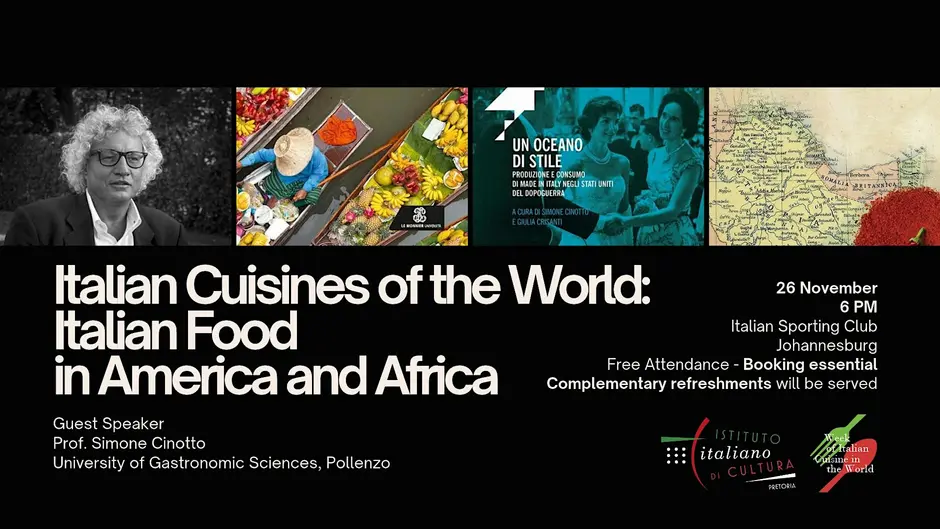
This year’s Week of Italian Cuisine in the World (23–30 November 2026), celebrates the recognition of Italian cuisine as UNESCO Intangible Cultural Heritage, under the official theme “Italian Cuisine as UNESCO Heritage: Territories and Outstanding Food Supply Chains”.
For the occasion, the Italian Cultural Institute in Pretoria invites you to a special seminar with Professor Simone Cinotto, Professor of Modern History at the University of Gastronomic Sciences in Pollenzo, Italy. His seminar invites us to look beyond the idea of Italian cuisine as something that developed exclusively within Italy, exploring how encounters with other peoples, territories and traditions have also shaped what we understand today as Italian food culture.
EVENT DETAILS
- Date: Thursday, 26 November 2026
- Time: 6:00 PM
- Venue: Italian Sporting Club, Johannesburg
- Admission: Free, with prior registration required
The seminar will be followed by complementary light refreshments, providing an opportunity to meet the speaker, exchange ideas and continue the conversation.
ABOUT THE SPEAKER
Professor Simone Cinotto is Professor of Modern History at the University of Gastronomic Sciences in Pollenzo, Italy, where he is Director of the Master's Programme in World Food Studies and Reference Professor for Fulbright cultural exchange programmes between Italy and the United States. His research focuses on the history of food, migration, identity and cultural exchange.
THE CONFERENCE
“Thank you for the salami and mushrooms you sent me. I made a sauce with the mushrooms and thought of you,” an Italian immigrant from Liguria living in Argentina wrote to his mother.
For many Italians who took part in the great waves of migration in the nineteenth and twentieth centuries, food was both a reason to leave and what continued to bind them most closely to Italy. In the late nineteenth century, emigrants left some of Europe’s poorest rural areas, where their everyday diet consisted largely of polenta and dark bread. Meat and white wheat bread were dreams that only “La Merica” could make come true. Along with their memories of hunger, immigrants carried culinary traditions associated with special occasions and the belief that food could hold together families separated by oceans and borders. Abroad, living conditions were often better: in the United States, Argentina and Australia, they ate beef three times a week rather than three times a year.
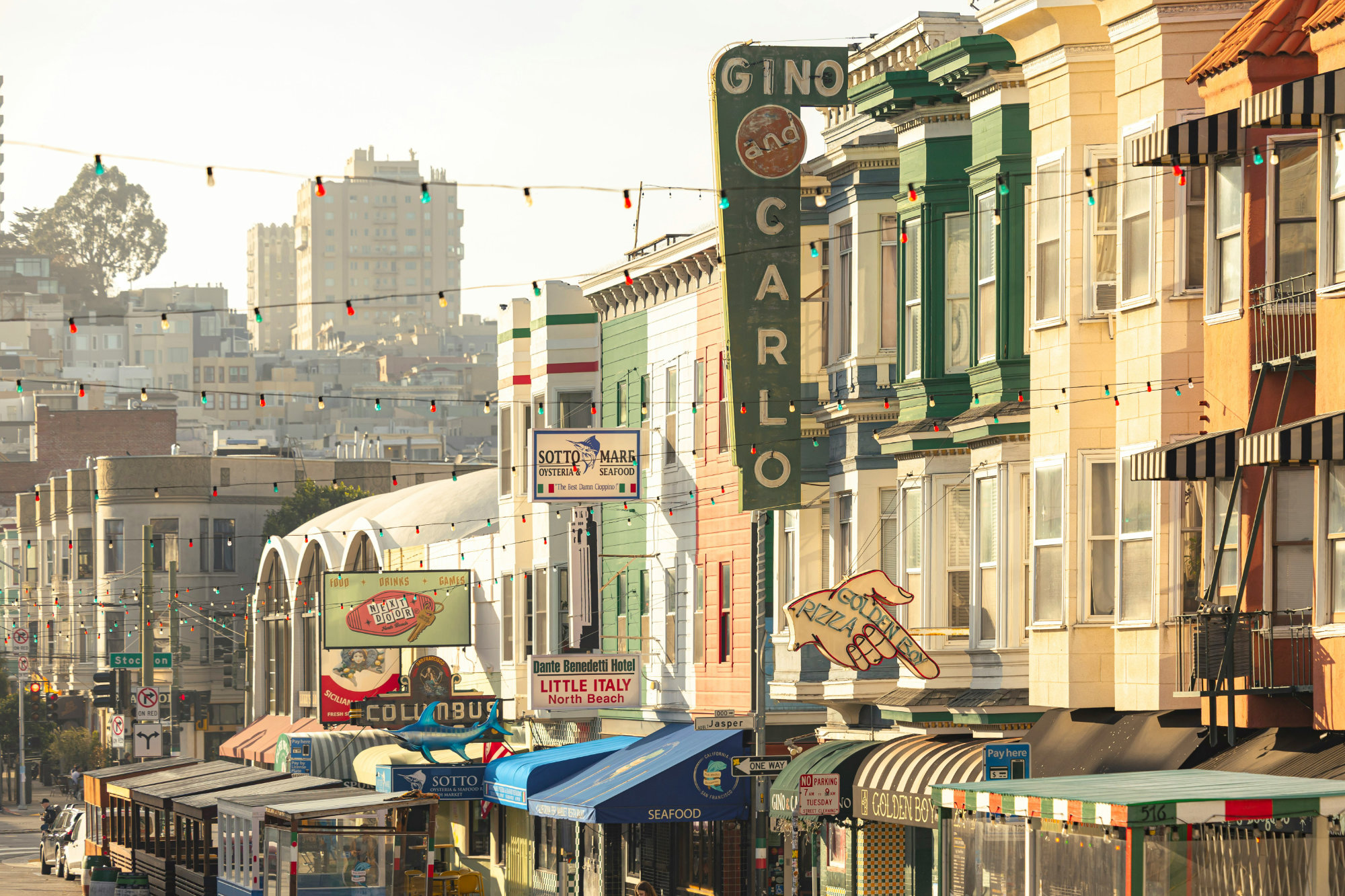
Many recipes that emerged from emigration, such as Italian American chicken parm, replaced vegetables in the original dishes with meat or made generous use of garlic, chili peppers, and tomato sauce—strongly flavored ingredients that came to be identified as “Italian.” The scale and distinctive patterns of Italian migration were decisive. The large number of migrants and their concentration in distinct communities (Little Italies) created new markets for the pasta, canned tomato, cheese, and olive oil industries, setting in motion the global expansion of “Made in Italy.” Farmers carried seeds in their pockets and began growing “Italian” vegetables—broccoli, zucchini, and eggplant—as well as grapes for winemaking, wherever they settled. Another significant strand of Italian migration was driven by the colonization of Eritrea, Somalia, and Ethiopia in East Africa, where new forms of “Italian cuisine” also emerged.
To feed the many single male immigrants, who were often joined by women and children only later, countless restaurants serving “Italian food” sprang up. From the United States and Argentina to Eritrea and Ethiopia, encounters between Italy’s regional culinary traditions and different cultures gave rise to a wide variety of dishes that nevertheless shared a recognizable family resemblance.
The emotional significance of food among emigrants endures today, in the age of Zoom and Instagram, in the lives of the many Italians who continue to leave their country. The tradition of the pacco da giù—a parcel sent from home, filled by family members in Italy with delicious foods rich in memories for their sons and daughters abroad—testifies to the enduring importance of food as a marker of identity for Italians around the world.