19 May 2015
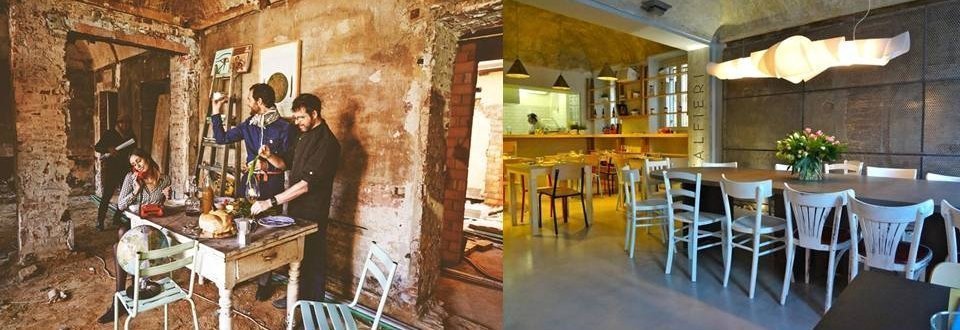
When Paolo Ferrarini asked me to write an essay for the New Gastronomes, I first thought of writing a beautiful communication piece on l’ALFIERI[1], a space dedicated to taste that Anna and I opened a year ago in the heart of Bra. I could have shared with you the challenges of being an entrepreneur in Italy, a country where one must deal with heavy bureaucracy and count with a recovering economy. I could also have told you about the beauty of planning a food and beverage project. All of the above would have been worth the essay, but instead, I thought I would rather share with you my observations on the mutation we live in… complexity in a few words.
After some time looking at the world we live in, I clearly noticed that the 3 main pillars of our society (Nature, Technology and Bureaudemocarcy) struggle to interact because they develop at a different speed.
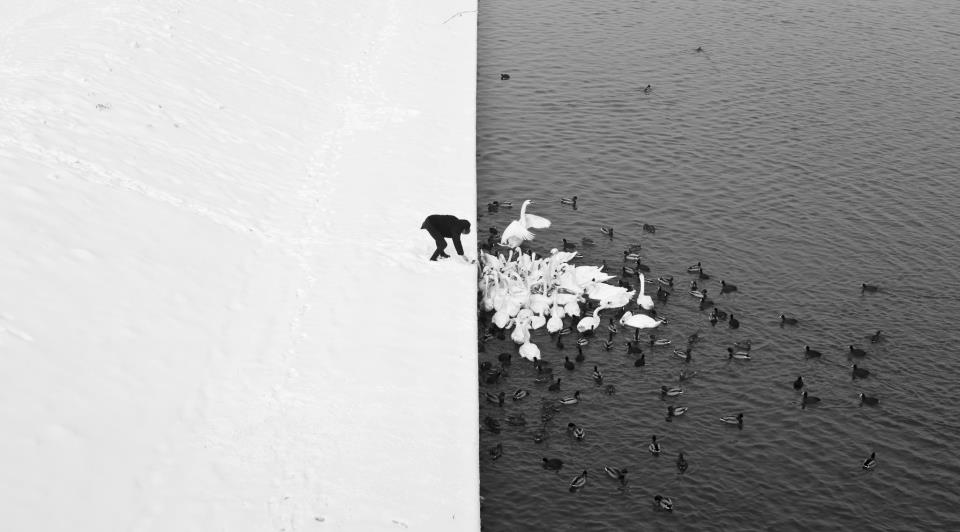
For centuries, Nature has ruled our pace of development because we live in nature and, ultimately, we are Nature. Even though it sometimes seems that natural lifetime is a variable element, if you look at the scale of the universe, it is not. Nature follows determined cycles where infinity of elements interact allowing biodiversity to exist. And this is the first pillar. Nature is there, nature is slowly there.
With this in mind and for some decades now, the Slow Food organisation[2] promotes the idea that we must realign ourselves with the natural pace of development. The very word “slow” has a powerful meaning when you look at society through the speed prism. Are we going too fast and furious? Now that we have linked our lives to computers and technology, did not we tie ourselves up to the processor’s speed of development instead of the natural one we were born with? Let me just remind you that according to Moore’s Law[3] it will double every two years, and that is exponentially fast.
So here comes our second pillar, technology.
In his latest album, Damon Albarn says that “we are everyday robots”[4], and I fear the day I will completely agree with him. Talking to New Gastronomes, I can only emphasize the fact that the time where people will 3Dprint their meal at home is getting closer[5]. We will interact with robots in the instant moment, where time will be reduced to the speed of our thoughts. A question remains open: what will happen when these robots will have the capability to learn from their mistakes and autonomously take decisions based on their programming and the information shared over the Internet?[6]
But technological progress has also opened a door to promising new ventures based on the principles of sharing economy. When you think about it, our survival on this planet is certainly due to our capacity to unite forces and share resources. So thanks to technology, our decisional power has been boosted by allowing us to compare prices, each other’s lives, other corners of the world, happiness, etc… this huge force is reshaping economic models around the globe. In the field of services, in which l’ALFIERI operates, we now must adapt to change, faster than ever. For example, Suppershare[7] and other platforms represent an incredible opportunity to explore new experiences in the food world. The monopoly by professionals in food to conduct an activity has been broken and reinvented. Today we say: “I know how to cook, I have a kitchen, I am connected to the web, so why wouldn’t I prepare you a meal at my home in exchange of a fee?” This is our right. Or is it? So how does bureaudemocracy, our last pillar in this essay, adapt to these new situations?
The democratic system is composed of a legislative body that produces laws and an executive one that enforces them. Bureaucracy is what makes that system function (or not). Everyday graduated lawmakers enter the system to put a legal frame around a situation and accordingly, an insurance company will value the risk it took to create that situation. Bureaucrats procrastinate and politicians campaign. Do you perceive another speed problem again here? The machine is torn between a slow complexity and a fast moment. It is huge, old and complex. But compromise takes time in a bureaudemocratic system, and when the political game gets faster and faster to adjust to people’s expectations, we end up with populist discourses and quick patches to deeply-rooted issues that would require long analysis and debate. There is no more left or right, there is an e-between.
So here we are, with technology running away at an exponential speed, followed by diet bureaudemocracy clumsily trying to catch up, and way behind, Nature standing still, wondering what the hell happened to us. You understand now where the complexity lies: pour all three forces with different speed in a shaker and try to create a balanced cocktail, ready to serve to society. Impossible? The answer might be in our ability to understand our own pace of life within the stream of mutation. And this is a gastronome’s most exciting challenge too.
For feedback or questions: gregoire@lalfieri.it
[4] http://www.damonalbarnmusic.com
[5] http://3dprintingindustry.com/food/
[6] http://waitbutwhy.com/2015/01/artificial-intelligence-revolution-1.html