
Preliminary Information
SCIENTIFIC COORDINATOR
Paola Migliorini
OTHER UNISG STAFF INVOLVED
Sandra Spagnolo
PARTNERSHIP
University of Turin – DISAFA (Italy), Associazione Antichi Mais (Italy)
PROJECT DURATION
36 months (January 2025 – December 2027)
FUNDING INSTRUMENT
Sviluppo Rurale Piemonte 2023-2027. SRA 16/1/2024 Conservazione agrobiodiversità - Banche del germoplasma vegetale
MAIN INTERDISCIPLINARY RESEARCH AREA IN UNISG:
Ecology and Sustainability
SDGs






Description
The activities planned under this project are intended to confirm and/or expand the information gathered for the phenotypic description during the GERMAIS project, and to compare the level of genetic variability present in the selected seed stocks.
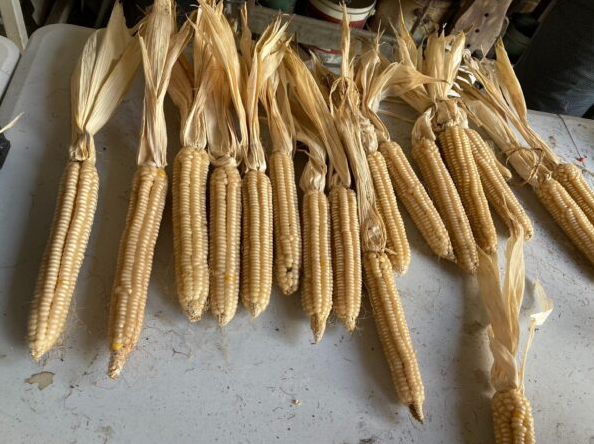
The GERMAIS 2 project forms part of a body of research carried out over the past twenty years on Piedmontese maize ecotypes, beginning with the first "Progetto Sementiero" (Seed Project), funded in 2006 by the Piedmont Region with the aim of entering in the National Register, as Conservation Varieties, the maize ecotypes recovered and characterised by CRAB (the Reference Centre for Organic Farming) and by the then newly founded Associazione Antichi Mais Piemontesi. The work of Germais 2 follows on directly from that carried out in 2023 under the project known as GERMAIS, and will make it possible to confirm and/or expand the information gathered for the phenotypic description. In addition, growing the seven varieties on farm will allow their level of genetic variability to be compared with that of the seed stocks selected in 2023.
In broad terms, the "GER-MAIS 2" project seeks to restore, maintain and improve agricultural biodiversity, to manage natural resources sustainably, and to maintain and enrich the region's stock of genetic resources through the conservation and reintroduction of traditional plant varieties across the territory.
Objectives
Specifically, the partnership has set itself the following objectives:
- characterisation, evaluation and selection of the seed stock to be placed in conservation at the DISAFA Bank for the three open-pollinated maize ecotypes known as "Pignoletto nero", "Ottofile nero" and "Quarantina del Canavese";
- in situ / on-farm conservation of the seven conservation varieties known as Ottofile Bianco, Ottofile Giallo, Ottofile Rosso, Pignoletto Giallo, Pignoletto Rosso, Ostenga del Canavese and Nostrano dell'Isola, together with the three new varieties to be registered;
- molecular characterisation using an NGS (next-generation sequencing) approach;
- sharing of information on cultivated biodiversity, participatory selection, resilience and adaptation to climate change, and the selection and management of local genetic resources;
- genotyping and phenotyping of the genetic resources, partly with a view to identifying specific traits of adaptation to differing and changing soil and climate conditions.
Expected results
The activities planned under Germais 2 are focused on achieving the following results:
- greater availability of suitable propagating material for the varieties under study;
- an estimate of the level of genetic variability present in farmers' in situ crops;
- identification of specific SNPs: detection and cataloguing of single-nucleotide polymorphisms for each ecotype analysed;
- creation of similarity dendrograms: construction of dendrograms illustrating the genetic relationships between the samples analysed;
- PCoA analysis: principal coordinates analysis to assess genetic variability within and between the ecotypes;
- an updated NGS database: updating of the NGS database with the new genomic sequences obtained from the analyses;
- comparison of genetic variability: assessment of the level of genetic variability present in the plots grown on farm compared with that present in the conserved seed stocks;
- greater awareness and information regarding local genetic resources, participatory and shared selection, resilience and adaptation to climate change, and the selection and conservation of varieties.
Progress to date
The first two years of the project have proceeded in line with the planned schedule: the establishment of the seed-increase plots for the nine traditional Piedmontese maize varieties, the phenotypic characterisation, the participatory selection of ears, and the outreach meetings. Work has begun on assessing the level of genetic variability, within and between the ecotypes, present both on farm and in the samples held in the seed bank.
The results obtained at the end of the project will be presented through a series of outreach meetings.
Publications
Updating
News from the Project
Meeting - Piedmontese Corn Varieties - Friday, September 25, 2026
In-Person Events in Piedmont — Summer–Autumn 2026
"Initiative funded by the Rural Development Complement 2023–2027 of the Piedmont Region – Intervention SRA16 – Conservation of agrobiodiversity – Germais 2 Project"
Initiative Funded by