29 April 2015
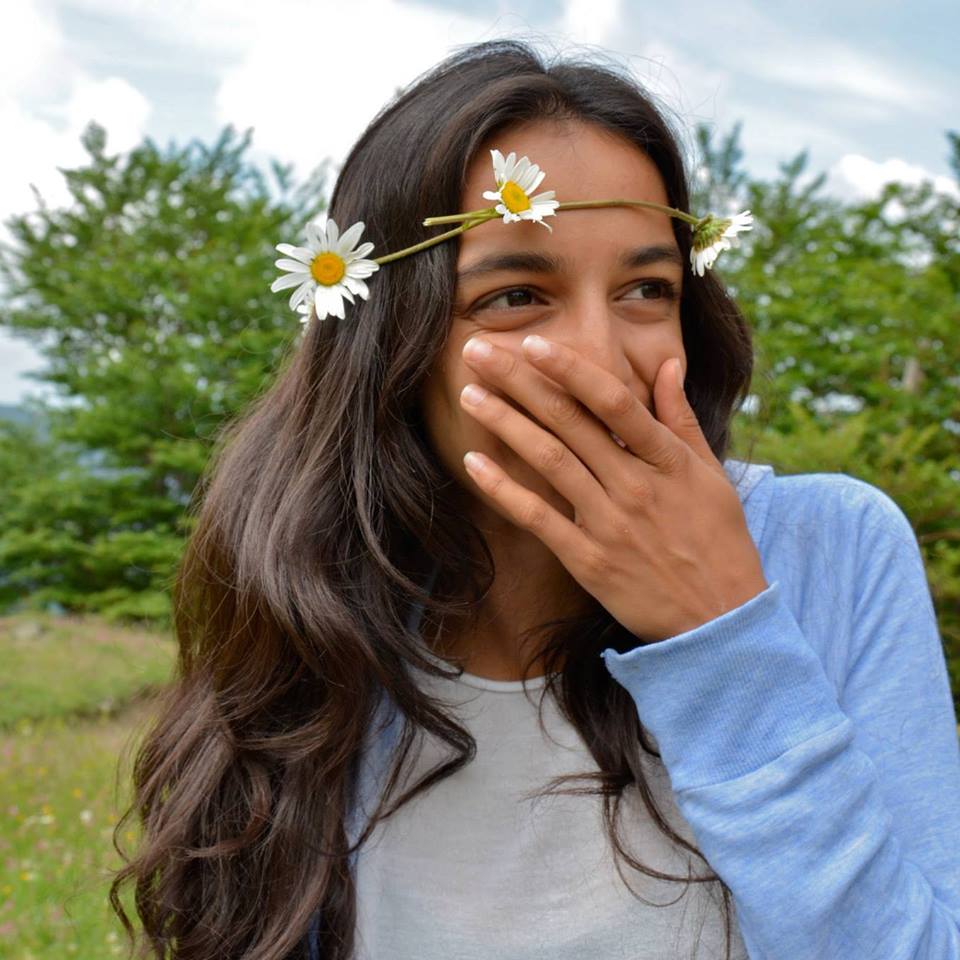
Her first name is actually Sheherzad, after the iconic storyteller and main character of “One Thousand and One Arabian Nights.” For a section full of anecdotes and personal accounts, we wanted to start by interviewing a person who likes telling stories. So let me introduce Sheherzad Maham Rizvi--born in Oklahoma, raised in Philadelphia, but Pakistani (“very important!”).
Francesca Monticone: Maham, what is your first food memory?
Sheherzad Maham Rizvi: When I was a toddler, my mom would serve me for breakfast roti (a Pakistani flat bread) fried in ghee, called paratha, with yogurt, sugar and a cup of chai (black tea with milk and sugar). Right after breakfast I would eat saunf, which are fennel seeds used as a breath-freshener, or digestive aid, or snack for kids, and head off to pre-school. One morning at school, I was eating my saunf at breakfast table, and “breakfast” arrived... It was hot oatmeal, which was grey and ugly and mushy, and there was cinnamon and apple on it, and I didn’t like those flavors then. I remember hesitantly putting a spoonful of oatmeal in my mouth, with the fennel seeds already half-chewed in there, and I just ended up vomiting it all back in the bowl at the breakfast table in front of all the other kids. Of course, that’s not what I associate with the first food I fell in love with, but it’s honestly the earliest thing I remember doing related to food.
FM: And this brings us straight to the main topic I wanted to explore with you: how did your double heritage, Pakistani and American, reflect in your food habits?
SMR: That was an evolution in my life.
All my years before eleven, let’s say, I identified affirmatively as Pakistani. My mom, in fact, was an immigrant in the U.S. at that point. English wasn’t her mother tongue, it was her first time figuring out a green card, and jobs, and what to do, or even how to be an independent adult as a woman. So in all my early years she didn’t think I was American. I didn’t think I was American. She thought I was a product of her, and she was still very much Pakistani. She only cooked Pakistani food, so in early childhood I really didn’t like American food that much. But eventually I evolved and adapted to my environment the more time I spent outside of my mother’s house. And, obviously, coming upon teenage years you desperately want to dissociate yourself from everything related to your parents. So I made myself much more American in my teens.
FM: And in teenage years one also becomes more independent in many senses; you start to be alone at home and cook. I remember the first pasta I cooked for myself, it was terrifying but a big satisfaction!
SMR: Exactly! As you made pasta, I made my mother’s dishes because that’s what I knew I liked, and it was a flavor I understood. But around sixteen I wanted to know how to cook Western food. At school we were getting The New York Times daily, and on Wednesdays they have a section called Dining & Wine, where there was a columnist called Mark Bittman. He had a column called The Minimalist, where he was writing recipes focusing either on minimal timing or minimal ingredients. I started cooking his recipes because they were approachable, and I picked only dishes that were outside of my familiar flavor palate, recipes with rosemary and thyme, for example… haha. But that wasn’t so easy, also because I didn’t know where to grocery shop at the beginning, but I ended up learning completely new things about my city and meeting different store owners in different neighborhoods. For example, I started going to the Italian market in South Philly and buying from Claudio’s Cheese Shop and Di Bruno Brothers’ Delicatessen.
FM: Oh, so that’s where you started to know--and love of course--Italian food?
SMR: Well, that comes later! At the time, I associated all Western food with “French food.” I didn’t know the difference. I didn’t know necessarily when I was cooking Italian, French, or Spanish. I just associated it all as Western. And also in America, since we don’t have a strong cultural cuisine, if you go to just any restaurant, the menu will probably have ingredients from all over the world but changing it to something else, for example it could be bollito misto served with Indian chutneys...
FM: Please, don’t tell me more, my Piemontese soul is rebelling!
SMR: I’m making that up, haha! But what I’m saying is there were some things that were obvious to me, for example I knew that if pimento was in a dish, it was Spanish. So I had some familiarities with some other countries’ ingredients, but I didn’t have an understanding of what truly is that cuisine.
After having learned how to cook and feeling like I have a comprehensive understanding of Western flavors, I realized I didn’t care about cooking that stuff anymore for myself at home. I wanted to cook what I liked eating, and what I liked eating is Asian cuisine.
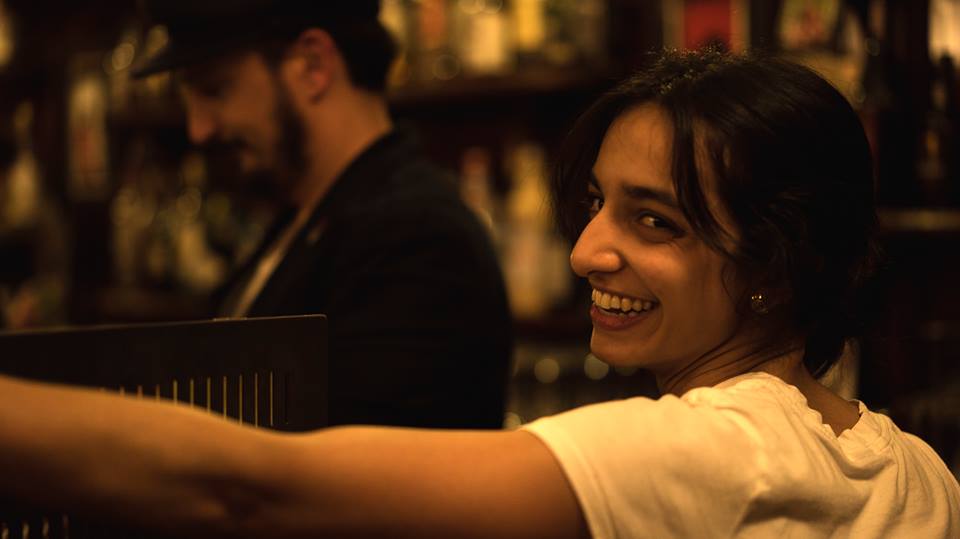
FM: And today, now that you have lived two and a half years in Italy, is Italian cuisine the third heritage for you?
SMR: So when I came here it was hard to figure out how to cook at home because I didn’t know where to source the ingredients I like to cook with. By now, I don’t remember the last time I cooked a Pakistani dish. I still cook plenty of Southeast Asian dishes, but simple things, like my egg with the sesame oil, sweet soy and chili. But otherwise I have a stash of pasta, I have passata di pomodoro che io ho fatto questa estate with an Italian family. And if I really have nothing, absolutely nothing in the house, and I don’t want to think about cooking, I make spaghetti al pomodoro. Now, that’s become my easy food. That’s because I’ve changed my style of buying. I want to buy from the farmers that live around me, I want to buy what they grow. And if I buy what they grow, I want to know how they eat it because I trust that they know the optimal way to cook it. Because of that, I’ve ended up becoming Italian in my kitchen.
FM: Here we go with the “Good, Clean and Fair!” What’s the role of the University in your change of perspective?
SMR: The University helped me to have a full comprehension of how our larger food system works. In three years we’ve had so many examples of what industrial, or intensive, or small-scale production are like. We have a formula for understanding products that we run into: you look at the packaging, look at the bottle, you read the ingredients, you smell it, you taste it, and you start to put together the pieces of what type of production went into this, which tells you a lot about the quality.
But from knowing all of these things, I’ve developed my palate in a different way: my palate is now attracted to food in its tastiest form, which has often ended up meaning “produced near me,” most likely in a small scale production. That’s why it’s important to me to know the story of a product and a producer: not all of these families we come across have incredibly “high quality tasting products” from an organoleptic perspective, but it’s their efforts that are tasty and perceivable in the finished product, and it’s their effort I economically want to support.