07 October 2015
When were given a list of internship possibilities, I was truly confused. I looked at most osterias on the guide along with their chefs and a description of what type of food they would serve only to be more flummoxed than when I had started! I thought how important it was to learn a great pasta or bake the perfect grissini to filleting anchovies and sardines, learning about the terroire was also an inspirational aspect of the experience, not to mention the suppliers and people involved in the whole process of putting those ingredients into a chefs loving, artistic hands. Being this confused, I asked the person responsible for our culinary ambitions to choose my eventual stage destination, after a few days and some research the possibilities were narrowed down to Dispensa- Pani e Vini in the beautiful geographic region of Franciacorte, a wine and grappa dominating region, with gorgeous vinyards, high society lifestyle and did I forget to mention 3 lakes all at half an hour from here or less! But most importantly the restaurant/enoteca/osteria’s culinary exploits are headed by something of a legend in the Italian ciulinary world, Chef Vittorio Fusari, the same man who spoke to us on our second day at UNISG, someone who conveyed his message with passion and vigour. My mind was made up and Dispensa was to be my internship destination.
Dispensa - Pani e Vini is located in the commercial centre of Torbiato. With holiday homes and lakes all around us, this place must be one that depends on seasons and vacation periods for the chunk of their business right? You couldn’t be more wrong! People are seen as early as 11 am at the wine bar, waiting for lunch service to start enjoying a nice sparkling Bellavista. The establishment is divided into 3 parts- enoteca where 25-30 people can be accommodated comfortably, osteria with about the same and restaurant with 50 covers more or less depending on reservations. Each “”outlet” has individual menus catering to the whims and fancies of the customers appetites. For example one can enjoy a panino hamburger at the enoteca, a silky smooth saffron risotto or a traditional meat and polenta plate at the osteria, or a very complex looking sturgeon and prawn plate which includes a tartare of prawn engulfed in thinly sliced sturgeon with sturgeon sorbet on top.
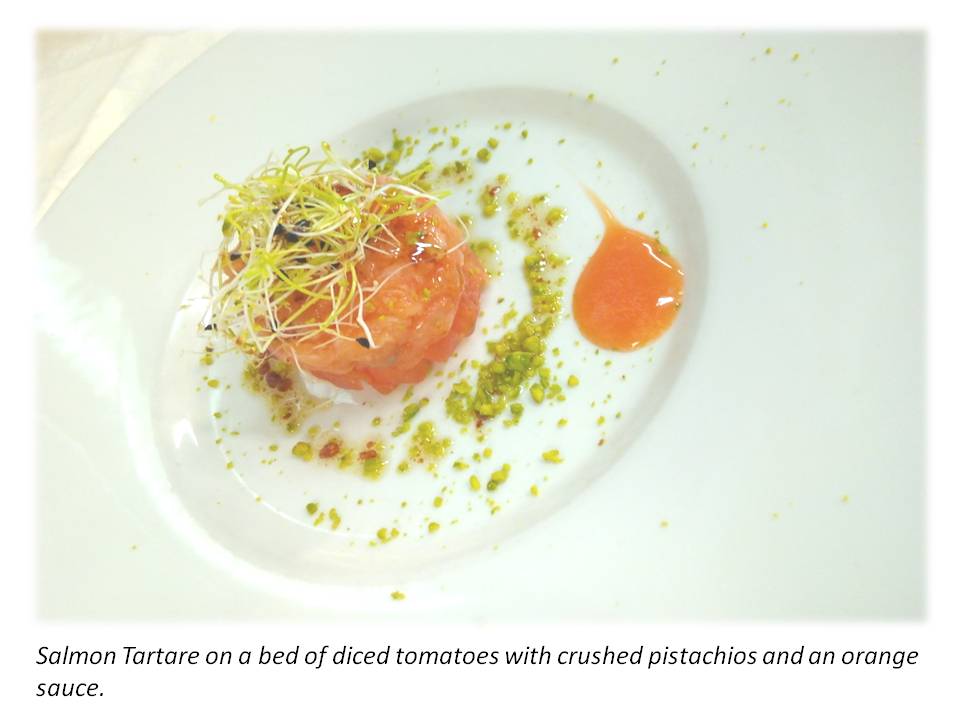
A typical day starts at 9 am, where one by one delivery trucks start rolling in with vegetables, dairy products, fish and meats, depending on what day it is and based on ordering requirements ofcourse. The kitchen department is broken into 2 parts, display kitchen and prep/dessert and bakery. All prep work and packing takes place downstairs where they are stored in either a meat or vegetable cella. I may have forgotten to mention that Dispensa has their very own humidity and air controlled cellars for all their cheeses and another one for their meats and salumis! The kitchen team comprises of 7 chefs, all varying in experience and age. As a stagista, your job is simple, make the chefs job simpler! Peeling and cubing potatoes, quartering sting beans, pin boning corrigone (a fish from the local lake of Iseo 5 kms away), blanching skinning and coring of tomatoes for confit, passing tonnes of boiled potato and cream through a drum sieve till your arm nearly falls off, complete processing of prawns from almost alive till vac-packed, the list is quite long actually, ill try to mention a few more as I go on. All this got me thinking! Extensive menus, complicated plates, tonnes of processing work, how do they manage it? How do these 6 chefs manage to get everything ready? How do they manage to convert 15/20 kgs of boiled meat and veg, minced, rolled into polpettinis or 10-15kgs of risotto into arancini and still be available for service and mise for the next day? How when there is a banquet function and 800 mini sliders have to be made (2 types- hamburgers and salmon with prawn), how do they do it!!???!! The answer… they don’t! Like myself only younger, there are at least 5 others doing their stage here. I like to call us the “minions”, the little elves who may not possess all the skill to put out fancy plates and sauce swirls, but we can sure use a peeler! We are the reason this restaurant is able to pull of what it does, busy lunch and dinner services through the week along with banquet functions and private dinners. Now I wouldn’t want anyone thinking that if it wasn’t for the minions this restaurant would collapse or that the dependency on us is like the relationship an infant shares with its mother, but more of how easy and comfortable this machine moves on because of us, cogs in the machinery! This is where I believe Chef Fusari has been very smart. He has contacts in most hotel based educational institutions from Piedmont, Lombardi all the way to Sicily and Japan. Hence, his restaurant will always have a constant influx of minions and an endless supply of kids varying from 15 years old to most recently even 55 years old! I would like to detach myself from the aspect of education for a few minutes and see what this means for him. He almost doubles his work force but doesn’t spend even quarter on salaries. He can afford to have time consuming procedures for sometimes redundant and very overlooked components of his plate, for example, the entire process of tomato confit, takes almost a whole day and a lot of energy spent for 1 tiny shrivelled quarter of confited tomato to go in a beef sandwich which in my opinion you cannot even taste. On the flip side for this very same example, there was a story behind that beef sandwich, 60-odd gms of ground beef (one of the few presidio products) with a slice of buffalo mozzarella and that puny quarter of confited tomato, that took ages to get there, all very aptly and cleverly named MccLasagne. A sort of play against McDonalds and all that it symbolises, that’s the part of this example I enjoyed. The MccLasagne is served with 3 dots of 3 different sauces, a piquant pepper sauce, a basilica sauce and an acidified cream almost mayo-like. The time taken to prepare those sauces is about 4/5 hours overall from start to finished product, only to be “dotted” on a plate! That’s the part I don’t understand about this establishment. Does someone actually look at the cost effectiveness of the plates and their highly complex components? Does anybody really care about sustainability and being true to the region, instead of calling for oysters from France that have won multiple gold medals in oyster competitions? When I had asked someone here if I could speak to some of the suppliers and producers as I had some questions to ask related to the origin of the product, whether the meats were anti-biotic free or whether the leaves used in their salads are organic or sprayed with pesticides, I was told, “very kindly” to do what I was told to do. Another stunning observation I made was the fact that Dispensa didn’t make their own pasta, “no time and its more effective” was the answer I got to the question I had raised upon seeing 50-60 of the pre-made packs. This why I stated earlier he is a very smart chef, who knows how to cover his bases and keep things looking beautiful to his devout customers at the same time. I have no doubts that he is a tremendous mind with inspirational qualities. Sometimes when im halfway through peeling them potatoes or pulling roots off 5 kgs of baby-leaved lettuce, I think how a place like this can be changed, made more sustainable, more of an actual Slow Food establishment. I then realised that this is something a chef has to do, to not only survive but thrive, as Dispensa has. It would be impossible for a chef to put out plates like what Dispensa does, for example, a humble puff pastry wrapped baby potato, without straying away from the Slow path and tantalising the Franciacortean taste buds by finishing it with a patate espuma and around 7gms of fine Beluga caviar! This was my learning. Not to look at this glass in particular as half empty, one must improvise if one wants to reach the sort of heights Chef Fusari has. The sort of heights where the man is asked to cater to high profile corporate parties, to a 100 pax post-prayer wine service and apertivo in a 17th century monastery on a Sunday afternoon. This was the fascinating part that I appreciated, that which I will carry on with me for as long as I am associated with food.
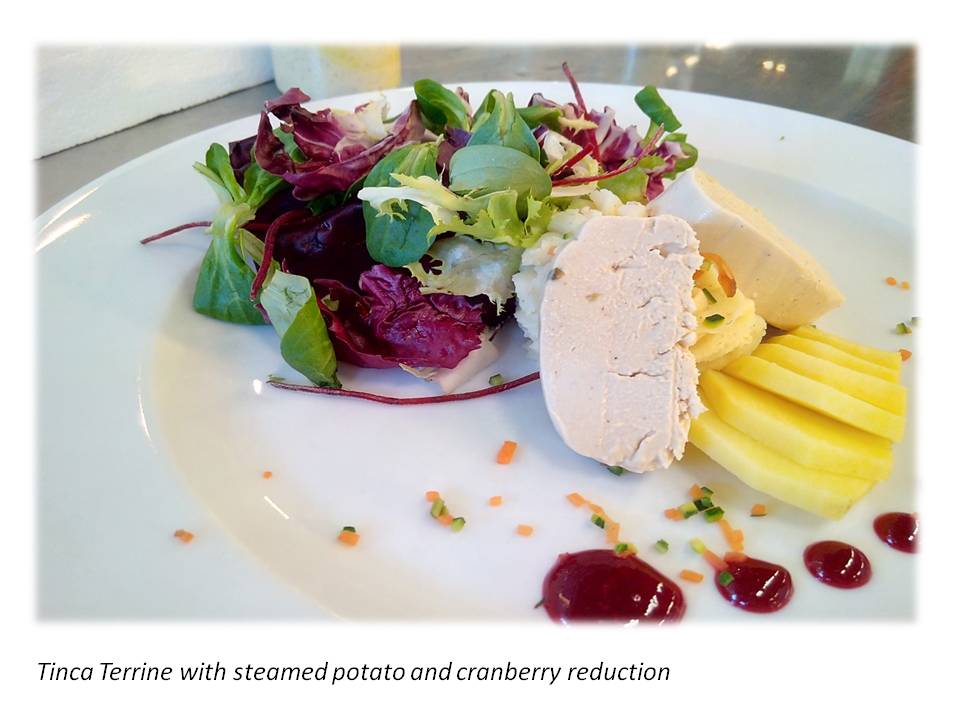
To conclude, I would like to say this has been a very insightful, bitter-sweet experience that has well and truly showed me how to run an efficient, well-oiled, safe money machine within the guidelines provided by the Slow Food Guide and not upsetting anyone (except maybe the minions!). Dispensa will continue to be a very big fish in a really small pond as long as it continues this way…