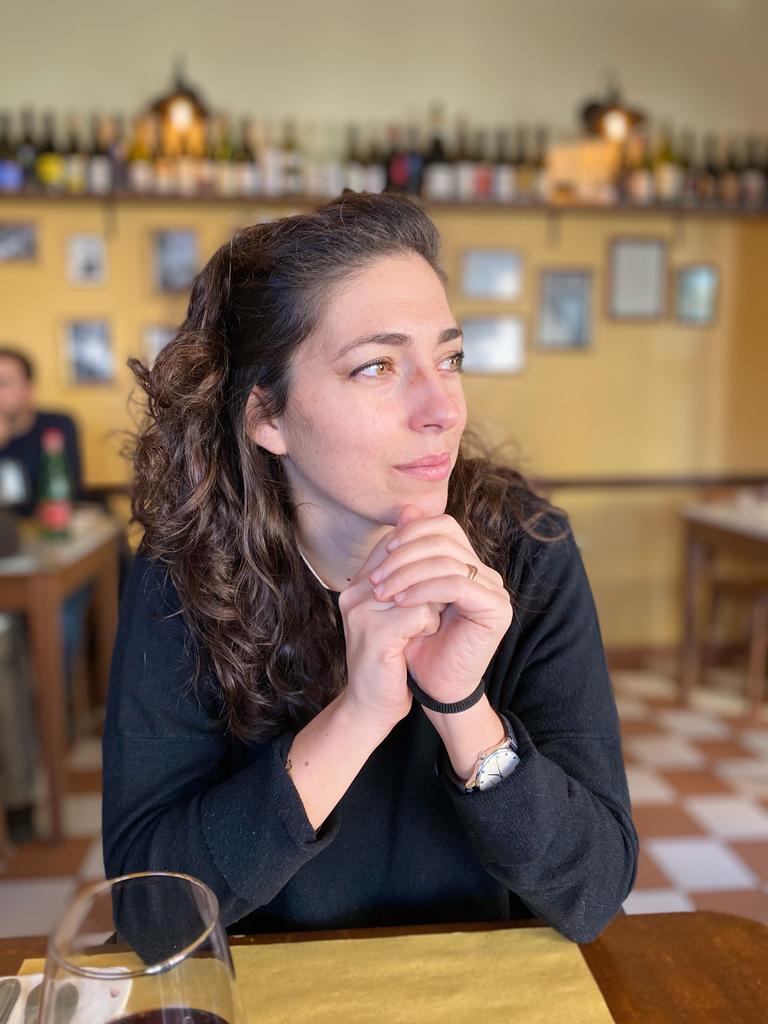
Francesca Grazioli, UNISG Alumna, Associate Scientist at Bioversity International and author of ‘Carnivorous capitalism’
Briefly tell us about your journey and what led you to enroll in the Master in Food Culture and Communications, Human Ecology and Sustainability in Pollenzo in 2014.
Already in 2007 went to an Open Day in Pollenzo with my parents, I was undecided about the course of study to undertake, and at that moment, I felt the need to live in a bigger city - coming from a small town - and so I opted for a three-year undergraduate degree and then a graduate degree in economics in Milan. Right from the start, my path was oriented towards development economics, the discipline that seeks to understand and correct various social and economic inequalities. My first work experience was in India, where inequalities feel like a slap in the face, forcing me to leave theoretical models.
Back in Italy, however, at every step of my journey, the idea remained that the underlying key to issues related to sustainable development was food.
I became a research assistant for a professor who dealt with financial markets, but I kept an eye on the UNISG website. Even during my free time, for example, during wine tastings, dinners cooked for friends, or the first sips of craft beers, I asked myself: what would my life be like if I had attended UNISG?
Finally, the day arrived. The Master in Human Ecology appears on the home page. The application deadline had already passed ,but I tried to call anyway and I was told that the deadline had been postponed and it was still possible to send the last applications. Needless to say, it went great from there. Having started this Master's with already two degrees and some work experience made me feel I had nothing to lose; I could only get the most out of professors and colleagues.
Compared to your various work experiences abroad, at FAO ,and now at the Alliance of Bioversity International, what have been the most significant achievements of your career?
I was contacted by FAO when I was about to finish my Master's, and from there, my career in international organizations dealing with food security began. A career strongly linked to my studies in Pollenzo. The added value given to me by UNISG was the possibility of understanding the invisible mechanisms through which the food system feeds or slows down the crises we are experiencing, such as climate or migration. This was a great advantage compared to those who perhaps had an equally technical background but without the experience of travel and meetings that university had given me. Today I work as an Associate Scientist at Bioversity International, dealing with climate change and food security in different regions of the world, especially the Sahel area.
To answer your question, I can't think of real goals frozen in time, but rather a whole series of encounters and networks that I've built over time, each of which enriches me. I strongly believe in encounters as a bringer of change, of being part of a fluid network that allows resonances between people who don't necessarily know each other. Even my first book is the result of the experiences I had in Pollenzo, of the readings and meetings I had.
Today you return to Pollenzo as a teacher, how does it enrich you to maintain this bond with future gastronomes, and what advice you feel you can give to those who want to undertake a course of study in this area?
It is a continuous exchange with students, the whole social fabric of the university, and the whole community, from teachers to staff. It is very valuable for me to tell my experience and listen to the world through others; teaching allows me to have direct contact with new and other generations, understand them and understand what motivates them, to find new ideas also for my battles.
Furthermore, Pollenzo gives me the opportunity to go where I could not (physically) thanks to its internationality, remaining a place that encompasses different geographies and cultures.
I advise the new generations to be curious and open, always trying to absorb everything possible with respect to the situations in which they find themselves.
I also advise not to be afraid of the frustration that can come from hard work, a process that can be lengthy in a society that wants everything immediately. Having an artisanal approach means having constant care over time, which must be applied to every path, whatever it may be.
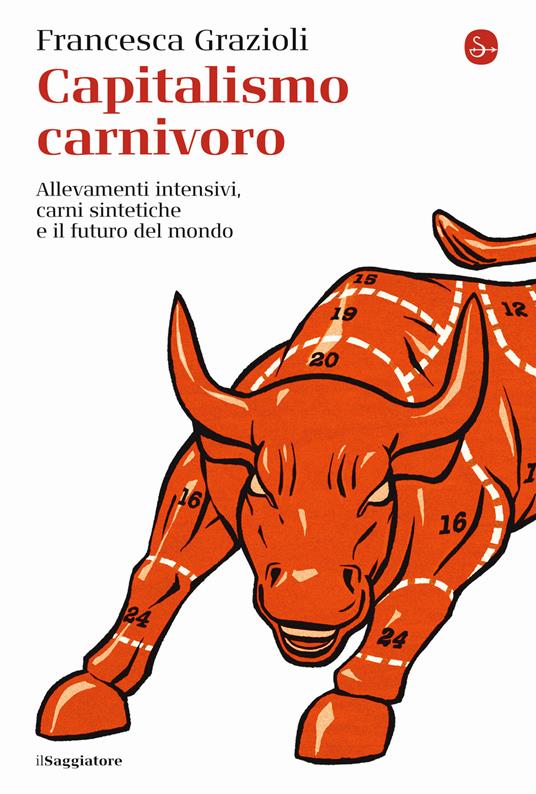
Carnivorous capitalism, your first book: where does the need to document the food system come from?
The need to write it arose from the awareness that ,for many, the influence that food has on the society in which we live is not only neglected but deliberately kept silent. Eating is a daily gesture that takes second place in the vicissitudes and habits of life, but with very powerful implications.
The writing of this book has been a journey to reveal what is always in front of us, those dynamics that arise from the choice to eat one dish over another, on a social, economic, environmental level, at 360°, with particular attention to the environmental impact of the now undeniable intensive animal industry.
I wanted to tell what are the implications of having created an intensive, capitalist and neo-liberal system on living beings. This book is not a manifesto ,nor it plays on individual guilt. It was important for me to free myself from these dynamics that require active agents only as consumers. This book wants to give a systemic perspective; what I hope is that we can move beyond the meat system to see the parallels in other industries that similarly base their growth on engulfing bodies and, finally, the planet itself in a frenetic run-up to capital.