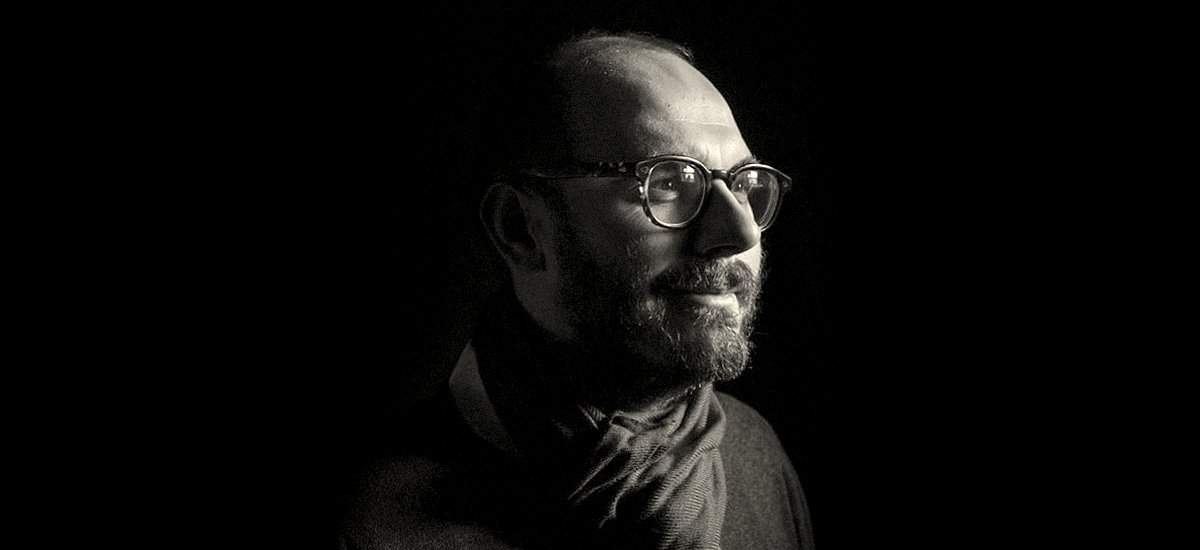
Eugenio Signoroni - Curator of Osterie d’Italia and Birre d’Italia Slow Food guides, pioneer student of Gastronomic Sciences and Cultures
You dreamed of being a Chef before becoming a curator for the Slow Food Editore "Osterie d'Italia" and "Birre d'Italia" guides; how has your path changed?
My path changed, I believe, the day I decided to come to Pollenzo. Thanks to a man and a cook, the extraordinary Vittorio Fusari, I realized that the kitchen was perhaps too narrow a space for me and that it would be better to deal with food on a broader scale. The guides happened a bit by chance: I attended UNISG, and the opportunity to do an internship at Slow Food Editore came up. When I arrived, the first guide to Italian Beers was being worked on. At the time, I knew little about beer and nothing about how to make a guide, but I threw myself in, and it went well.
What brought you to Pollenzo in 2004, the year UNISG was opened, and how do you think this University has changed since then?
The curiosity and the desire to take care of what, at the time, was nothing more than a simple and very confused passion. Pollenzo was like a childhood dream that came true: finally, I could spend my time studying what I liked best, and I could compare myself every day with others who had the same passion. The first time I heard about Pollenzo was in a chat with Vittorio (Fusari). I was still convinced I wanted to be a cook, and he said to me, "I think that in Bra, Slow Food is thinking of a university, try to find out more"... the next day, I was already on the phone and they replied that, yes, there was an idea, but it was little more than a project ...
The University has grown, has matured. In some respects, it has become a more "normal" place compared to our first years, totally pioneering. Still, it seems that the spirit, the desire to represent food beyond simple storytelling and false myths, continues to live on.
In addition to taking care of the guides, you are the author of two books "Cook: from the discovery of fire to the present day" and "The pleasure of beer: a journey into the world of the oldest drink", how do you find the right arguments to counter the publishing crisis?
The topics I write about are often the ones I would also like to read about. When I thought about "The pleasure of beer" with Luca Giaccone, we started with an idea in mind: to make someone passionate about beer who knew nothing about this magnificent drink. To do this, we tried to be precise, narrative and informative. The same approach guided me to "Cook:". Even though I chose not to cook professionally, it has continued and still continues to be an activity that I do whenever I can, having fun and trying to learn new things. So, I tried to transfer the things I learned over the years, the little tricks, the whys behind daily and repetitive preparations into a book that was once again within everyone's reach.
As a pioneer of studies in Gastronomic Sciences and Cultures, what do you recommend to those who would like to start the three-year degree course?
To get involved and to try to absorb all that this place has to offer. To look at each story with curiosity and without prejudice. To go beyond what the lessons are able to give, to go further, and to seek a personal look in every aspect.