
Erika Sesti, UNISG alumna and Key Account Manager Food Service Italy at BRIDOR
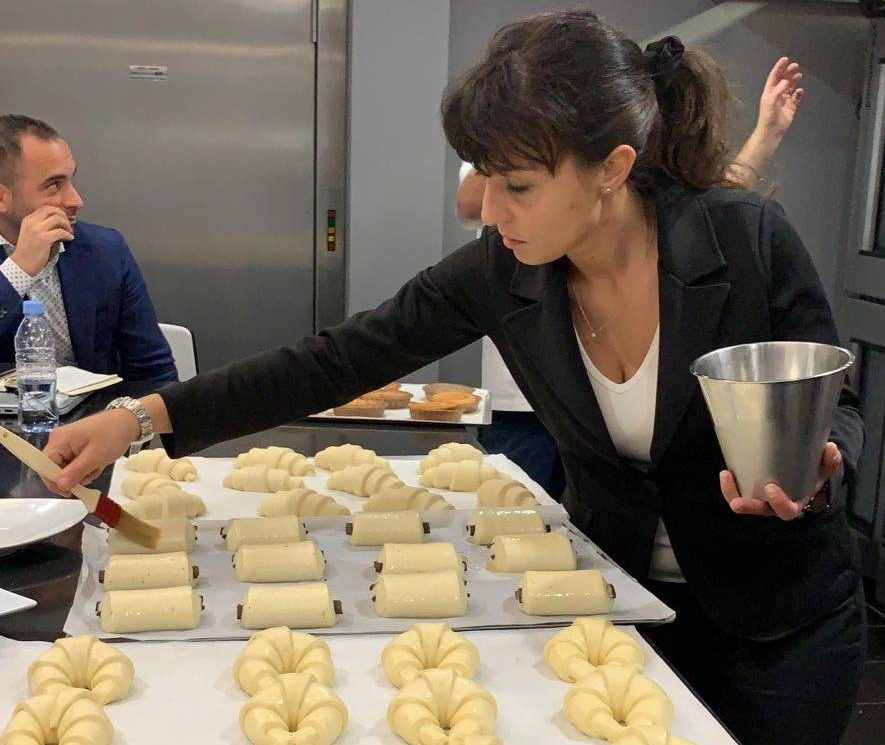 You studied at UNISG in 2005, just one year after its opening. What led you to choose the degree in Gastronomic Sciences and Cultures?
I was in my first year of economics and business management and not very convinced of the path I had taken. As a testimony of this, I was given a subscription to Cucina Italiana, where, in October, shortly after the beginning of the academic year, I discovered the existence of the University of Gastronomic Sciences. I read the article, and it was love at first sight; I realized that I could combine my passion for food with a course of study. Everyone wondered what I would do "when I grew up" after attending such a young and innovative university, but I was not worried. We must feed ourselves; therefore, everything that revolves around food is destined to be present in everyday life and the work of many, so I was sure that I would find my place.
After six years in Pollenzo, how did you see your future and what were the best moments of your journey here?
When I arrived in Pollenzo, it was not yet as well-known and full of life as it is today. Therefore, leaving a more traditional course of study, family, and friends to move to a reality still under construction was not easy, but, undoubtedly, more tears were shed at the end of the journey than at the beginning when I was leaving home. I have a rather vivid memory of the journey back home, the car loaded with moving objects, and my eyes swollen with tears: reality turned out to be much greater than expectations and getting away from Pollenzo was difficult, especially since the stories looked more like a novel than the truth. My expectations at the end of my studies were to understand how to combine the notions and experience of Pollenzo with the professional world, to investigate the added value of a gastronome, compared to other figures in the world of work, taking into account the fact that it was a new profession among the profiles present in the work orbit. Given the market niche, I never feared not finding a place, mainly thanks to many companies that showed curiosity towards graduates from such an innovative school. I initially dealt with a large distribution chain and immediately noticed their interest in my course of study and my degree thesis, which could be used to develop their supermarket format. This first work experience allowed me to bring a bit of UNISG to large supermarkets, a world historically seen as linked to prices and numbers but which I was able to contaminate with concepts of territoriality and attention to labels, all aspects that are now commonplace but that, ten years ago, were part of the innovation. In my small way, I feel like a spokesperson for a path of change that I hope to see in the market. Last but not least, Pollenzo gave me the great opportunity to learn about the territory, with direct experience and not only in books: the experimentation in the field has allowed the internalization of concepts in a more profound way than a classic didactic one could have done.
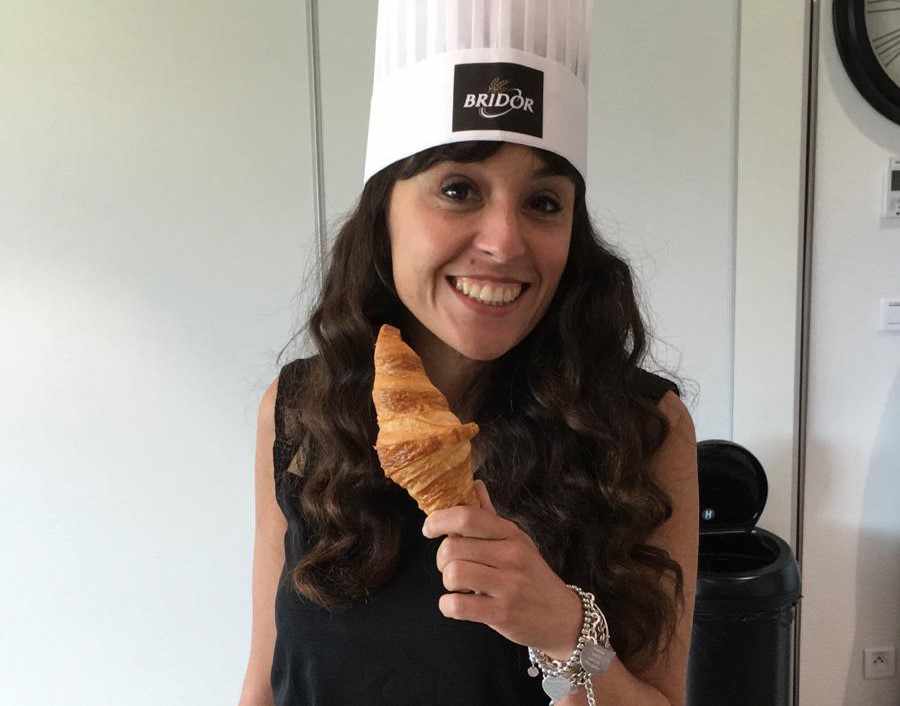 Today, you work for Bridor, a UNISG partner. Which Pollenzo values accompany you in your daily life?
It is nice to live the values learnt in Pollenzo and compare them with the path that Bridor has taken for some time now. They are a company that manages to combine the vision of a multinational with attention to the territory. This aspect is very stimulating as it allows me to bring my experience into an extensive and essential context that I am happy and proud to represent and of which I share the values. My commercial approach is still focused on the product and the company's values rather than on the price. This is in line with the corporate values that Bridor itself shares with UNISG, having decided to support the university as a strategic partner and, thus, defining their belief.
How was the period after graduation for you, and how is a gastronome seen in a large company today?
In dealing with the professional world, the first positive aspect was finding employment in a short time, confirming that I had taken the right path; Fortunately, this dynamic has remained constant over the years and has allowed me to proceed along the way of professional growth and believe more and more in the goodness of my chosen course of study. Today, unlike ten years ago, we hear about UNISG, and even the approach and contribution of a gastronome is starting to be more known and sought after. Multidisciplinarity, one of UNISG's strengths, has also become fundamental in the world of work: we need to multitask increasingly. The UNISG graduate can offer this open and interconnected contribution thanks to diversified training. The path for gastronomes will open more and more as the interest and dissemination of knowledge about food is a growing phenomenon with an increasing need for competence and awareness.
What advice would you give to those who want to undertake a course of study in this area today?
To enjoy the experience of Pollenzo to the fullest, try to understand how beautiful and essential the return to gastronomy is, think about food around the world and the role it plays in the job market. You cannot have the pretence and presumption of being able to change the world, but you must be focused on bringing your own small but significant approach to change.