
Guest Professors at UNISG: Global Perspectives on Gastronomy
At the University of Gastronomic Sciences (UNISG), guest lectures are a cornerstone of our educational approach, providing students with unique access to the expertise of global leaders in food studies. These lectures bring together thinkers, researchers, and practitioners from diverse fields, offering a multidisciplinary lens through which students can explore the complexities of food systems. This exchange of ideas complements the core curriculum, grounding theoretical learning in real-world challenges and solutions.
Our guest lecturers address topics that are central to understanding the interconnected nature of food, culture, and the environment. By engaging with experts who are shaping the future of sustainable agriculture, public health, urban planning, and gastronomy, students gain insights that push them to think critically and holistically about the field. These interactions not only broaden academic horizons but also inspire innovative approaches to addressing global food challenges.
The diversity of voices and perspectives shared through our guest lecture series is a reflection of UNISG’s commitment to cultivating global awareness and fostering meaningful dialogue. Each lecture deepens our students’ understanding of the food world’s past, present, and future while encouraging them to consider their roles in shaping it.
Below is a list of some of the remarkable guest lecturers who have contributed to UNISG courses, with a brief introduction to their work and impact.

Miguel Altieri
Emeritus Professor of Agroecology at the University of California, Berkeley (USA). Originally from Santiago, Chile.
Altieri is a globally recognized expert in agroecology, focusing on creating sustainable farming systems that integrate ecological principles with traditional agricultural practices. He has worked extensively with smallholder farmers to promote biodiversity, soil health, and resilience against climate change, emphasizing the social and environmental equity of food production.
©Federico Gutiérrez
 Carole Counihan
Professor Emerita of Anthropology at Millersville University (USA). Based in Lancaster, Pennsylvania, USA.
Counihan is a leading anthropologist in the field of food studies, known for her work on the cultural and gender dimensions of food. Her research has examined the role of food in shaping cultural identities, family dynamics, and power relations, often drawing on ethnographic methods to explore food systems in Italy and the United States.
©foodanthro.com
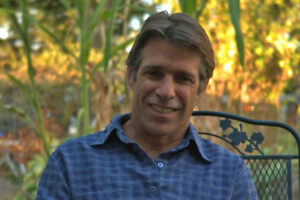 Eric Holt Giménez
Former Executive Director of Food First (Institute for Food and Development Policy), based in Oakland, California, USA. Originally from the USA.
Holt Giménez is an activist, writer, and researcher focused on food justice and agroecology. Through his leadership at Food First, he advocated for global food system reforms, addressing inequalities and fostering grassroots movements to combat hunger and poverty. His work bridges academic insights with on-the-ground social activism.
©cetri_be
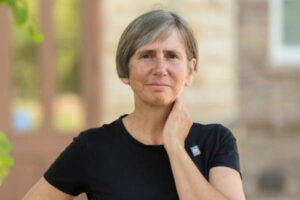 Lisa Heldke
Professor of Philosophy at Gustavus Adolphus College in St. Peter, Minnesota, USA. Based in the USA.
Heldke is known for her interdisciplinary approach to food philosophy, exploring topics such as cultural food appropriation, ethical eating, and the everyday practices of gastronomy. Her work questions traditional distinctions between high and low cuisine and challenges readers to think critically about the moral and cultural dimensions of food.
©gustavus_headshots_evan-taylor_dsc
 Tim Ingold
Emeritus Professor of Social Anthropology at the University of Aberdeen (Scotland, UK). Originally from the UK.
Ingold is a renowned anthropologist whose work on human-environment interactions has influenced multiple disciplines. He examines how food systems and material culture reflect and shape our relationships with nature. His focus on ecological knowledge and sustainability offers critical insights into the food world’s intersection with broader societal challenges.
©Caroline_Dear
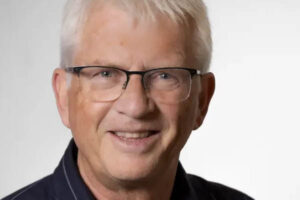
Geir Leiblein
Professor of Strategy at the Norwegian School of Economics (NHH) in Bergen, Norway. Based in Bergen, Norway.
Leiblein’s research focuses on strategic management and innovation, with a specific emphasis on sustainability in business practices. His insights into adaptive strategies and organizational resilience are highly relevant to the evolving food and agribusiness sectors.

Sidney Mintz
(1922–2015) Former Professor of Anthropology at Johns Hopkins University (USA). Originally from Dover, New Jersey, USA.
Mintz was one of the founding figures in the anthropology of food. His seminal work Sweetness and Power examined the cultural and economic history of sugar, revealing how a single commodity shaped global trade, labor systems, and social structures. His contributions continue to influence food studies, cultural anthropology, and historical research.
 Massimo Montanari
Professor of Medieval History at the University of Bologna (Italy). Based in Bologna, Italy.
Montanari is a preeminent historian of food culture in Europe. His research traces the evolution of culinary traditions, agricultural practices, and food systems from the Middle Ages to the modern era. He explores how food reflects cultural identities and societal transformations over time, making his work a cornerstone of historical gastronomy.
©Luigi Montanari
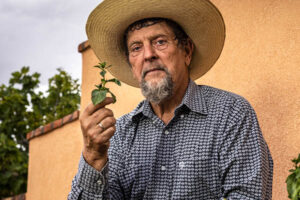 Gary Nabhan
Professor of Ethnobotany at the University of Arizona in Tucson, Arizona, USA. Originally from the USA.
Nabhan is an ethnobotanist, conservationist, and advocate for sustainable food systems. He has worked to preserve traditional agricultural knowledge and biodiversity, particularly in arid regions. His focus on indigenous foodways and seed saving has made him a key voice in the fight against climate change and the erosion of cultural food heritage.
©Eirini Pajak
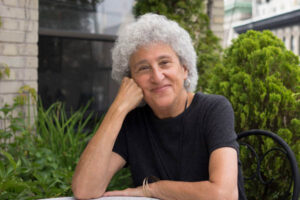 Marion Nestle
Professor Emerita of Nutrition, Food Studies, and Public Health at New York University (USA). Based in New York City, USA.
Nestle is one of the most influential figures in food policy, addressing the impact of the food industry on public health, nutrition, and sustainability. Her books, such as Food Politics, have become essential reading for understanding the intersections of government, industry, and consumer behavior in shaping modern food systems.
©BILL-HAYES-scaled
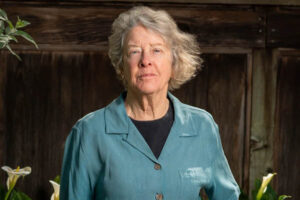 Ann Noble
Emerita Professor of Enology at the University of California, Davis (USA). Based in Davis, California, USA.
Noble is a trailblazer in sensory wine analysis, best known for developing the Aroma Wheel, which provides a systematic method for identifying and describing wine aromas. Her work has transformed both academic and practical approaches to wine evaluation, fostering a deeper understanding of sensory experiences in wine appreciation.
©Salgu-Wissmath
 Priscilla Parkhurst Ferguson
(1940–2018) Former Professor of Sociology at Columbia University (USA). Based in New York City, USA.
Ferguson examined how food serves as a social and cultural symbol, shaping individual and collective identities. Her work bridged sociology and gastronomy, offering insights into how culinary practices influence cultural hierarchies, social norms, and national identities.
©criterionchannel
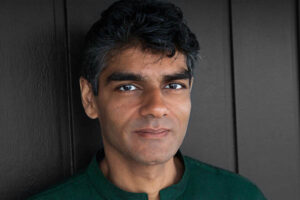 Raj Patel
Research Professor in the Lyndon B. Johnson School of Public Affairs at the University of Texas, Austin (USA). Originally from London, UK.
Patel is an economist, author, and food justice advocate whose work critiques the inequalities in global food systems. His interdisciplinary approach combines economics, history, and social justice to propose equitable solutions for sustainable food production and distribution.
©Sheila Menezes
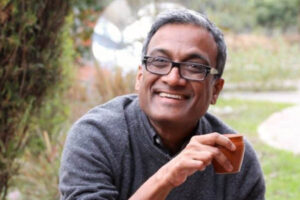 Krishnendu Ray
Associate Professor of Food Studies at New York University (USA). Based in New York City, USA.
Ray studies the intersections of food, migration, and cultural identity, focusing on how diasporic communities influence and reshape culinary practices. His work explores the global dynamics of food culture, highlighting the power of food to connect and transform societies.
©Maggie Tauranac
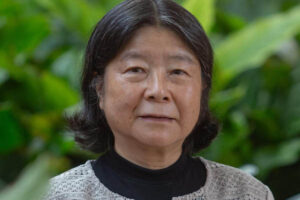 Yuriko Saito
Professor Emerita of Philosophy at the Rhode Island School of Design (USA). Based in Providence, Rhode Island, USA.
Saito’s research focuses on the aesthetics of everyday life, emphasizing the ethical and environmental dimensions of food. Her work examines how aesthetic values influence sustainable living and the cultural appreciation of food practices.
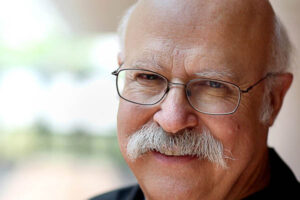 Steven Shapin
Emeritus Professor of the History of Science at Harvard University (USA). Originally from Brooklyn, New York, USA.
Shapin’s work explores the historical and cultural relationships between food, science, and society. He investigates how scientific advancements have shaped culinary practices and public perceptions of food, offering a unique perspective on the modern food landscape.
©jonathan_wiggs
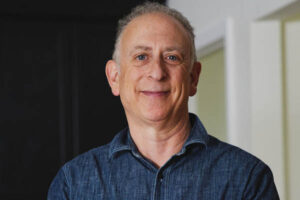 David Sutton
Professor of Anthropology at Southern Illinois University (USA). Based in Carbondale, Illinois, USA.
Sutton specializes in the role of memory, identity, and tradition in food practices. His ethnographic research in Greece has illuminated how food rituals and practices connect people to their histories and communities, fostering a deeper understanding of cultural heritage.
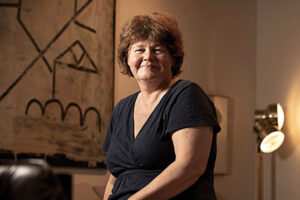 Carolyn Steel
Author and architect based in London, UK.
Steel is known for her groundbreaking work on urban food systems. Her book Hungry City explores how cities are shaped by their food systems and proposes innovative strategies for creating sustainable urban food networks that support both people and the environment.
©metode_es
 Nancy Turner
Emeritus Professor of Environmental Studies at the University of Victoria (Canada). Based in Victoria, British Columbia, Canada.
Turner is a leading ethnobotanist whose work focuses on the relationships between indigenous knowledge, cultural traditions, and ecological sustainability. Her research emphasizes the importance of traditional plant knowledge in fostering resilient food systems and biodiversity.
©Alex Harris
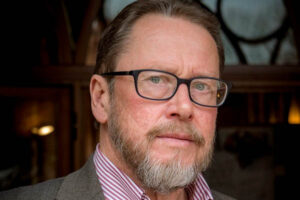 Stanley Ulijaszek
Professor of Human Ecology at the University of Oxford (UK). Based in Oxford, UK.
Ulijaszek examines the links between human health, nutrition, and culture. His work addresses global nutrition challenges, investigating how dietary practices are shaped by cultural, social, and economic factors, and how they impact public health.